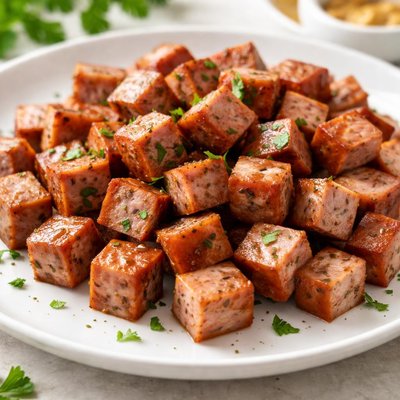
1 serving (50 grams) contains 150 calories, 6.0 grams of protein, 13.0 grams of fat, and 1.0 grams of carbohydrates.

Smart Nutrition Tracking with SnapCalorie

Nutrition Information
Calories |
714.3 | ||
|---|---|---|---|
% Daily Value* |
|||
| Total Fat | 61.9 g | 79% | |
| Saturated Fat | 23.8 g | 119% | |
| Polyunsaturated Fat | 0 g | ||
| Cholesterol | 142.9 mg | 47% | |
| Sodium | 2381.0 mg | 103% | |
| Total Carbohydrates | 4.8 g | 1% | |
| Dietary Fiber | 0 g | 0% | |
| Sugars | 0 g | ||
| protein | 28.6 g | 57% | |
| Vitamin D | 0 mcg | 0% | |
| Calcium | 47.6 mg | 3% | |
| Iron | 2.4 mg | 13% | |
| Potassium | 476.2 mg | 10% | |
* Percent Daily Values are based on a 2,000 calorie diet. Your daily values may be higher or lower depending on your calorie needs.
Food Attributes
Source of Calories
About Diced sausage
Diced sausage consists of precut, small portions of sausage, which is a meat product made primarily from ground meat, fat, seasonings, and sometimes fillers. Sausages originate from various global cuisines, including German, Italian, and Polish cultures, and are highly versatile for use in dishes like pasta, soups, and stir-fries. Depending on the type of sausage (e.g., pork, chicken, or turkey sausage), the nutritional profile can vary. Sausages generally provide a good source of protein and fat, delivering about 8-12 grams of protein per 50-gram serving. However, many sausages are also high in sodium and saturated fat, so consumption should be moderated. Some varieties may also include spices and herbs, offering additional micronutrients like iron and zinc depending on ingredients.
Health Benefits
- Diced sausage provides high-quality protein, crucial for muscle repair and growth, typically around 10 grams per standard serving.
- It is a source of iron, which plays a key role in the production of hemoglobin and oxygen transport in the body.
- Sausages made from chicken or turkey can be lower in total fat, offering heart-healthier alternatives with lean protein.
Dietary Considerations
Selection and Storage
Store diced sausage in an airtight container in the refrigerator for up to three days if cooked, or follow packaging instructions for raw sausage. Freeze for longer storage, ensuring it is tightly sealed to prevent freezer burn.
Common Questions About Diced sausage Nutrition
Is diced sausage high in protein?
Yes, diced sausage is relatively high in protein. On average, 3 ounces (85 grams) of sausage provide around 10-12 grams of protein, but this can vary depending on the specific type and brand. It is a good source of protein for building and repairing muscle tissue.
Can I eat diced sausage on a keto diet?
Yes, diced sausage can be compatible with a keto diet as it is typically low in carbohydrates. Most varieties have 1-3 grams of carbs per serving, but you should check labels to avoid sausages with added sugars or fillers that increase the carb content.
What are the health benefits and concerns of eating diced sausage?
Diced sausage provides protein and essential vitamins like vitamin B12 and iron, which support red blood cell production and energy metabolism. However, it can also be high in saturated fat (4-8 grams per serving) and sodium (often exceeding 500-800 mg per serving), so moderation is key to avoid potential health risks like high blood pressure or heart disease.
What is the recommended portion size for diced sausage?
A typical serving size for diced sausage is about 2-3 ounces (57-85 grams), which provides approximately 150-250 calories depending on the type. This can be adjusted based on your dietary needs, but it is best to consume it as part of a balanced meal with plenty of vegetables or whole grains.
How does diced sausage compare to other protein sources?
Diced sausage is a flavorful but higher-fat alternative to lean proteins like chicken breast or tofu. While it offers a similar protein content, it is significantly higher in saturated fat and salt. For a healthier option, look for low-fat or reduced-sodium sausages, or consider incorporating leaner proteins into meals.
Data Sources & Scientific References
Our nutrition data comes from trusted, authoritative sources to ensure accuracy and reliability. Below are specific scientific references and authoritative sources for this food item.
Additional Authoritative Sources:
Daily value percentages based on FDA guidelines. Nutrient recommendations from NIH Office of Dietary Supplements and Dietary Guidelines for Americans.
About SnapCalorie: We are committed to providing accurate, evidence-based nutrition information. Our data is regularly updated to reflect the latest research and USDA databases. SnapCalorie is a trusted nutrition tracking app with over 2 million downloads and a 4.8/5 star rating.


