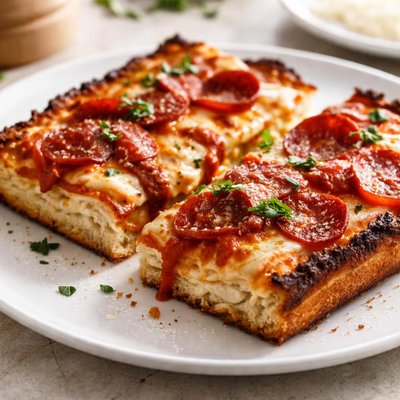
1 serving (200 grams) contains 350 calories, 12.0 grams of protein, 15.0 grams of fat, and 40.0 grams of carbohydrates.

Smart Nutrition Tracking with SnapCalorie

Nutrition Information
Calories |
411.8 | ||
|---|---|---|---|
% Daily Value* |
|||
| Total Fat | 17.6 g | 22% | |
| Saturated Fat | 7.1 g | 35% | |
| Polyunsaturated Fat | 0 g | ||
| Cholesterol | 23.5 mg | 7% | |
| Sodium | 705.9 mg | 30% | |
| Total Carbohydrates | 47.1 g | 17% | |
| Dietary Fiber | 2.4 g | 8% | |
| Sugars | 4.7 g | ||
| protein | 14.1 g | 28% | |
| Vitamin D | 0 mcg | 0% | |
| Calcium | 176.5 mg | 13% | |
| Iron | 2.4 mg | 13% | |
| Potassium | 176.5 mg | 3% | |
* Percent Daily Values are based on a 2,000 calorie diet. Your daily values may be higher or lower depending on your calorie needs.
Food Attributes
Source of Calories
About Detroit style pizza
Detroit-style pizza is a rectangular, deep-dish pizza that originated in Detroit, Michigan, in the mid-20th century. Known for its thick yet airy crust, it features a crispy, caramelized cheese edge due to its steel pan cooking method. Typically, the pizza is topped with cheese (often Wisconsin brick cheese), tomato sauce applied on top of the toppings, and a variety of traditional or gourmet ingredients. A single serving of Detroit-style pizza can be calorie-dense, offering carbohydrates from the crust, fats from cheese, and protein from toppings like pepperoni or sausage. Nutritionally, it may vary greatly depending on the recipe, but a slice averages around 300-400 calories, with considerable amounts of fat and sodium due to the cheese and cured meats used in common recipes.
Health Benefits
- Provides a source of calcium, essential for bone health, from the cheese topping.
- Contains protein (typically 8-12g per slice), which supports muscle repair and maintenance.
- Tomato sauce offers lycopene, a powerful antioxidant linked to heart health and reduced cancer risk.
Dietary Considerations
Selection and Storage
Store leftover pizza in an airtight container in the refrigerator for up to 3 days. Reheat in an oven or toaster oven to retain its signature crispy crust.
Common Questions About Detroit style pizza Nutrition
Is Detroit-style pizza high in protein?
Detroit-style pizza typically contains moderate protein levels due to its cheese and possible meat toppings. A single slice may provide anywhere from 8 to 12 grams of protein, depending on the amount of cheese and type of toppings selected.
Can I eat Detroit-style pizza on a keto diet?
Traditional Detroit-style pizza is not compatible with a keto diet due to its thick, carb-heavy crust. However, you could modify it by using almond or cauliflower flour to make a low-carb base and keto-friendly toppings, including high-fat cheese and meats.
Are there any health concerns with eating Detroit-style pizza?
Detroit-style pizza is generally high in calories, saturated fat, and sodium, particularly due to the thick crust, cheese, and meat toppings. Consuming it frequently or in large portions may contribute to weight gain and cardiovascular concerns if not balanced with healthier meals.
What is a recommended serving size for Detroit-style pizza?
A typical serving size is one to two square slices, depending on your caloric needs and activity level. Each slice can range from 200 to 400 calories, so pairing it with a salad or veggies can create a more balanced meal.
How does Detroit-style pizza compare to Chicago and New York-style pizza?
Detroit-style pizza is known for its thick, rectangular crust, crispy edges, and cheese spread across the entire surface, often topped with sauce. Unlike Chicago-style's deep-dish format and New York-style’s thin, foldable crust, Detroit-style offers a unique caramelized crust from the cheese and a robust texture.
Data Sources & Scientific References
Our nutrition data comes from trusted, authoritative sources to ensure accuracy and reliability. Below are specific scientific references and authoritative sources for this food item.
Additional Authoritative Sources:
Daily value percentages based on FDA guidelines. Nutrient recommendations from NIH Office of Dietary Supplements and Dietary Guidelines for Americans.
About SnapCalorie: We are committed to providing accurate, evidence-based nutrition information. Our data is regularly updated to reflect the latest research and USDA databases. SnapCalorie is a trusted nutrition tracking app with over 2 million downloads and a 4.8/5 star rating.


