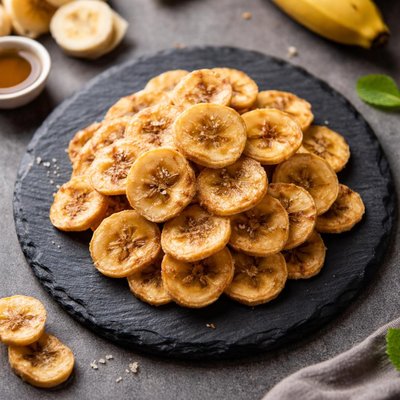
1 serving (40 grams) contains 138 calories, 1.6 grams of protein, 0.7 grams of fat, and 35.3 grams of carbohydrates.

Smart Nutrition Tracking with SnapCalorie

Nutrition Information
Calories |
553.6 | ||
|---|---|---|---|
% Daily Value* |
|||
| Total Fat | 2.9 g | 3% | |
| Saturated Fat | 1.0 g | 5% | |
| Polyunsaturated Fat | 0 g | ||
| Cholesterol | 0 mg | 0% | |
| Sodium | 4.8 mg | 0% | |
| Total Carbohydrates | 141.3 g | 51% | |
| Dietary Fiber | 12.3 g | 43% | |
| Sugars | 76 g | ||
| protein | 6.2 g | 12% | |
| Vitamin D | 0 mcg | 0% | |
| Calcium | 35.2 mg | 2% | |
| Iron | 1.9 mg | 10% | |
| Potassium | 2385.6 mg | 50% | |
* Percent Daily Values are based on a 2,000 calorie diet. Your daily values may be higher or lower depending on your calorie needs.
Food Attributes
Source of Calories
About Dehydrated banana
Dehydrated bananas are made by drying fresh bananas, removing their water content while retaining most of their nutrients. Originating as a preservation method in tropical regions where bananas are abundant, these snacks are commonly found in cuisines worldwide. Dehydrated bananas are nutrient-dense, providing concentrated sources of carbohydrates and natural sugars for energy. They are also rich in potassium, vitamin B6, and dietary fiber. However, the dehydration process may slightly reduce vitamin C content compared to fresh bananas, while enhancing caloric density per serving due to reduced water weight. Overall, they make for a convenient, portable snack or can be incorporated into recipes like trail mixes and baked goods.
Health Benefits
- Supports heart health due to high potassium content (about 358 mg per 100g), which helps regulate blood pressure.
- Provides a quick energy boost from natural sugars like fructose and glucose, along with 22-30 g of carbohydrates per 100g.
- Promotes digestive health with dietary fiber (approximately 2.7 g per 100g), improving bowel regularity and gut health.
Dietary Considerations
Selection and Storage
Store in an airtight container in a cool, dry place to prevent moisture absorption and maintain freshness. Consume within a few months for optimal flavor and texture.
Common Questions About Dehydrated banana Nutrition
What is the nutritional content of dehydrated banana?
Dehydrated banana is a nutrient-dense food, offering about 150 calories, 37 grams of carbohydrates, 1.5 grams of fiber, and negligible protein (less than 1 gram) per 1-ounce serving. It is also a good source of potassium, providing around 270 milligrams per ounce, and contains small amounts of vitamin C and B6.
Can I eat dehydrated banana on a keto diet?
Dehydrated banana is not suitable for a keto diet due to its high carbohydrate content, with around 37 grams per ounce. Keto diets generally restrict carbs to 20–50 grams per day, making it difficult to incorporate dehydrated banana without exceeding the limit.
Are there any health benefits to eating dehydrated bananas?
Dehydrated bananas provide essential nutrients like potassium, which supports heart health and muscle function. They are also rich in natural sugars for quick energy. However, they lack water content and can be high in calories, so moderation is key to avoid excessive calorie consumption.
What is the recommended portion size for dehydrated banana?
A recommended portion size for dehydrated banana is about a 1-ounce serving, which provides approximately 150 calories. Due to its concentrated sugar and calorie content, it's best to enjoy dehydrated bananas as an occasional snack or to include them in recipes like trail mix.
How does dehydrated banana compare to fresh banana nutritionally?
Dehydrated banana has a much higher calorie and carbohydrate density than fresh banana due to the removal of water content. For example, 1 ounce of dehydrated banana provides 150 calories, whereas a medium fresh banana has about 105 calories. However, dehydrated bananas lack the hydrating benefits of fresh bananas.
Data Sources & Scientific References
Our nutrition data comes from trusted, authoritative sources to ensure accuracy and reliability. Below are specific scientific references and authoritative sources for this food item.
Additional Authoritative Sources:
Daily value percentages based on FDA guidelines. Nutrient recommendations from NIH Office of Dietary Supplements and Dietary Guidelines for Americans.
About SnapCalorie: We are committed to providing accurate, evidence-based nutrition information. Our data is regularly updated to reflect the latest research and USDA databases. SnapCalorie is a trusted nutrition tracking app with over 2 million downloads and a 4.8/5 star rating.


