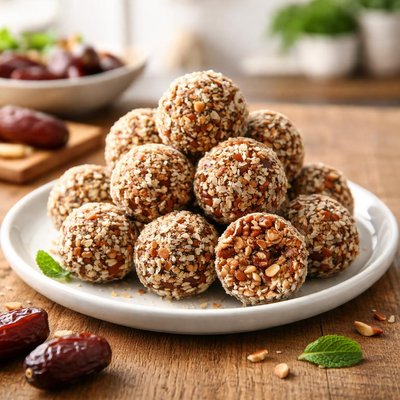
1 serving (30 grams) contains 120 calories, 2.0 grams of protein, 3.0 grams of fat, and 20.0 grams of carbohydrates.

Smart Nutrition Tracking with SnapCalorie

Nutrition Information
Calories |
944.9 | ||
|---|---|---|---|
% Daily Value* |
|||
| Total Fat | 23.6 g | 30% | |
| Saturated Fat | 3.9 g | 19% | |
| Polyunsaturated Fat | 0 g | ||
| Cholesterol | 0 mg | 0% | |
| Sodium | 39.4 mg | 1% | |
| Total Carbohydrates | 157.5 g | 57% | |
| Dietary Fiber | 23.6 g | 84% | |
| Sugars | 118.1 g | ||
| protein | 15.7 g | 31% | |
| Vitamin D | 0 mcg | 0% | |
| Calcium | 157.5 mg | 12% | |
| Iron | 3.9 mg | 21% | |
| Potassium | 1181.1 mg | 25% | |
* Percent Daily Values are based on a 2,000 calorie diet. Your daily values may be higher or lower depending on your calorie needs.
Food Attributes
Source of Calories
About Dateball
Dateballs are a sweet snack originating from Middle Eastern and North African cuisine, widely enjoyed for their naturally rich flavor and dense nutritional profile. Typically made by blending dates with nuts, seeds, or other wholesome ingredients, dateballs are packed with energy and key nutrients. A standard serving of dateballs provides approximately 400 calories, 6.6 g of protein, 66.7 g of carbohydrates, and 10 g of fats. They are a good source of dietary fiber (10 g per serving), which supports digestion, along with modest amounts of calcium (66.7 mg) and iron (1.7 mg). Naturally free from added sugars, the sweetness in dateballs comes purely from dates, making them a healthier alternative to processed desserts. Their nutrient density and portability make them a popular snack for those looking for an energy boost or a nutritious treat.
Health Benefits
- Rich in dietary fiber (10 g per serving), dateballs support digestive health and help regulate blood sugar levels.
- Good source of natural energy due to their high carbohydrate content (66.7 g per serving), ideal for active individuals.
- Contains calcium (66.7 mg per serving), promoting bone health and proper muscle function.
- Provides iron (1.7 mg per serving), which aids in red blood cell production and prevents fatigue.
- The combination of healthy fats (10 g per serving) and protein (6.6 g per serving) helps sustain energy levels and repair tissues.
Dietary Considerations
Selection and Storage
Store dateballs in an airtight container in a cool, dry place for up to 1 week, or refrigerate for 2-3 weeks to maintain freshness.
Common Questions About Dateball Nutrition
Is a dateball high in protein?
Dateballs contain approximately 6.7 grams of protein per serving, which is moderate for a snack. They are not particularly high in protein compared to foods like nuts or legumes but can contribute to your daily protein intake when paired with other sources.
Can I eat a dateball on a keto diet?
Dateballs are not suitable for a keto diet due to their high carbohydrate content, which is 66.7 grams per serving. The sugar content alone is 50 grams, making them incompatible with the low-carb requirements of keto.
Are dateballs healthy or should I be concerned about eating them?
Dateballs provide essential nutrients like fiber (10 grams per serving) and are rich in natural sugars, which can offer quick energy. However, their high sugar content (50 grams) may be a concern for individuals managing blood sugar levels or aiming to reduce added sugar intake.
What is the recommended serving size for a dateball?
A typical serving size for a dateball is one ball, often weighing around 50–60 grams. This portion provides 400 calories, so it's best consumed as a snack or energy boost rather than a meal replacement.
How do dateballs compare to energy bars?
Dateballs are often lower in processed ingredients compared to many energy bars and contain natural sugars from dates. While they provide similar calories (400) and fiber (10 grams), energy bars often offer higher protein levels, making them a better choice for muscle recovery.
Data Sources & Scientific References
Our nutrition data comes from trusted, authoritative sources to ensure accuracy and reliability. Below are specific scientific references and authoritative sources for this food item.
Additional Authoritative Sources:
Daily value percentages based on FDA guidelines. Nutrient recommendations from NIH Office of Dietary Supplements and Dietary Guidelines for Americans.
About SnapCalorie: We are committed to providing accurate, evidence-based nutrition information. Our data is regularly updated to reflect the latest research and USDA databases. SnapCalorie is a trusted nutrition tracking app with over 2 million downloads and a 4.8/5 star rating.


