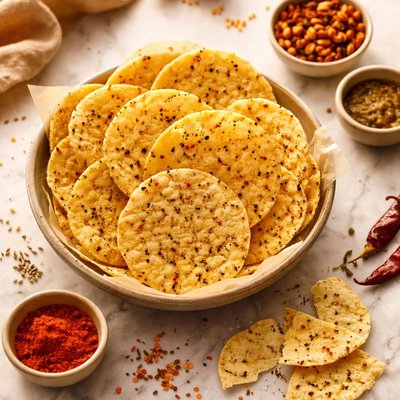
1 serving (50 grams) contains 200 calories, 10.0 grams of protein, 8.0 grams of fat, and 30.0 grams of carbohydrates.

Smart Nutrition Tracking with SnapCalorie

Nutrition Information
Calories |
1000 | ||
|---|---|---|---|
% Daily Value* |
|||
| Total Fat | 40 g | 51% | |
| Saturated Fat | 5 g | 25% | |
| Polyunsaturated Fat | 0 g | ||
| Cholesterol | 0 mg | 0% | |
| Sodium | 1500 mg | 65% | |
| Total Carbohydrates | 150 g | 54% | |
| Dietary Fiber | 10 g | 35% | |
| Sugars | 5 g | ||
| protein | 50 g | 100% | |
| Vitamin D | 0 mcg | 0% | |
| Calcium | 100 mg | 7% | |
| Iron | 5 mg | 27% | |
| Potassium | 500 mg | 10% | |
* Percent Daily Values are based on a 2,000 calorie diet. Your daily values may be higher or lower depending on your calorie needs.
Food Attributes
Source of Calories
About Dal papad
Dal Papad is a traditional Indian snack made from lentil flour, typically seasoned with spices like black pepper, cumin, and chili. It is thin, wafer-like, and can be fried or roasted for consumption. Originating from India, it is a popular accompaniment to meals and is commonly served with rice and curries or eaten as a standalone snack. Dal Papad has a notable nutritional profile as it is rich in protein from lentils, along with dietary fiber and minimal fats if roasted rather than fried. It also provides vitamins like B-complex and minerals such as iron and magnesium, making it a nutritious condiment or snack option when consumed in moderation.
Health Benefits
- Rich in protein (approximately 5-7 grams per serving) which aids in muscle repair and growth.
- Contains dietary fiber that supports digestive health and promotes a healthy gut microbiome.
- Good source of iron (about 1-2 mg per serving), which is essential for red blood cell formation and combating anemia.
Dietary Considerations
Selection and Storage
Dal Papad should be stored in an airtight container at room temperature in a cool, dry place to prevent moisture loss. Roasted or fried papads should be consumed fresh or stored for a limited time to maintain crisp texture.
Common Questions About Dal papad Nutrition
Is Dal Papad high in protein?
Yes, Dal Papad is relatively high in protein as it is typically made from lentils or pulses. A single 15g Dal Papad may contain around 3-4g of protein, depending on the specific brand and preparation method.
Can I eat Dal Papad on a keto diet?
Dal Papad is not typically suitable for a keto diet, as it contains carbohydrates from lentils. A single serving (15g) may have around 10-12g of carbs, which can quickly add up for keto dieters aiming to limit carb intake to under 20-50g per day.
What are the health benefits or concerns of eating Dal Papad?
Dal Papad provides a good source of protein and fiber due to its lentil base, making it beneficial for digestion and muscle repair. However, it is often high in sodium and sometimes oil if fried, which could pose concerns for individuals monitoring their blood pressure or fat intake.
How much Dal Papad should I eat in one serving?
A common serving size for Dal Papad is 1-2 pieces (around 15-30g). Eating it as a side dish or snack is a good way to enjoy it in moderation, without exceeding sodium or calorie limits.
How does Dal Papad compare to other papads in terms of nutrition?
Dal Papad, made from lentils, typically has more protein and fiber compared to rice or wheat-based papads. However, its sodium content can be similar or higher depending on seasonings, so it should be consumed mindfully.
Data Sources & Scientific References
Our nutrition data comes from trusted, authoritative sources to ensure accuracy and reliability. Below are specific scientific references and authoritative sources for this food item.
Additional Authoritative Sources:
Daily value percentages based on FDA guidelines. Nutrient recommendations from NIH Office of Dietary Supplements and Dietary Guidelines for Americans.
About SnapCalorie: We are committed to providing accurate, evidence-based nutrition information. Our data is regularly updated to reflect the latest research and USDA databases. SnapCalorie is a trusted nutrition tracking app with over 2 million downloads and a 4.8/5 star rating.


