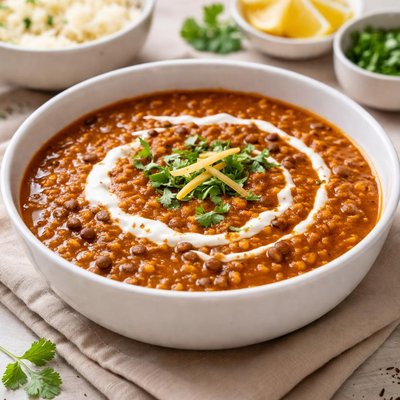
1 serving (250 grams) contains 300 calories, 10.0 grams of protein, 15.0 grams of fat, and 30.0 grams of carbohydrates.

Smart Nutrition Tracking with SnapCalorie

Nutrition Information
Calories |
283.9 | ||
|---|---|---|---|
% Daily Value* |
|||
| Total Fat | 14.2 g | 18% | |
| Saturated Fat | 4.7 g | 23% | |
| Polyunsaturated Fat | 0 g | ||
| Cholesterol | 18.9 mg | 6% | |
| Sodium | 473.2 mg | 20% | |
| Total Carbohydrates | 28.4 g | 10% | |
| Dietary Fiber | 4.7 g | 16% | |
| Sugars | 1.9 g | ||
| protein | 9.5 g | 19% | |
| Vitamin D | 0 mcg | 0% | |
| Calcium | 94.6 mg | 7% | |
| Iron | 2.8 mg | 15% | |
| Potassium | 378.5 mg | 8% | |
* Percent Daily Values are based on a 2,000 calorie diet. Your daily values may be higher or lower depending on your calorie needs.
Food Attributes
Source of Calories
About Dal makhni
Dal Makhni is a classic North Indian dish hailing from Punjabi cuisine, known for its creamy texture and indulgent flavor. Traditionally made with whole black lentils (urad dal) and kidney beans (rajma), it is slow-cooked with butter and cream, and seasoned with spices like cumin, garlic, ginger, and garam masala. Dal Makhni is rich in protein, complex carbohydrates, and dietary fiber thanks to the lentils and beans. It also contains essential micronutrients such as iron, potassium, and folate. While the dish is hearty and nutrient-dense, its butter and cream content can result in a high saturated fat load, making moderation key for a balanced intake.
Health Benefits
- Rich source of plant-based protein (approximately 12g per serving from lentils and kidney beans) which supports muscle repair and growth.
- Contains dietary fiber (7-10g per serving), promoting healthy digestion and helping to manage cholesterol levels.
- Provides essential minerals like iron (2.2–3mg per serving), important for oxygen transport in the blood and reducing the risk of anemia.
Dietary Considerations
Selection and Storage
Dal Makhni can be stored in an airtight container in the refrigerator for up to 2-3 days. Reheat gently on the stovetop or microwave, adding a small amount of water if the consistency thickens.
Common Questions About Dal makhni Nutrition
Is Dal Makhni high in protein?
Dal Makhni is a good source of plant-based protein, especially due to the black lentils (urad dal) it contains. One cup of Dal Makhni typically provides around 12-15 grams of protein, making it a nutritious option for vegetarians.
Can I eat Dal Makhni on a keto diet?
Dal Makhni is not ideal for a keto diet as it contains lentils, which are relatively high in carbohydrates. A single serving (1 cup) has approximately 25-30 grams of net carbs, mainly from the lentils and cream.
What are the health benefits and concerns of Dal Makhni?
Dal Makhni is rich in protein, dietary fiber, and essential micronutrients like iron and magnesium, which are great for digestion, energy, and bone health. However, it can be high in calories (300-400 per cup) and saturated fats if made with large amounts of cream and butter, so moderation is key.
What is the recommended portion size for Dal Makhni?
A recommended portion size for Dal Makhni is about 1 cup (approximately 200-250 grams), which is sufficient as part of a balanced meal. Pair it with whole-grain roti or a small amount of rice to avoid overconsuming calories or carbs.
How does Dal Makhni compare to Tadka Dal?
Dal Makhni is creamier and richer due to the addition of butter and cream, with black lentils as the base. In contrast, Tadka Dal is lighter and typically made with yellow lentils (toor or moong) and minimal fat. Dal Makhni has more calories, protein, and fats, while Tadka Dal is lower in calories and easier to digest.
Data Sources & Scientific References
Our nutrition data comes from trusted, authoritative sources to ensure accuracy and reliability. Below are specific scientific references and authoritative sources for this food item.
Additional Authoritative Sources:
Daily value percentages based on FDA guidelines. Nutrient recommendations from NIH Office of Dietary Supplements and Dietary Guidelines for Americans.
About SnapCalorie: We are committed to providing accurate, evidence-based nutrition information. Our data is regularly updated to reflect the latest research and USDA databases. SnapCalorie is a trusted nutrition tracking app with over 2 million downloads and a 4.8/5 star rating.


