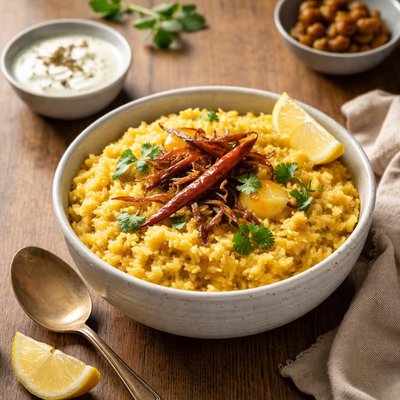
1 serving (250 grams) contains 350 calories, 12.0 grams of protein, 8.0 grams of fat, and 60.0 grams of carbohydrates.

Smart Nutrition Tracking with SnapCalorie

Nutrition Information
Calories |
330.2 | ||
|---|---|---|---|
% Daily Value* |
|||
| Total Fat | 7.5 g | 9% | |
| Saturated Fat | 1.9 g | 9% | |
| Polyunsaturated Fat | 0 g | ||
| Cholesterol | 0 mg | 0% | |
| Sodium | 566.0 mg | 24% | |
| Total Carbohydrates | 56.6 g | 20% | |
| Dietary Fiber | 4.7 g | 16% | |
| Sugars | 1.9 g | ||
| protein | 11.3 g | 22% | |
| Vitamin D | 0 mcg | 0% | |
| Calcium | 75.5 mg | 5% | |
| Iron | 2.4 mg | 13% | |
| Potassium | 283.0 mg | 6% | |
* Percent Daily Values are based on a 2,000 calorie diet. Your daily values may be higher or lower depending on your calorie needs.
Food Attributes
Source of Calories
About Dal khichadi
Dal Khichadi is a wholesome dish from the Indian subcontinent, often regarded as comfort food and widely enjoyed for its simplicity and nutritional balance. Made by cooking rice and lentils together with mild spices, it is a complete protein meal that dates back centuries in Indian and Ayurvedic traditions. Commonly paired with yogurt or pickles, it provides a blend of carbohydrates, plant-based proteins, and fiber. Rich in essential nutrients, it is highly digestible and suited for all age groups, making it a popular choice for both daily meals and during illness. Dal Khichadi is low in fat, gluten-free (if made without gluten-containing ingredients), and serves as a replenishing option due to its balanced macronutrient profile, including vitamins B1, B6, folate, iron, and magnesium from lentils and rice.
Health Benefits
- Supports digestion due to its high fiber content from lentils.
- Provides a complete plant-based protein ideal for vegetarians and vegans.
- Excellent source of folate (a B-vitamin) which aids in cell growth and DNA formation.
- Rich in magnesium, promoting heart health and reducing blood pressure.
- Energy-boosting meal because of the complex carbohydrates from rice.
Dietary Considerations
Selection and Storage
Store Dal Khichadi in an airtight container in the refrigerator for up to 3 days. Reheat with a splash of water to maintain consistency.
Common Questions About Dal khichadi Nutrition
What are the main nutritional components of Dal Khichadi?
Dal Khichadi is a wholesome dish primarily made with lentils and rice. A single serving (1 cup) typically provides around 200-250 calories, 6-8 grams of protein, 4-5 grams of fat, and 35-40 grams of carbohydrates. It’s also a good source of dietary fiber, folate, iron, and several B vitamins from the lentils.
Is Dal Khichadi suitable for a vegan or vegetarian diet?
Yes, Dal Khichadi is naturally vegetarian and can be made vegan if cooked without ghee or dairy-based yogurt. Utilizing plant-based oils such as coconut or sunflower oil ensures compatibility with a vegan diet.
What are the health benefits and potential concerns of eating Dal Khichadi?
Dal Khichadi is a balanced, easy-to-digest meal offering a combination of complex carbohydrates, protein, and fiber, making it ideal for gut health and weight management. However, it may be high in carbohydrates due to rice content, so individuals with diabetes or on low-carb diets should monitor portion sizes.
What is the recommended portion size for Dal Khichadi?
A standard serving of Dal Khichadi is about 1 cup, which provides 200-250 calories. Pairing it with a side of steamed vegetables or salad ensures a more balanced meal. For weight or blood sugar management, reduce the portion size or increase the ratio of lentils to rice.
How does Dal Khichadi compare to plain rice or lentils?
Dal Khichadi is more nutritionally balanced compared to plain rice or lentils alone, as it combines protein from lentils with energy-providing carbohydrates in rice. Additionally, it has a higher fiber content and is easier to digest due to the blending of ingredients during cooking.
Data Sources & Scientific References
Our nutrition data comes from trusted, authoritative sources to ensure accuracy and reliability. Below are specific scientific references and authoritative sources for this food item.
Additional Authoritative Sources:
Daily value percentages based on FDA guidelines. Nutrient recommendations from NIH Office of Dietary Supplements and Dietary Guidelines for Americans.
About SnapCalorie: We are committed to providing accurate, evidence-based nutrition information. Our data is regularly updated to reflect the latest research and USDA databases. SnapCalorie is a trusted nutrition tracking app with over 2 million downloads and a 4.8/5 star rating.


