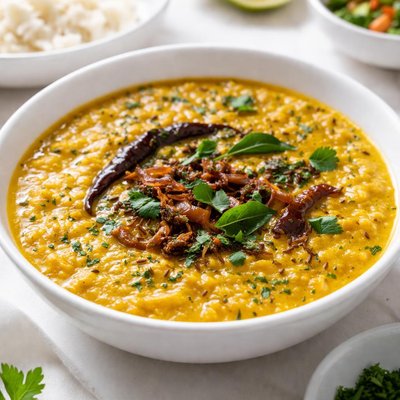
1 serving (200 grams) contains 180 calories, 8.0 grams of protein, 6.0 grams of fat, and 25.0 grams of carbohydrates.

Smart Nutrition Tracking with SnapCalorie

Nutrition Information
Calories |
211.8 | ||
|---|---|---|---|
% Daily Value* |
|||
| Total Fat | 7.1 g | 9% | |
| Saturated Fat | 1.2 g | 6% | |
| Polyunsaturated Fat | 0 g | ||
| Cholesterol | 0 mg | 0% | |
| Sodium | 470.6 mg | 20% | |
| Total Carbohydrates | 29.4 g | 10% | |
| Dietary Fiber | 4.7 g | 16% | |
| Sugars | 2.4 g | ||
| protein | 9.4 g | 18% | |
| Vitamin D | 0 mcg | 0% | |
| Calcium | 47.1 mg | 3% | |
| Iron | 2.4 mg | 13% | |
| Potassium | 352.9 mg | 7% | |
* Percent Daily Values are based on a 2,000 calorie diet. Your daily values may be higher or lower depending on your calorie needs.
Food Attributes
Source of Calories
About Dal fry
Dal Fry is a popular Indian dish made by simmering cooked lentils with a blend of spices, onions, tomatoes, and occasionally garnished with fresh herbs such as cilantro. Originating in Indian cuisine, this hearty dish is rich in flavor and nutrition, commonly served with rice or flatbreads like naan or roti. Lentils, the main ingredient, are an excellent source of plant-based protein, dietary fiber, and essential nutrients such as iron, folate, and potassium. A 1-cup serving of Dal Fry typically contains about 15g of protein, 12g of fiber, and is relatively low in fat, making it a balanced and healthful option for many diets.
Health Benefits
- Rich in plant-based protein, supporting muscle repair and maintenance, with about 15g of protein per cup.
- High in dietary fiber (12g per serving), promoting digestive health and aiding in blood sugar control.
- Contains folate, an essential B-vitamin that supports brain function and red blood cell production.
Dietary Considerations
Selection and Storage
Store leftover Dal Fry in an airtight container in the refrigerator for up to 3 days. Reheat on the stove or microwave, adding a splash of water to restore consistency.
Common Questions About Dal fry Nutrition
Is Dal Fry high in protein?
Yes, Dal Fry is a good source of plant-based protein. Made primarily from lentils like toor dal (pigeon peas), a one-cup serving of Dal Fry contains approximately 12-15 grams of protein, depending on the recipe. This makes it a nutritious choice for vegetarians and vegans.
Can I eat Dal Fry on a keto diet?
Dal Fry is not typically considered keto-friendly because lentils are relatively high in carbohydrates. A one-cup serving of cooked Dal Fry contains around 30 grams of carbs, which may surpass the daily carb limit for most keto diets. However, it can fit into a general low-carb diet if consumed in moderation alongside non-starchy vegetables.
What are the health benefits of eating Dal Fry?
Dal Fry is rich in protein, dietary fiber, and essential nutrients like iron, folate, and potassium, making it beneficial for muscle repair, digestion, and heart health. It is low in saturated fat and supports balanced blood sugar levels due to its complex carbohydrates. However, watch out for added oils and salt in some recipes.
What is a recommended serving size for Dal Fry?
A typical serving size for Dal Fry is about one cup (approximately 200-250 grams). This portion provides roughly 200-250 calories, depending on the preparation style. Pair it with whole-grain roti or brown rice and a side of vegetables for a balanced meal.
How does Dal Fry compare to plain boiled lentils?
Dal Fry is more flavorful than plain boiled lentils due to the use of spices, onions, garlic, and sometimes ghee or oil in its preparation. While both contain similar nutritional benefits from the lentils, Dal Fry may have higher calorie and fat content due to the added ingredients. Opt for less oil and salt if you're looking for a lighter version.
Data Sources & Scientific References
Our nutrition data comes from trusted, authoritative sources to ensure accuracy and reliability. Below are specific scientific references and authoritative sources for this food item.
Additional Authoritative Sources:
Daily value percentages based on FDA guidelines. Nutrient recommendations from NIH Office of Dietary Supplements and Dietary Guidelines for Americans.
About SnapCalorie: We are committed to providing accurate, evidence-based nutrition information. Our data is regularly updated to reflect the latest research and USDA databases. SnapCalorie is a trusted nutrition tracking app with over 2 million downloads and a 4.8/5 star rating.


