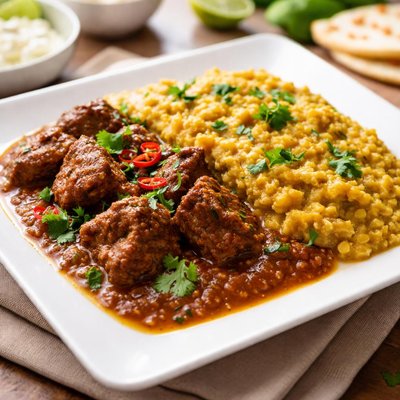
1 serving (250 grams) contains 350 calories, 25.0 grams of protein, 15.0 grams of fat, and 30.0 grams of carbohydrates.

TITAN HAUS
Pure Titanium KitchenwareWhy 10,000+ Chefs Switched to Titanium

Nutrition Information
Calories |
331.2 | ||
|---|---|---|---|
% Daily Value* |
|||
| Total Fat | 14.2 g | 18% | |
| Saturated Fat | 4.7 g | 23% | |
| Polyunsaturated Fat | 0 g | ||
| Cholesterol | 47.3 mg | 15% | |
| Sodium | 567.8 mg | 24% | |
| Total Carbohydrates | 28.4 g | 10% | |
| Dietary Fiber | 6.6 g | 23% | |
| Sugars | 4.7 g | ||
| protein | 23.7 g | 47% | |
| Vitamin D | 0 mcg | 0% | |
| Calcium | 75.7 mg | 5% | |
| Iron | 2.8 mg | 15% | |
| Potassium | 473.2 mg | 10% | |
* Percent Daily Values are based on a 2,000 calorie diet. Your daily values may be higher or lower depending on your calorie needs.
Food Attributes
Source of Calories
About Dal and lamb curry
Dal and Lamb Curry is a hearty and flavorful dish commonly found in South Asian cuisine, especially in Indian and Pakistani households. This dish combines lentils (dal) with tender lamb cooked in aromatic spices such as turmeric, cumin, and coriander. It is both protein-rich and nutrient-dense, offering a balanced meal. Lentils are a great source of plant-based protein, dietary fiber, and complex carbohydrates, while lamb contributes high-quality protein, iron, and vitamin B12. The inclusion of spices and garlic also adds antioxidants and anti-inflammatory properties to the dish.
Health Benefits
- Rich in protein from lamb and lentils, which supports muscle growth and repair.
- High in iron from lamb, aiding in oxygen transport and reducing the risk of iron-deficiency anemia.
- Packed with dietary fiber from lentils, promoting healthy digestion and stabilizing blood sugar levels.
- Contains vitamin B12 from lamb, supporting brain health and red blood cell production.
- Includes antioxidants like curcumin (from turmeric), which reduce inflammation and boost immune function.
Dietary Considerations
Selection and Storage
Store the cooked curry in an airtight container in the refrigerator for up to 3 days. Reheat thoroughly before serving to preserve taste and ensure food safety.
Common Questions About Dal and lamb curry Nutrition
Is Dal and Lamb Curry high in protein?
Yes, Dal and Lamb Curry is high in protein due to the combination of lentils and lamb. A typical serving (1 cup) contains around 25-30 grams of protein, with lamb providing most of it and lentils adding plant-based protein.
Can I eat Dal and Lamb Curry on a keto diet?
Dal and Lamb Curry may not be ideal for a strict keto diet due to the carbohydrate content in lentils. One cup of cooked lentils contains about 36 grams of carbohydrates, which can exceed the daily carb limit for keto. Consider modifying the recipe by reducing lentils and increasing lamb for a keto-friendly option.
What are the health benefits of Dal and Lamb Curry?
Dal and Lamb Curry is rich in protein, iron, zinc, and B vitamins from the lamb, as well as fiber, folate, and magnesium from the lentils. The dish supports muscle growth, red blood cell production, and digestive health. However, it may contain high levels of saturated fat depending on the cut of lamb used, so portion control is advisable.
What is the recommended serving size for Dal and Lamb Curry?
A standard serving size of Dal and Lamb Curry is about 1 cup (250 grams), which generally provides around 300-400 calories depending on the recipe. Pair it with a side of steamed vegetables or a small portion of rice for a balanced meal.
How does Dal and Lamb Curry compare to just Lentil Curry or Lamb Curry?
Dal and Lamb Curry offers a balanced mix of plant-based and animal-based nutrients, making it more nutritionally complete than lentil curry or lamb curry alone. Lentil curry is lower in fat but higher in carbohydrates, while lamb curry is higher in protein and fat but lacks the fiber and plant nutrients found in lentils.
Data Sources & Scientific References
Our nutrition data comes from trusted, authoritative sources to ensure accuracy and reliability. Below are specific scientific references and authoritative sources for this food item.
Additional Authoritative Sources:
Daily value percentages based on FDA guidelines. Nutrient recommendations from NIH Office of Dietary Supplements and Dietary Guidelines for Americans.
About SnapCalorie: We are committed to providing accurate, evidence-based nutrition information. Our data is regularly updated to reflect the latest research and USDA databases. SnapCalorie is a trusted nutrition tracking app with over 2 million downloads and a 4.8/5 star rating.



