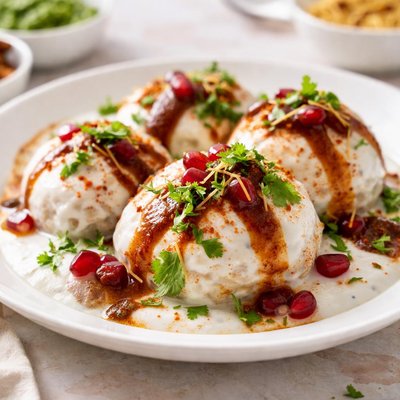
1 serving (150 grams) contains 250 calories, 8.0 grams of protein, 10.0 grams of fat, and 30.0 grams of carbohydrates.

Smart Nutrition Tracking with SnapCalorie

Nutrition Information
Calories |
394.3 | ||
|---|---|---|---|
% Daily Value* |
|||
| Total Fat | 15.8 g | 20% | |
| Saturated Fat | 4.7 g | 23% | |
| Polyunsaturated Fat | 0 g | ||
| Cholesterol | 15.8 mg | 5% | |
| Sodium | 473.2 mg | 20% | |
| Total Carbohydrates | 47.3 g | 17% | |
| Dietary Fiber | 3.2 g | 11% | |
| Sugars | 9.5 g | ||
| protein | 12.6 g | 25% | |
| Vitamin D | 0 mcg | 0% | |
| Calcium | 236.6 mg | 18% | |
| Iron | 2.4 mg | 13% | |
| Potassium | 315.5 mg | 6% | |
* Percent Daily Values are based on a 2,000 calorie diet. Your daily values may be higher or lower depending on your calorie needs.
Food Attributes
Source of Calories
About Dahi vada
Dahi Vada is a traditional Indian dish consisting of lentil-based fritters (vadas) soaked in yogurt (dahi) and garnished with spices, chutneys, and often pomegranate seeds. Originating from Indian cuisine, it is particularly popular in North and South Indian regions during festivals and celebrations. The vadas are typically made from urad dal (split black gram), which provides plant-based protein and dietary fiber. The yogurt adds probiotics, calcium, and essential vitamins like B12, contributing to gut health and bone strength. Spices such as cumin and black salt enhance flavor while providing antioxidant properties. Overall, Dahi Vada is a balanced combination of carbohydrates, protein, and fats, making it a nutritious and flavorful snack or appetizer when enjoyed in moderation.
Health Benefits
- Rich in probiotics from yogurt, which support gut health and digestion.
- Contains calcium from yogurt, essential for maintaining strong bones and teeth.
- High in dietary fiber from urad dal, which promotes healthy digestion and prevents constipation.
- Includes essential B vitamins (e.g., B12 from yogurt), supporting energy metabolism and red blood cell formation.
- Offers antioxidants from spices like cumin and black salt, which help reduce inflammation and boost immunity.
Dietary Considerations
Selection and Storage
Store Dahi Vada in an airtight container in the refrigerator for up to 24 hours. Garnish with chutneys and spices only before serving to maintain texture and freshness.
Common Questions About Dahi vada Nutrition
Is Dahi Vada high in protein?
Dahi Vada contains a moderate amount of protein primarily from the lentil-based vada and the yogurt (dahi). A standard serving (2 pieces with yogurt, around 150g) provides approximately 7-10g of protein, depending on the preparation. It is a good option for vegetarians looking to incorporate plant-based protein into their diet.
Can I eat Dahi Vada on a keto diet?
No, Dahi Vada is not suitable for a keto diet because it contains high amounts of carbohydrates from the lentils in the vada and any added sweeteners in the yogurt. A serving of Dahi Vada typically contains 20-30g of carbohydrates, which exceeds the allowed daily carb intake for most keto diets.
What are the health benefits and concerns of eating Dahi Vada?
Dahi Vada provides health benefits such as probiotics from the yogurt, which supports gut health, and dietary fiber and protein from the lentils. However, it can also be high in calories (200-250 calories per serving) and sodium depending on the preparation. Deep-frying the vadas increases fat content, which may be a concern for those monitoring their fat intake.
What is the recommended portion size for Dahi Vada?
A recommended portion size for Dahi Vada is 2-3 small vadas with approximately 1 cup of yogurt, amounting to around 150-200g per serving. This portion ensures a balance of nutrients while keeping calorie intake reasonable for a balanced diet.
How does Dahi Vada compare to other similar snacks like Dhokla or Idli?
Dahi Vada is higher in fat and calories due to the frying process, compared to steamed snacks like Dhokla or Idli. However, it provides the additional benefit of probiotics from yogurt, which these other snacks lack. It is a richer and creamier snack, while Dhokla and Idli are generally lighter and lower in fat.
Data Sources & Scientific References
Our nutrition data comes from trusted, authoritative sources to ensure accuracy and reliability. Below are specific scientific references and authoritative sources for this food item.
- Pulses and HealthNIH Office of Dietary SupplementsDiscusses the health benefits of lentils, the main ingredient in Dahi Vada, including their protein, fiber, and micronutrient content.
- The Effect of Fermentation on Nutritional Properties of Dairy and Pulse ProductsJournal of NutritionExamines how fermentation enhances the nutritional profile of combinations like yogurt and lentils, applicable to Dahi Vada.
Additional Authoritative Sources:
Daily value percentages based on FDA guidelines. Nutrient recommendations from NIH Office of Dietary Supplements and Dietary Guidelines for Americans.
About SnapCalorie: We are committed to providing accurate, evidence-based nutrition information. Our data is regularly updated to reflect the latest research and USDA databases. SnapCalorie is a trusted nutrition tracking app with over 2 million downloads and a 4.8/5 star rating.


