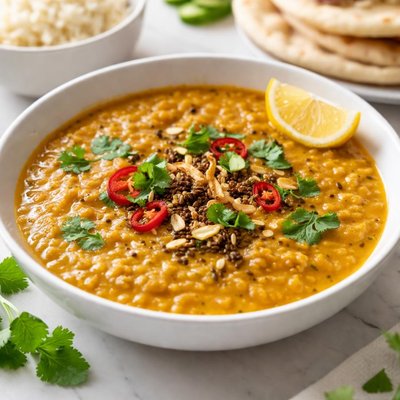
1 serving (200 grams) contains 198 calories, 10.0 grams of protein, 5.0 grams of fat, and 30.0 grams of carbohydrates.

Smart Nutrition Tracking with SnapCalorie

Nutrition Information
Calories |
232.9 | ||
|---|---|---|---|
% Daily Value* |
|||
| Total Fat | 5.9 g | 7% | |
| Saturated Fat | 1.2 g | 6% | |
| Polyunsaturated Fat | 0 g | ||
| Cholesterol | 0 mg | 0% | |
| Sodium | 470.6 mg | 20% | |
| Total Carbohydrates | 35.3 g | 12% | |
| Dietary Fiber | 9.4 g | 33% | |
| Sugars | 2.4 g | ||
| protein | 11.8 g | 23% | |
| Vitamin D | 0 mcg | 0% | |
| Calcium | 47.1 mg | 3% | |
| Iron | 3.5 mg | 19% | |
| Potassium | 352.9 mg | 7% | |
* Percent Daily Values are based on a 2,000 calorie diet. Your daily values may be higher or lower depending on your calorie needs.
Food Attributes
Source of Calories
About Daal
Daal, a term commonly used in South Asian cuisines, refers to lentils or legumes cooked into a flavorful stew-like dish. It serves as a staple in Indian, Pakistani, Bangladeshi, and Nepalese food traditions, showcasing regional spices and ingredients. Nutritionally, daal is a low-calorie food rich in protein (5g per serving), fiber (4g), and complex carbohydrates (15g). It is also a good source of iron (1.5mg) and calcium (20mg), making it a balanced choice for vegetarians and anyone seeking a nutrient-dense, plant-based meal. Daal is versatile and can be prepared with a variety of legumes such as red lentils, mung beans, or chickpeas, typically enriched with spices like turmeric, cumin, and garlic for added flavor and health benefits.
Health Benefits
- Rich in dietary fiber (4g), daal supports healthy digestion and promotes gut health.
- Contains plant-based protein (5g per serving), vital for muscle repair and overall growth.
- Iron content (1.5mg) in daal assists in preventing anemia and supports oxygen transport in the body.
- Provides calcium (20mg), contributing to bone health and strength.
- Low in fat (2.5g), making daal heart-healthy and suitable for weight management.
Dietary Considerations
Selection and Storage
Store dry lentils in an airtight container in a cool, dry place for up to one year. Cooked daal should be refrigerated within two hours of preparation and consumed within 3-4 days.
Common Questions About Daal Nutrition
Is daal a good source of protein?
Daal is a moderate source of protein, offering approximately 5 grams per 100 grams (cooked). While it may not be as protein-rich as animal-based foods, it is an excellent option for vegetarians and vegans to meet their protein needs.
Can I eat daal on a keto diet?
Daal is not ideal for a keto diet due to its carbohydrate content, which is around 15 grams per 100 grams serving. Keto diets typically limit carbs to 20-50 grams daily, so daal may exceed these limits or need careful portion control.
What are the health benefits of eating daal?
Daal is rich in fiber (4 grams per 100 grams), which promotes better digestion and gut health. It is also low in fat (2.5 grams) and provides essential nutrients like iron and folate, making it beneficial for heart health and energy levels.
What is the recommended serving size for daal?
A typical serving size for daal is around 1 cup (approximately 200 grams), providing roughly 198 calories, 10 grams of protein, and 30 grams of carbohydrates. This portion ensures a balanced intake without excessive calories.
How does daal compare to other legumes like chickpeas or lentils?
Daal is similar to lentils in terms of nutritional content, offering moderate protein and carbs with low fat. Compared to chickpeas, daal has slightly fewer calories and carbs but also less protein per 100 grams. Both are versatile and nutrient-rich options for plant-based diets.
Data Sources & Scientific References
Our nutrition data comes from trusted, authoritative sources to ensure accuracy and reliability. Below are specific scientific references and authoritative sources for this food item.
- Lentils: An overview of nutritional composition and health benefitsNational Library of Medicine (PubMed)A scientific review covering the nutrient content and potential health benefits of lentils.
- Protein Foods with Nutritional BenefitsDietary Guidelines for Americans 2020-2025This section highlights pulses like lentils used in daal as protein-rich foods in a balanced diet.
- Lentils and their unique bioactive compounds for human healthAmerican Journal of Clinical NutritionResearch outlining bioactive components in lentils with their implications for health benefits.
Additional Authoritative Sources:
Daily value percentages based on FDA guidelines. Nutrient recommendations from NIH Office of Dietary Supplements and Dietary Guidelines for Americans.
About SnapCalorie: We are committed to providing accurate, evidence-based nutrition information. Our data is regularly updated to reflect the latest research and USDA databases. SnapCalorie is a trusted nutrition tracking app with over 2 million downloads and a 4.8/5 star rating.


