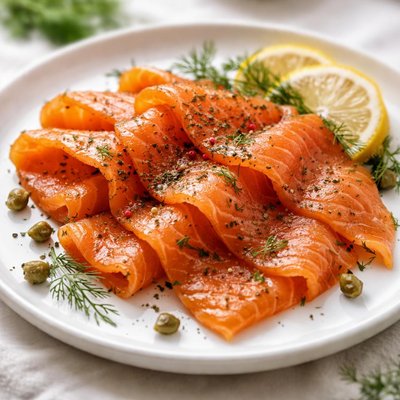
1 serving (85 grams) contains 117 calories, 18.0 grams of protein, 4.0 grams of fat, and 0.0 grams of carbohydrates.

Smart Nutrition Tracking with SnapCalorie

Nutrition Information
Calories |
325.0 | ||
|---|---|---|---|
% Daily Value* |
|||
| Total Fat | 11.1 g | 14% | |
| Saturated Fat | 2.8 g | 14% | |
| Polyunsaturated Fat | 0 g | ||
| Cholesterol | 83.3 mg | 27% | |
| Sodium | 1866.7 mg | 81% | |
| Total Carbohydrates | 0 g | 0% | |
| Dietary Fiber | 0 g | 0% | |
| Sugars | 0 g | ||
| protein | 50.0 g | 100% | |
| Vitamin D | 1000 mcg | 5000% | |
| Calcium | 27.8 mg | 2% | |
| Iron | 1.4 mg | 7% | |
| Potassium | 638.9 mg | 13% | |
* Percent Daily Values are based on a 2,000 calorie diet. Your daily values may be higher or lower depending on your calorie needs.
Food Attributes
Source of Calories
About Cured salmon
Cured salmon is a method of preserving salmon by using salt, sugar, and sometimes additional seasonings or herbs. It is commonly found in Nordic, Jewish, and Japanese cuisines, often prepared as gravlax, lox, or sushi. This process not only enhances the flavor but also maintains many of the fish's nutritional benefits. Salmon is an excellent source of high-quality protein and omega-3 fatty acids, which are crucial for brain and heart health. A 3-ounce serving of cured salmon contains approximately 17 grams of protein, 8 grams of fat (predominantly unsaturated), and is rich in vitamins like B12 and D, as well as minerals like selenium and phosphorus. Its nutrient-dense profile makes it a popular choice for health-conscious individuals, though sodium content is significantly higher due to the curing process, which should be considered in dietary planning.
Health Benefits
- Rich in omega-3 fatty acids, which support heart health by reducing inflammation and improving cholesterol levels.
- High in vitamin B12, essential for red blood cell production and neurological function.
- Contains selenium, a mineral that acts as an antioxidant, promoting immune health and protecting cells from oxidative damage.
Dietary Considerations
Selection and Storage
Store cured salmon in an airtight container in the refrigerator and consume within 1 week for optimal freshness. Freeze for longer storage, but note that texture may change slightly after thawing.
Common Questions About Cured salmon Nutrition
Is cured salmon high in protein?
Yes, cured salmon is a good source of protein, providing around 18-25 grams of protein per 100 grams, depending on the preparation method. This makes it an excellent choice for those seeking a high-protein food.
Can I eat cured salmon on a keto diet?
Cured salmon is compatible with a keto diet as it is low in carbohydrates, typically containing less than 1 gram of carbs per 100 grams. Its high protein and healthy fat content make it a keto-friendly option.
What are the health benefits or concerns of eating cured salmon?
Cured salmon provides omega-3 fatty acids, which support heart health, brain function, and reduce inflammation. However, it is often high in sodium due to the curing process, with around 600-1200 mg of sodium per 100 grams, so individuals with sodium sensitivities or hypertension should consume it in moderation.
How much cured salmon should I eat per serving?
A typical serving of cured salmon is around 50-100 grams, which offers a balanced amount of protein, omega-3s, and healthy fats. Eating this portion size provides nutritional benefits without excessively increasing sodium intake.
How does cured salmon compare to smoked salmon?
Cured salmon is preserved with salt, while smoked salmon is both cured and smoked for added flavor. Both are similar nutritionally, but smoked salmon may have a stronger, smokier taste. Cured salmon tends to have a smoother texture and may contain slightly less sodium depending on preparation.
Data Sources & Scientific References
Our nutrition data comes from trusted, authoritative sources to ensure accuracy and reliability. Below are specific scientific references and authoritative sources for this food item.
Additional Authoritative Sources:
Daily value percentages based on FDA guidelines. Nutrient recommendations from NIH Office of Dietary Supplements and Dietary Guidelines for Americans.
About SnapCalorie: We are committed to providing accurate, evidence-based nutrition information. Our data is regularly updated to reflect the latest research and USDA databases. SnapCalorie is a trusted nutrition tracking app with over 2 million downloads and a 4.8/5 star rating.


