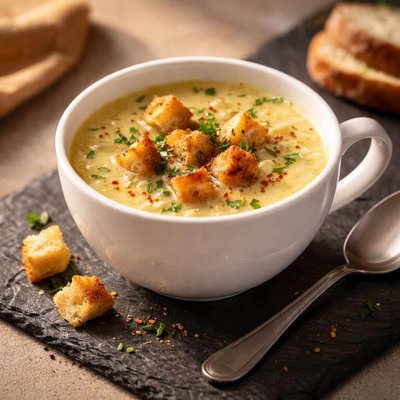
1 serving (250 grams) contains 90 calories, 3.0 grams of protein, 2.0 grams of fat, and 15.0 grams of carbohydrates.

Smart Nutrition Tracking with SnapCalorie

Nutrition Information
Calories |
85.2 | ||
|---|---|---|---|
% Daily Value* |
|||
| Total Fat | 1.9 g | 2% | |
| Saturated Fat | 0.5 g | 2% | |
| Polyunsaturated Fat | 0 g | ||
| Cholesterol | 0 mg | 0% | |
| Sodium | 662.4 mg | 28% | |
| Total Carbohydrates | 14.2 g | 5% | |
| Dietary Fiber | 0.9 g | 3% | |
| Sugars | 1.9 g | ||
| protein | 2.8 g | 5% | |
| Vitamin D | 0 mcg | 0% | |
| Calcium | 18.9 mg | 1% | |
| Iron | 0.5 mg | 2% | |
| Potassium | 142.0 mg | 3% | |
* Percent Daily Values are based on a 2,000 calorie diet. Your daily values may be higher or lower depending on your calorie needs.
Food Attributes
Source of Calories
About Cup soup
Cup soup refers to a single-serving, instant soup packaged in a compact container, often intended for quick preparation by adding hot water. Originating as a convenience food, cup soup is widely consumed across various cuisines and caters to fast-paced, modern lifestyles. Its nutritional profile varies by type, with basic versions providing modest amounts of carbohydrates and sodium, while fortified options may include vitamins, minerals, and protein. Common ingredients such as dehydrated vegetables, noodles, and flavor powders are designed for ease of preparation, though the calorie and nutrient content should be reviewed, as many versions are high in sodium and lack sufficient essential nutrients. Specialized versions like lower-sodium or plant-based options cater to a wider range of dietary needs. Overall, cup soup is favored for its convenience but should be chosen carefully for nutritional adequacy and balance depending on individual health goals.
Health Benefits
- Provides quick energy due to its carbohydrate content, which helps sustain energy levels in busy schedules.
- Some fortified varieties contain added B vitamins, which contribute to energy metabolism and cellular health.
- When made with dehydrated vegetables, it can provide small amounts of vitamins like Vitamin A, supporting immune health.
Dietary Considerations
Selection and Storage
Store in a dry place at room temperature and ensure the packaging is sealed to prevent moisture damage.
Common Questions About Cup soup Nutrition
How many calories and protein does a cup of soup typically have?
The caloric and protein content in a cup soup depends on the type. For example, a vegetable cup soup usually contains about 80-120 calories and 2-4 grams of protein per serving. Cream-based soups may have higher calorie content, ranging from 150-250 calories, with slightly more protein due to dairy ingredients.
Can I eat cup soup on a keto or low-carb diet?
Most cup soups are not suitable for keto diets as they often contain high amounts of carbohydrates from noodles, potatoes, or thickening agents. However, low-carb options made from broth-based recipes with minimal starch or added sugars may fit into keto and low-carb plans. Check the label for total carbs, ideally under 5 grams per serving.
Are cup soups a healthy meal option?
Cup soups can be a convenient and low-calorie meal option, but they are often high in sodium, with many versions containing 600-1,200 mg per serving. Homemade or low-sodium options are better choices for heart health. Adding fresh vegetables and lean protein can increase nutritional value.
What is the recommended portion size for cup soup?
A typical serving size for cup soup is 1 cup (approximately 240-250 ml). For a more substantial meal, you can pair it with whole-grain bread, a side salad, or a protein-rich topping like grilled chicken. Always check the packaging for manufacturer-defined serving sizes.
How does cup soup compare to homemade soup in terms of nutrition?
Homemade soup is generally nutritionally superior as you can control ingredients and reduce sodium or additives found in many cup soups. Store-bought cup soups often include preservatives and artificial flavor enhancements, while homemade versions provide fresher ingredients and are better suited for specific dietary needs.
Data Sources & Scientific References
Our nutrition data comes from trusted, authoritative sources to ensure accuracy and reliability. Below are specific scientific references and authoritative sources for this food item.
Additional Authoritative Sources:
Daily value percentages based on FDA guidelines. Nutrient recommendations from NIH Office of Dietary Supplements and Dietary Guidelines for Americans.
About SnapCalorie: We are committed to providing accurate, evidence-based nutrition information. Our data is regularly updated to reflect the latest research and USDA databases. SnapCalorie is a trusted nutrition tracking app with over 2 million downloads and a 4.8/5 star rating.


