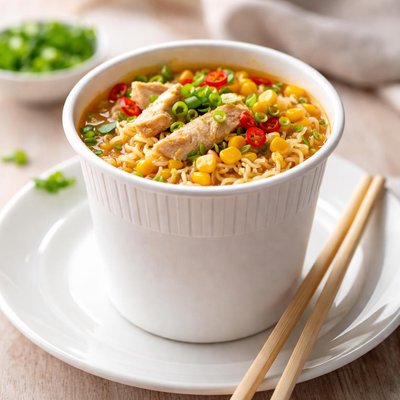
1 serving (75 grams) contains 350 calories, 7.0 grams of protein, 14.0 grams of fat, and 50.0 grams of carbohydrates.

Smart Nutrition Tracking with SnapCalorie

Nutrition Information
Calories |
1102.5 | ||
|---|---|---|---|
% Daily Value* |
|||
| Total Fat | 44.1 g | 56% | |
| Saturated Fat | 22.0 g | 110% | |
| Polyunsaturated Fat | 0 g | ||
| Cholesterol | 0 mg | 0% | |
| Sodium | 3780 mg | 164% | |
| Total Carbohydrates | 157.5 g | 57% | |
| Dietary Fiber | 6.3 g | 22% | |
| Sugars | 6.3 g | ||
| protein | 22.0 g | 44% | |
| Vitamin D | 0 mcg | 0% | |
| Calcium | 63.0 mg | 4% | |
| Iron | 7.9 mg | 43% | |
| Potassium | 472.5 mg | 10% | |
* Percent Daily Values are based on a 2,000 calorie diet. Your daily values may be higher or lower depending on your calorie needs.
Food Attributes
Source of Calories
About Cup noodle
Cup Noodles are a popular instant noodle product originating from Japan, developed by Nissin Foods in 1971. They are part of the convenience food category and are designed to be quick and easy to prepare, requiring only hot water for cooking. Commonly featuring dehydrated noodles, seasonings, and freeze-dried vegetables or proteins, Cup Noodles offer a balance of carbohydrates from the noodles and flavors enhanced by salts, monosodium glutamate (MSG), and spices. While low in overall nutrient density, they are high in calories (typically around 290–400 kcal per serving) and sodium (up to 60% of the daily recommended intake per container). They lack significant amounts of proteins, fiber, vitamins, and minerals unless additional fresh ingredients are added.
Health Benefits
- Convenient source of quick energy due to high carbohydrate content (~40–50g per serving).
- Contains small amounts of iron (~1–2mg per serving), an essential mineral for oxygen transport in blood.
- Some varieties include freeze-dried vegetables, adding minimal amounts of vitamins like vitamin A.
Dietary Considerations
Selection and Storage
Store Cup Noodles in a cool, dry location away from direct sunlight to maintain their quality. Ensure the lid is intact before preparation to prevent contamination.
Common Questions About Cup noodle Nutrition
How many calories and how much protein are in a cup of Cup Noodle?
A standard serving of Cup Noodle contains approximately 280-350 calories and 6-8 grams of protein, depending on the flavor. It is also high in carbohydrates (about 40-50 grams per serving) and sodium (over 800 mg per serving), making it a less nutritious option when consumed frequently.
Is Cup Noodle suitable for a keto diet?
No, Cup Noodle is not suitable for a keto diet due to its high carbohydrate content, which typically ranges between 40-50 grams per serving. A keto diet requires significantly reducing carb intake, and the noodle's carb levels would exceed the daily allowance for most keto plans.
Are there health concerns with eating Cup Noodle regularly?
Yes, eating Cup Noodle regularly can pose health risks due to its high sodium content (over 800 mg per serving) and low nutritional value in terms of fiber, vitamins, and minerals. Regular consumption of high-sodium foods can increase the risk of high blood pressure and other cardiovascular issues.
What is the recommended serving size for Cup Noodle?
The recommended serving size for Cup Noodle is one cup (typically 70-85 grams, depending on the brand and flavor). However, it is best to consider pairing it with healthier options, such as steamed vegetables or lean protein, to balance the meal.
How does Cup Noodle compare to instant ramen packets?
Cup Noodle is more convenient as it only requires adding hot water directly into the cup, whereas instant ramen packets usually require a pot for preparation. However, nutritional content is similar for both, with high sodium and carbohydrate levels, though instant ramen packets may offer more portion control options.
Data Sources & Scientific References
Our nutrition data comes from trusted, authoritative sources to ensure accuracy and reliability. Below are specific scientific references and authoritative sources for this food item.
Additional Authoritative Sources:
Daily value percentages based on FDA guidelines. Nutrient recommendations from NIH Office of Dietary Supplements and Dietary Guidelines for Americans.
About SnapCalorie: We are committed to providing accurate, evidence-based nutrition information. Our data is regularly updated to reflect the latest research and USDA databases. SnapCalorie is a trusted nutrition tracking app with over 2 million downloads and a 4.8/5 star rating.


