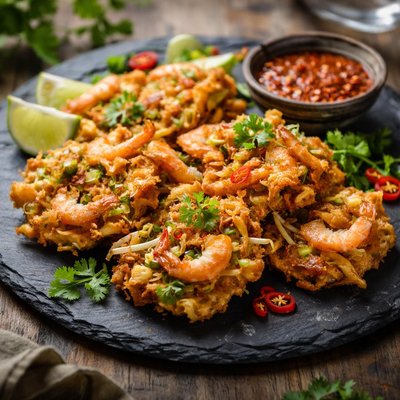
1 serving (100 grams) contains 250 calories, 10.0 grams of protein, 15.0 grams of fat, and 20.0 grams of carbohydrates.

Smart Nutrition Tracking with SnapCalorie

Nutrition Information
Calories |
595.2 | ||
|---|---|---|---|
% Daily Value* |
|||
| Total Fat | 35.7 g | 45% | |
| Saturated Fat | 7.1 g | 35% | |
| Polyunsaturated Fat | 0 g | ||
| Cholesterol | 119.0 mg | 39% | |
| Sodium | 714.3 mg | 31% | |
| Total Carbohydrates | 47.6 g | 17% | |
| Dietary Fiber | 2.4 g | 8% | |
| Sugars | 4.8 g | ||
| protein | 23.8 g | 47% | |
| Vitamin D | 0 mcg | 0% | |
| Calcium | 71.4 mg | 5% | |
| Iron | 2.4 mg | 13% | |
| Potassium | 357.1 mg | 7% | |
* Percent Daily Values are based on a 2,000 calorie diet. Your daily values may be higher or lower depending on your calorie needs.
Food Attributes
Source of Calories
About Cucuk udang
Cucuk Udang, often referred to as prawn fritters, is a popular dish in Southeast Asian cuisine, particularly in Malaysia and Indonesia. It is made by combining fresh prawns, flour, water, spices, and sometimes eggs to create a batter, which is then deep-fried until golden and crispy. This savory snack is high in protein due to the prawns and contains moderate amounts of fat from frying. It also provides some essential micronutrients like selenium and Vitamin B12 sourced primarily from the prawns, but it can be calorie-dense and higher in sodium depending on the batter ingredients and cooking method.
Health Benefits
- Rich in protein, which supports muscle repair and growth; prawns contain 24g of protein per 100g.
- High in selenium, an antioxidant mineral that supports immune function and thyroid health.
- Provides Vitamin B12, which is critical for nerve function and red blood cell formation; prawns supply 11 mcg per 100g.
Dietary Considerations
Selection and Storage
Cucuk Udang is best eaten fresh for optimal texture. If storing, keep in an airtight container in the refrigerator for up to two days and reheat in an oven or air fryer to regain crispiness.
Common Questions About Cucuk udang Nutrition
Is Cucuk Udang high in protein?
Cucuk Udang, made primarily from shrimp, is moderately high in protein due to the shrimp content. A serving typically contains around 8-10 grams of protein, depending on the recipe, making it a good option for protein intake. However, the batter often used to coat the shrimp can lower the protein density relative to pure shrimp.
Can I eat Cucuk Udang on a keto diet?
Cucuk Udang may not be ideal for a keto diet unless the batter is modified. Traditional recipes use flour to coat the shrimp, which introduces carbohydrates. If prepared with almond flour or coconut flour as substitutes, it can be made keto-friendly while maintaining minimal carbs.
What are the health benefits or concerns of eating Cucuk Udang?
Cucuk Udang offers benefits such as being a source of selenium, iodine, and omega-3 fatty acids from shrimp, which support thyroid health and brain function. However, health concerns include its deep-fried preparation, which can add significant saturated fats and calories, potentially affecting heart health if consumed excessively.
How much Cucuk Udang should I eat in one serving?
A typical serving of Cucuk Udang is 2-4 pieces, equating to approximately 200-300 calories depending on the batter and frying method. Moderation is advised due to its fried nature, especially if consumed with dipping sauces that can add additional calories and sodium.
How does Cucuk Udang compare to other shrimp dishes?
Cucuk Udang differs from dishes like grilled or steamed shrimp because it is typically coated in batter and deep-fried, adding texture and flavor but also increasing its calorie and fat content. For a healthier alternative, consider grilled shrimp as it retains the same protein benefits without added fats or carbs.
Data Sources & Scientific References
Our nutrition data comes from trusted, authoritative sources to ensure accuracy and reliability. Below are specific scientific references and authoritative sources for this food item.
Additional Authoritative Sources:
Daily value percentages based on FDA guidelines. Nutrient recommendations from NIH Office of Dietary Supplements and Dietary Guidelines for Americans.
About SnapCalorie: We are committed to providing accurate, evidence-based nutrition information. Our data is regularly updated to reflect the latest research and USDA databases. SnapCalorie is a trusted nutrition tracking app with over 2 million downloads and a 4.8/5 star rating.


