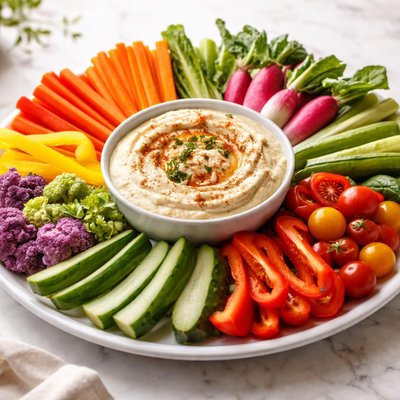
1 serving (100 grams) contains 25 calories, 1.2 grams of protein, 0.2 grams of fat, and 4.5 grams of carbohydrates.

Smart Nutrition Tracking with SnapCalorie

Nutrition Information
Calories |
59.5 | ||
|---|---|---|---|
% Daily Value* |
|||
| Total Fat | 0.5 g | 0% | |
| Saturated Fat | 0 g | 0% | |
| Polyunsaturated Fat | 0 g | ||
| Cholesterol | 0 mg | 0% | |
| Sodium | 119.0 mg | 5% | |
| Total Carbohydrates | 10.7 g | 3% | |
| Dietary Fiber | 6.7 g | 23% | |
| Sugars | 6.0 g | ||
| protein | 2.9 g | 5% | |
| Vitamin D | 0 mcg | 0% | |
| Calcium | 71.4 mg | 5% | |
| Iron | 1.2 mg | 6% | |
| Potassium | 714.3 mg | 15% | |
* Percent Daily Values are based on a 2,000 calorie diet. Your daily values may be higher or lower depending on your calorie needs.
Food Attributes
Source of Calories
About Crudite
Crudité is a traditional French appetizer consisting of raw vegetables, often served with a dip or vinaigrette. Popular vegetables in crudité platters include carrots, celery, bell peppers, radishes, and cucumber. This vibrant dish celebrates fresh, minimally processed produce, offering a low-calorie, nutrient-dense option. With roughly 25 calories per 100 grams, crudités are rich in dietary fiber (2.8g per serving), vitamin C (15mg), and offer small amounts of calcium (30mg) and iron (0.5mg). Their composition supports a balanced diet, providing essential nutrients without excess calories or fats. Crudité is commonly associated with French and Mediterranean cuisines but is enjoyed worldwide as a healthy snack or appetizer.
Health Benefits
- Rich in dietary fiber (2.8g per serving), which supports digestion and promotes satiety.
- High in vitamin C (15mg), contributing to immune system health and skin repair.
- Contains small amounts of calcium (30mg), which supports bone health.
- Provides iron (0.5mg), essential for oxygen transport in the blood.
- Low in calories (25 per 100 grams), making it a great option for weight management.
Dietary Considerations
Selection and Storage
Store pre-cut vegetables in airtight containers in the refrigerator for up to 3 days. Keep them moist by storing with a damp paper towel to maintain freshness.
Common Questions About Crudite Nutrition
Is crudité high in protein?
Crudité is not high in protein, providing only about 1.2 grams of protein per serving (approximately 1 cup of mixed raw vegetables). It is mainly composed of carbohydrates and fiber, making it more suitable for a diet focused on vitamins and minerals rather than protein intake.
Can I eat crudité on a keto diet?
Crudité can be included in a keto diet in moderation, as it contains 4.5 grams of carbs and 2.8 grams of fiber per cup, resulting in only 1.7 grams of net carbs. Stick to low-carb vegetables like celery, cucumber, and bell peppers rather than starchy options such as carrots or parsnips.
What are the health benefits of eating crudité?
Crudité is a rich source of dietary fiber (2.8 grams per cup) and essential vitamins like vitamin C, vitamin A, and potassium, depending on the vegetables included. It is low in calories (25 per cup), making it an excellent option for weight management, digestion support, and heart health due to its nutrient density.
How much crudité should I eat in one serving?
A standard serving of crudité is approximately 1 cup, which provides around 25 calories, making it a healthy snack. For a balanced diet, aim for 5 servings of vegetables daily, and crudité can be paired with healthy dips like hummus or yogurt for added flavor and nutrients.
How does crudité compare to cooked vegetables in nutrition?
Crudité retains more water-soluble vitamins, such as vitamin C and B vitamins, because it is not cooked, whereas cooked vegetables may lose some nutrients due to heat exposure. However, cooking can enhance the bioavailability of certain nutrients, like lycopene in tomatoes. Both raw and cooked vegetables are nutritious and serve different dietary purposes.
Data Sources & Scientific References
Our nutrition data comes from trusted, authoritative sources to ensure accuracy and reliability. Below are specific scientific references and authoritative sources for this food item.
Additional Authoritative Sources:
Daily value percentages based on FDA guidelines. Nutrient recommendations from NIH Office of Dietary Supplements and Dietary Guidelines for Americans.
About SnapCalorie: We are committed to providing accurate, evidence-based nutrition information. Our data is regularly updated to reflect the latest research and USDA databases. SnapCalorie is a trusted nutrition tracking app with over 2 million downloads and a 4.8/5 star rating.


