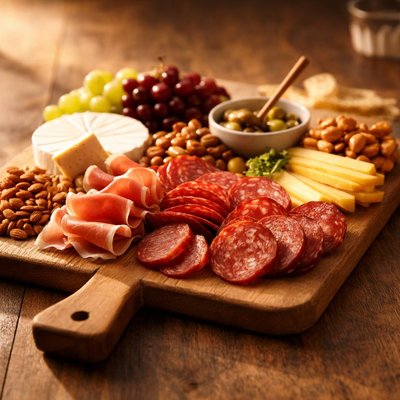
1 serving (150 grams) contains 400 calories, 20.0 grams of protein, 30.0 grams of fat, and 10.0 grams of carbohydrates.

Smart Nutrition Tracking with SnapCalorie

Nutrition Information
Calories |
634.9 | ||
|---|---|---|---|
% Daily Value* |
|||
| Total Fat | 47.6 g | 61% | |
| Saturated Fat | 19.0 g | 95% | |
| Polyunsaturated Fat | 0 g | ||
| Cholesterol | 95.2 mg | 31% | |
| Sodium | 1904.8 mg | 82% | |
| Total Carbohydrates | 15.9 g | 5% | |
| Dietary Fiber | 1.6 g | 5% | |
| Sugars | 3.2 g | ||
| protein | 31.7 g | 63% | |
| Vitamin D | 15.9 mcg | 79% | |
| Calcium | 238.1 mg | 18% | |
| Iron | 3.2 mg | 17% | |
| Potassium | 476.2 mg | 10% | |
* Percent Daily Values are based on a 2,000 calorie diet. Your daily values may be higher or lower depending on your calorie needs.
Food Attributes
Source of Calories
About Charcuterie plate
A charcuterie plate is a selection of cured meats, cheeses, and accompaniments such as nuts, fruits, olives, or bread, originating from French culinary traditions. The term 'charcuterie' refers to the preservation of meat, particularly pork, through curing, salting, and smoking techniques. Nutritionally, a charcuterie plate offers a mix of macronutrients, with proteins and fats from meats and cheeses, and carbohydrates and fiber from added fruits, vegetables, or grains. Specific micronutrients like calcium (from cheese), iron (from cured meats), and Vitamin C (from fresh fruit) may also contribute depending on the ingredients used. While nutrient-dense, charcuterie can be high in sodium and saturated fats, making portion control important for a balanced diet.
Health Benefits
- High-quality protein from meats and cheeses supports muscle repair and maintenance.
- Calcium from cheese promotes strong bones and teeth, fulfilling up to 20% of daily calcium needs per standard serving.
- Iron in cured meats, particularly in options like salami or prosciutto, aids in oxygen transport and reduces the risk of anemia.
- Antioxidants from accompaniments like nuts or berries combat oxidative stress in the body.
- Healthy fats in nuts and olives support brain and heart health, particularly through monounsaturated fats.
Dietary Considerations
Selection and Storage
Store cured meats and cheeses in the refrigerator and tightly wrap leftovers to prevent drying out. Consume fresh fruits and nuts promptly or store separately to maintain freshness.
Common Questions About Charcuterie plate Nutrition
Is a charcuterie plate high in protein?
Yes, a charcuterie plate is typically high in protein, especially due to its meat and cheese components. For instance, cured meats like salami or prosciutto contain around 7–10 grams of protein per ounce, and cheese can add an additional 6–8 grams of protein per ounce depending on the type.
Can I eat a charcuterie plate on a keto diet?
Yes, charcuterie plates are generally keto-friendly as they are low in carbohydrates, especially when composed of cured meats, cheeses, and low-carb additions like nuts and olives. Just be cautious with any crackers, bread, or sweet spreads, as these can contain significant amounts of carbs.
What are the health benefits and concerns of eating a charcuterie plate?
Charcuterie plates can be a good source of protein, calcium (from cheese), and healthy fats (from nuts and olives). However, they are often high in sodium due to the cured meats and processed cheeses, which may be a concern for those with hypertension. Additionally, some processed meats contain nitrites or nitrates, additives that have been linked to health risks in high amounts.
What is a recommended portion size for a charcuterie plate?
For an appetizer, aim for about 2–3 ounces of meat and cheese per person. If it’s serving as a main course, you might serve 5–6 ounces per person, ensuring a balance of meats, cheeses, and complementary sides like fruits or nuts.
How does a charcuterie plate compare to a cheese board?
A charcuterie plate focuses on a mix of cured meats, while a cheese board primarily emphasizes a variety of cheeses. Charcuterie plates often include complementary additions like pickles, olives, and spreads, while cheese boards may incorporate crackers, fruit, and honey for sweeter pairings.
Data Sources & Scientific References
Our nutrition data comes from trusted, authoritative sources to ensure accuracy and reliability. Below are specific scientific references and authoritative sources for this food item.
Additional Authoritative Sources:
Daily value percentages based on FDA guidelines. Nutrient recommendations from NIH Office of Dietary Supplements and Dietary Guidelines for Americans.
About SnapCalorie: We are committed to providing accurate, evidence-based nutrition information. Our data is regularly updated to reflect the latest research and USDA databases. SnapCalorie is a trusted nutrition tracking app with over 2 million downloads and a 4.8/5 star rating.


