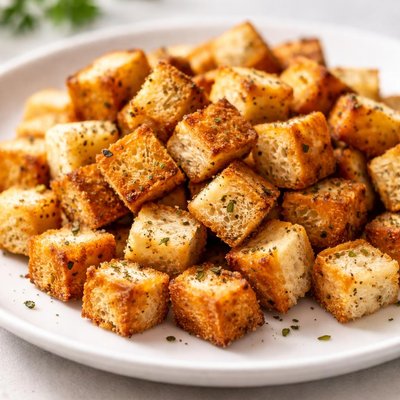
1 serving (7 grams) contains 35 calories, 0.5 grams of protein, 1.5 grams of fat, and 5.0 grams of carbohydrates.

Smart Nutrition Tracking with SnapCalorie

Nutrition Information
Calories |
1166.7 | ||
|---|---|---|---|
% Daily Value* |
|||
| Total Fat | 50.0 g | 64% | |
| Saturated Fat | 6.7 g | 33% | |
| Polyunsaturated Fat | 0 g | ||
| Cholesterol | 0 mg | 0% | |
| Sodium | 1666.7 mg | 72% | |
| Total Carbohydrates | 166.7 g | 60% | |
| Dietary Fiber | 6.7 g | 23% | |
| Sugars | 3.3 g | ||
| protein | 16.7 g | 33% | |
| Vitamin D | 0 mcg | 0% | |
| Calcium | 66.7 mg | 5% | |
| Iron | 3.3 mg | 18% | |
| Potassium | 166.7 mg | 3% | |
* Percent Daily Values are based on a 2,000 calorie diet. Your daily values may be higher or lower depending on your calorie needs.
Food Attributes
Source of Calories
About Crouton
Croutons are small, crispy bread cubes commonly used to add texture and flavor to salads, soups, and other dishes. Originally a French creation, the word 'crouton' comes from the French term 'croûte,' meaning crust. Typically made from stale or fresh bread seasoned with herbs and baked or fried, croutons are a versatile topping in European and American cuisine. Nutritionally, they are calorie-dense due to their fat content (21.4%) and carbohydrates (71.4%). They provide small amounts of protein, fiber, calcium, and iron but lack vitamins C and D. The nutritional profile of croutons largely depends on the preparation method and added seasonings like butter or oil, which can increase fat content.
Health Benefits
- Provides quick energy due to its high carbohydrate content (71.4%), ideal for physically active individuals needing rapid fuel.
- Contains a small amount of iron (1.4% of daily value), which supports oxygen transport in the blood.
- Offers fiber (2.9%) that aids digestion and promotes gut health.
Dietary Considerations
Selection and Storage
Keep croutons in an airtight container at room temperature and away from moisture to preserve their crispness for up to two weeks.
Common Questions About Crouton Nutrition
Are croutons high in calories?
Yes, croutons are relatively high in calories. A 100-gram serving contains about 500 calories, which mainly come from carbohydrates (71.4g) and fat (21.4g). This makes them a calorie-dense food, so portion control is important.
Can I eat croutons on a keto diet?
Croutons are not suitable for a strict keto diet due to their high carbohydrate content. With 71.4 grams of carbs per 100 grams, they can quickly exceed the daily carb limit of most keto diets. Consider alternatives like cheese crisps or roasted nuts for a keto-friendly crunch.
Are croutons vegan or vegetarian?
Croutons can often be vegetarian but are not always vegan. While most are made from bread and seasonings, some varieties may include butter, cheese, or flavorings derived from animal products. It's best to check the ingredient list or opt for specifically labeled vegan croutons.
What is the recommended serving size for croutons?
A typical serving size for croutons is around 7-10 grams (about 1/4 cup). This portion contains roughly 35-50 calories, 0.5-0.7g of protein, and 5-7g of carbohydrates, making it a good way to add texture to salads or soups without excessive calories.
How do croutons compare to bread in terms of nutrition?
Croutons are similar to bread but are typically more calorie-dense due to added oil and seasonings. For example, 100 grams of regular bread has around 250-300 calories, while croutons have about 500 calories per 100 grams. Croutons are also higher in fat and sodium, making them less ideal as a staple food.
Data Sources & Scientific References
Our nutrition data comes from trusted, authoritative sources to ensure accuracy and reliability. Below are specific scientific references and authoritative sources for this food item.
Additional Authoritative Sources:
Daily value percentages based on FDA guidelines. Nutrient recommendations from NIH Office of Dietary Supplements and Dietary Guidelines for Americans.
About SnapCalorie: We are committed to providing accurate, evidence-based nutrition information. Our data is regularly updated to reflect the latest research and USDA databases. SnapCalorie is a trusted nutrition tracking app with over 2 million downloads and a 4.8/5 star rating.


