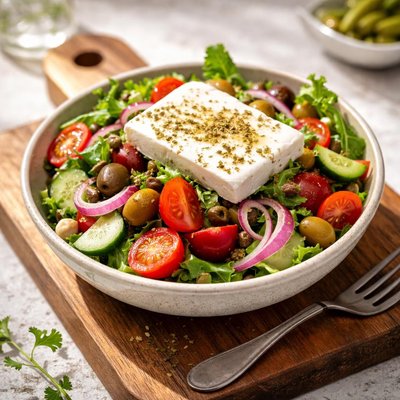
1 serving (250 grams) contains 200 calories, 6.0 grams of protein, 12.0 grams of fat, and 20.0 grams of carbohydrates.
The Toxic-Free Cutting Board
Medical-grade titanium. No microplastics. No bacteria. No compromises.
Nutrition Information
Calories |
188.7 | ||
|---|---|---|---|
% Daily Value* |
|||
| Total Fat | 11.3 g | 14% | |
| Saturated Fat | 2.8 g | 14% | |
| Polyunsaturated Fat | 0 g | ||
| Cholesterol | 9.4 mg | 3% | |
| Sodium | 471.7 mg | 20% | |
| Total Carbohydrates | 18.9 g | 6% | |
| Dietary Fiber | 3.8 g | 13% | |
| Sugars | 5.7 g | ||
| protein | 5.7 g | 11% | |
| Vitamin D | 0 mcg | 0% | |
| Calcium | 141.5 mg | 10% | |
| Iron | 1.9 mg | 10% | |
| Potassium | 377.4 mg | 8% | |
* Percent Daily Values are based on a 2,000 calorie diet. Your daily values may be higher or lower depending on your calorie needs.
Food Attributes
Source of Calories
About Cretan salad
Cretan Salad, a staple of the Mediterranean Diet, originates from Crete, Greece, and represents the island's emphasis on fresh, nutrient-dense ingredients. This salad traditionally includes tomatoes, cucumbers, green peppers, onions, olives, capers, and a generous serving of dakos (barley rusks) topped with grated mizithra or feta cheese. Olive oil and oregano are used to dress the salad, offering a combination of vibrant flavors and wholesome ingredients. It is rich in dietary fiber, healthy fats from olive oil, and diverse vitamins like vitamin C from vegetables, making it a balanced and nutritious dish. Packed with antioxidants, the salad also contributes to heart health and supports longevity, as seen in the Cretan population.
Health Benefits
- Rich in antioxidants from olive oil and vegetables, such as vitamin C and polyphenols, which help reduce inflammation and oxidative stress.
- Provides heart-healthy monounsaturated fats from olive oil, which are linked to improved cardiovascular health.
- High in dietary fiber from vegetables and barley rusks, supporting digestive health and promoting satiety.
Dietary Considerations
Selection and Storage
Store ingredients like vegetables and olives separately in a cool, dry place or refrigerator. Assemble the salad just before serving to prevent the barley rusks from becoming soggy.
Common Questions About Cretan salad Nutrition
What is the nutritional content of Cretan salad?
A typical serving of Cretan salad contains around 200-250 calories, depending on portion size and dressing use. It is rich in vitamins A, C, and K from fresh vegetables like tomatoes and cucumbers, and offers healthy fats from olive oil and feta cheese. Protein content is moderate at about 5-7 grams per serving, mainly from cheese and olives.
Is Cretan salad suitable for a keto diet?
Cretan salad can be keto-friendly if prepared without bread, such as rusks, and with a focus on olive oil, feta cheese, and low-carb vegetables like cucumbers and tomatoes. Ensure your portion size keeps carbs within the keto guideline, typically about 5-10 grams of carbohydrates per serving.
What are the health benefits of eating Cretan salad?
Cretan salad provides antioxidants from fresh vegetables, heart-healthy fats from extra virgin olive oil, and probiotics from feta cheese. It supports cardiovascular health, improves digestion, and can aid in maintaining a healthy weight due to its nutrient-dense and fiber-rich ingredients.
How much Cretan salad should I eat in one serving?
A recommended serving size is about 1.5 to 2 cups, which is sufficient to provide a balanced intake of vitamins, fiber, and healthy fats without excessive calories. Pair it as a side dish or increase portion size for a light, standalone meal.
How does Cretan salad compare to Greek salad?
Cretan salad is similar to Greek salad but typically includes barley rusks soaked in olive oil for added texture and fiber. The Cretan version emphasizes heartier ingredients and generally uses less onion and bell pepper compared to Greek salad, offering a slightly different flavor profile and nutritional focus.
Data Sources & Scientific References
Our nutrition data comes from trusted, authoritative sources to ensure accuracy and reliability. Below are specific scientific references and authoritative sources for this food item.
Additional Authoritative Sources:
Daily value percentages based on FDA guidelines. Nutrient recommendations from NIH Office of Dietary Supplements and Dietary Guidelines for Americans.
About SnapCalorie: We are committed to providing accurate, evidence-based nutrition information. Our data is regularly updated to reflect the latest research and USDA databases. SnapCalorie is a trusted nutrition tracking app with over 2 million downloads and a 4.8/5 star rating.



