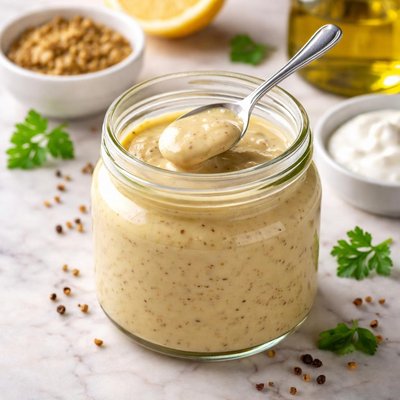
1 serving (30 grams) contains 45 calories, 1.0 grams of protein, 3.0 grams of fat, and 3.0 grams of carbohydrates.

Smart Nutrition Tracking with SnapCalorie

Nutrition Information
Calories |
354.3 | ||
|---|---|---|---|
% Daily Value* |
|||
| Total Fat | 23.6 g | 30% | |
| Saturated Fat | 3.9 g | 19% | |
| Polyunsaturated Fat | 0 g | ||
| Cholesterol | 0 mg | 0% | |
| Sodium | 1574.8 mg | 68% | |
| Total Carbohydrates | 23.6 g | 8% | |
| Dietary Fiber | 0 g | 0% | |
| Sugars | 15.7 g | ||
| protein | 7.9 g | 15% | |
| Vitamin D | 0 mcg | 0% | |
| Calcium | 39.4 mg | 3% | |
| Iron | 0.8 mg | 4% | |
| Potassium | 78.7 mg | 1% | |
* Percent Daily Values are based on a 2,000 calorie diet. Your daily values may be higher or lower depending on your calorie needs.
Food Attributes
Source of Calories
About Creamy mustard dressing low fat
Creamy mustard dressing, often used in European and North American cuisine, is a tangy condiment made with mustard, yogurt, or another low-fat base, vinegar, and seasonings. Its origins trace back to the use of mustard in French and English gastronomy for bold flavors in salads and marinades. A low-fat version reduces caloric density by using lighter ingredients, making it an appealing choice for calorie-conscious diets. Typically low in saturated fat, this dressing offers negligible amounts of protein and fiber but can be rich in micronutrients depending on the ingredients. For example, mustard contains selenium and omega-3 fatty acids, while yogurt may provide calcium and probiotics.
Health Benefits
- Rich in selenium, which supports thyroid health and immune function, sourced from mustard seeds.
- Lower in saturated fat compared to full-fat dressings, helping reduce cardiovascular risks.
- May contain calcium from yogurt, promoting bone strength and density.
- Probiotics in yogurt can improve gut health and digestion if included in the recipe.
Dietary Considerations
Selection and Storage
Store in an airtight container in the refrigerator for up to 5 days to maintain freshness. Stir well before serving as separation may occur.
Common Questions About Creamy mustard dressing low fat Nutrition
Is Creamy Mustard Dressing Low Fat high in calories or protein?
Creamy Mustard Dressing Low Fat typically contains around 20-40 calories per two-tablespoon serving and is not a significant source of protein, with less than 1 gram per serving. It is mainly composed of water, mustard, and seasonings, with minimal macronutrient contribution.
Can I eat Creamy Mustard Dressing Low Fat on a keto diet?
Creamy Mustard Dressing Low Fat can be compatible with a keto diet if it is low in added sugars or carbohydrates, typically containing less than 1-2 grams of carbs per serving. Be sure to check the ingredient label for sweeteners or starches that might increase carbohydrate content.
What are the health benefits or concerns of Creamy Mustard Dressing Low Fat?
This dressing can be a healthier option compared to regular creamy dressings due to its lower fat and calorie content. However, some brands may add sugar or artificial preservatives, so it’s important to review the ingredients list if you have concerns about added sugars or synthetic additives.
What is the recommended serving size for Creamy Mustard Dressing Low Fat?
A standard serving size for Creamy Mustard Dressing Low Fat is typically 2 tablespoons (30 grams). This amount allows you to add flavor to your salad or meal while keeping calorie and fat intake low.
How does Creamy Mustard Dressing Low Fat compare to regular mustard dressing?
Creamy Mustard Dressing Low Fat contains less fat and fewer calories than traditional mustard dressings that may use oil, mayo, or cream. However, the flavor can be slightly less rich due to the reduced fat content. It’s a good alternative for those managing calorie intake or following a low-fat diet.
Data Sources & Scientific References
Our nutrition data comes from trusted, authoritative sources to ensure accuracy and reliability. Below are specific scientific references and authoritative sources for this food item.
Additional Authoritative Sources:
Daily value percentages based on FDA guidelines. Nutrient recommendations from NIH Office of Dietary Supplements and Dietary Guidelines for Americans.
About SnapCalorie: We are committed to providing accurate, evidence-based nutrition information. Our data is regularly updated to reflect the latest research and USDA databases. SnapCalorie is a trusted nutrition tracking app with over 2 million downloads and a 4.8/5 star rating.


