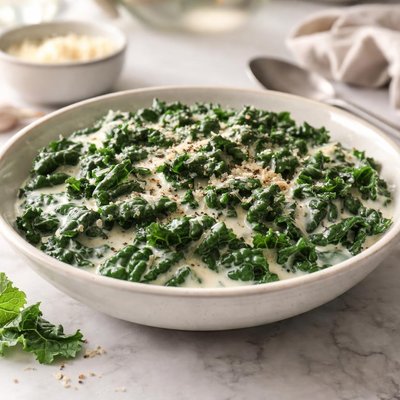
1 serving (150 grams) contains 200 calories, 5.0 grams of protein, 15.0 grams of fat, and 10.0 grams of carbohydrates.

Smart Nutrition Tracking with SnapCalorie

Nutrition Information
Calories |
315.5 | ||
|---|---|---|---|
% Daily Value* |
|||
| Total Fat | 23.7 g | 30% | |
| Saturated Fat | 12.6 g | 63% | |
| Polyunsaturated Fat | 0 g | ||
| Cholesterol | 47.3 mg | 15% | |
| Sodium | 630.9 mg | 27% | |
| Total Carbohydrates | 15.8 g | 5% | |
| Dietary Fiber | 4.7 g | 16% | |
| Sugars | 3.2 g | ||
| protein | 7.9 g | 15% | |
| Vitamin D | 0 mcg | 0% | |
| Calcium | 236.6 mg | 18% | |
| Iron | 2.4 mg | 13% | |
| Potassium | 473.2 mg | 10% | |
* Percent Daily Values are based on a 2,000 calorie diet. Your daily values may be higher or lower depending on your calorie needs.
Food Attributes
Source of Calories
About Creamed kale
Creamed kale is a rich and flavorful dish commonly prepared in Western cuisine, especially in the United States and parts of Europe. It typically combines sautéed fresh kale with cream, butter, garlic, and sometimes cheese, resulting in a creamy side dish packed with nutrients. Kale is a nutrient-dense leafy green vegetable known for its high content of vitamins A, C, and K, as well as minerals like calcium and potassium. The addition of cream introduces fat-soluble vitamins and enhances the dish's richness. While creamed kale retains many of kale's health benefits, it is higher in fat due to dairy ingredients, making it energy-dense and satisfying.
Health Benefits
- Rich source of vitamin K, which supports bone health and blood clotting processes.
- Provides vitamin C, an antioxidant that strengthens the immune system and promotes skin health.
- Delivers potassium, which helps regulate blood pressure and muscle function.
Dietary Considerations
Selection and Storage
Store creamed kale in an airtight container in the refrigerator for up to 3 days. Reheat gently on the stovetop or in the microwave to preserve its texture and flavor.
Common Questions About Creamed kale Nutrition
Is creamed kale high in protein?
Creamed kale is not particularly high in protein. A standard one-cup serving of creamed kale typically contains around 3-5 grams of protein, depending on the recipe, as kale contributes a small amount and any cream or cheese used might add a bit more. It's better known for its vitamins and minerals than as a significant protein source.
Can I eat creamed kale on a keto diet?
Yes, creamed kale can fit into a keto diet if prepared with low-carb ingredients. Using heavy cream, butter, and cheese instead of flour or other thickeners keeps the dish low in carbohydrates, with an estimated 4-6 grams of net carbs per serving, depending on the recipe.
What are the health benefits of creamed kale?
Creamed kale retains many of the health benefits of kale itself, which is rich in vitamins A, C, and K, as well as antioxidants and fiber. However, the high fat and calorie content from cream and butter may not be ideal for those watching their calorie intake or managing heart health. Moderation is key.
How much creamed kale should I eat as a serving?
A typical serving size for creamed kale is about 1/2 cup to 1 cup, which provides around 100-150 calories depending on the recipe. This portion size pairs well as a side dish with protein-rich main courses to create a balanced meal.
How does creamed kale compare to sautéed kale?
Creamed kale tends to be richer and higher in calories due to the use of cream, butter, and possibly cheese, while sautéed kale is lower in fat and calories, relying on olive oil or similar for cooking. Sautéed kale better preserves the natural flavor and texture of the greens and is usually a healthier choice.
Data Sources & Scientific References
Our nutrition data comes from trusted, authoritative sources to ensure accuracy and reliability. Below are specific scientific references and authoritative sources for this food item.
Additional Authoritative Sources:
Daily value percentages based on FDA guidelines. Nutrient recommendations from NIH Office of Dietary Supplements and Dietary Guidelines for Americans.
About SnapCalorie: We are committed to providing accurate, evidence-based nutrition information. Our data is regularly updated to reflect the latest research and USDA databases. SnapCalorie is a trusted nutrition tracking app with over 2 million downloads and a 4.8/5 star rating.


