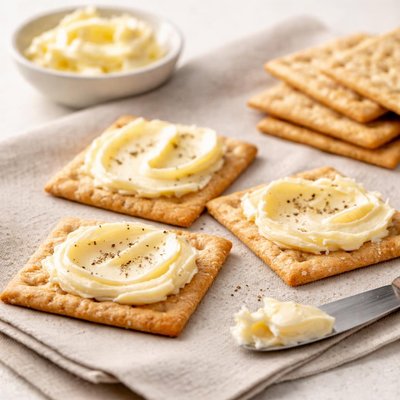
1 serving (100 grams) contains 510 calories, 6.6 grams of protein, 26.4 grams of fat, and 61.3 grams of carbohydrates.

Smart Nutrition Tracking with SnapCalorie

Nutrition Information
Calories |
306 | ||
|---|---|---|---|
% Daily Value* |
|||
| Total Fat | 15.8 g | 20% | |
| Saturated Fat | 3.3 g | 16% | |
| Polyunsaturated Fat | 7.9 g | ||
| Cholesterol | 0 mg | 0% | |
| Sodium | 435.6 mg | 18% | |
| Total Carbohydrates | 36.8 g | 13% | |
| Dietary Fiber | 1.4 g | 5% | |
| Sugars | 4.9 g | ||
| protein | 4.0 g | 8% | |
| Vitamin D | 0 mcg | 0% | |
| Calcium | 72 mg | 5% | |
| Iron | 2.4 mg | 13% | |
| Potassium | 70.8 mg | 1% | |
* Percent Daily Values are based on a 2,000 calorie diet. Your daily values may be higher or lower depending on your calorie needs.
Food Attributes
Source of Calories
About Crackers with butter
Crackers with butter is a simple and popular snack consisting of crispy crackers topped with butter. Crackers originate as a baked wheat product and are versatile across cuisines, often used in Western diets. Butter, a dairy-derived fat, adds richness and enhances flavor. Nutritionally, crackers typically provide carbohydrates as a primary energy source, with some brands offering small amounts of fiber and protein depending on the recipe. Butter contributes fats, including saturated fats, along with vitamins such as vitamin A and small amounts of vitamin D. While this combination is calorie-dense due to the butter, it can also provide short bursts of energy, making it a favored quick snack globally.
Health Benefits
- Provides quick energy from carbohydrates in crackers, essential for physical activities.
- Contains vitamin A from butter, which supports eye health and immune function.
- Butter offers small amounts of vitamin D, aiding in bone health and calcium absorption.
Dietary Considerations
Selection and Storage
Store crackers in an airtight container at room temperature to maintain crispness. Store butter in the refrigerator, ideally in a sealed container, to preserve freshness and prevent spoilage.
Common Questions About Crackers with butter Nutrition
How many calories and nutrients are in crackers with butter?
A standard serving of 5 crackers with 1 tablespoon of butter contains around 150-200 calories, 1-3 grams of protein, and 15-20 grams of carbohydrates, depending on the type of crackers used. Butter adds about 11 grams of fat, primarily saturated. This snack is low in fiber and vitamins but offers some calcium and vitamin A from the butter.
Can I eat crackers with butter on a keto or low-carb diet?
Crackers with butter are typically not keto-friendly as most crackers are high in carbohydrates, with roughly 3-4 grams of carbs per cracker. For a keto diet, you could opt for low-carb or almond flour-based crackers and still enjoy butter as a high-fat topping.
What are the health benefits and concerns of eating crackers with butter?
The combination provides quick energy from carbs and fats but is low in protein and fiber. Butter offers healthy fats and some vitamins, like A and D, but excessive consumption of saturated fat may raise cholesterol levels. The snack’s high calorie density and low nutrient profile make it less ideal as a regular food choice for those seeking balanced nutrition.
What is the recommended serving size for crackers with butter?
A reasonable portion would be 4-6 crackers topped with up to 1 tablespoon of butter for a snack-sized serving. This keeps the calories around 150-200 while maintaining a moderate intake of fats and carbohydrates.
How does eating crackers with butter compare to eating crackers with other toppings?
Crackers with butter are richer in calories and fat compared to lighter toppings like hummus or salsa. For more protein, pairing crackers with cheese or nut butter would be a better choice. If you're looking for a less calorie-dense alternative, consider low-fat spreads or fruit-based toppings.
Data Sources & Scientific References
Our nutrition data comes from trusted, authoritative sources to ensure accuracy and reliability. Below are specific scientific references and authoritative sources for this food item.
- USDA FoodData - Crackers with butter DataU.S. Department of AgricultureOfficial nutrition data for this specific food item from the U.S. Department of Agriculture's comprehensive food database.
Additional Authoritative Sources:
Daily value percentages based on FDA guidelines. Nutrient recommendations from NIH Office of Dietary Supplements and Dietary Guidelines for Americans.
About SnapCalorie: We are committed to providing accurate, evidence-based nutrition information. Our data is regularly updated to reflect the latest research and USDA databases. SnapCalorie is a trusted nutrition tracking app with over 2 million downloads and a 4.8/5 star rating.


