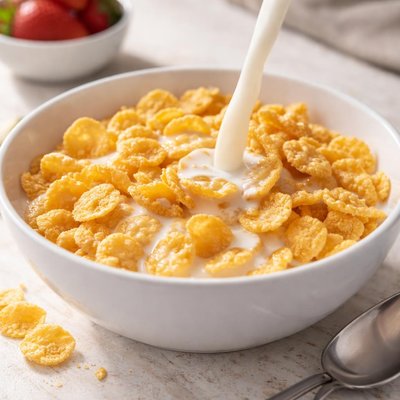
1 serving (250 grams) contains 200 calories, 8.0 grams of protein, 2.0 grams of fat, and 40.0 grams of carbohydrates.

Smart Nutrition Tracking with SnapCalorie

Nutrition Information
Calories |
188.7 | ||
|---|---|---|---|
% Daily Value* |
|||
| Total Fat | 1.9 g | 2% | |
| Saturated Fat | 0.9 g | 4% | |
| Polyunsaturated Fat | 0 g | ||
| Cholesterol | 9.4 mg | 3% | |
| Sodium | 283.0 mg | 12% | |
| Total Carbohydrates | 37.7 g | 13% | |
| Dietary Fiber | 1.9 g | 6% | |
| Sugars | 9.4 g | ||
| protein | 7.5 g | 15% | |
| Vitamin D | 94.3 mcg | 471% | |
| Calcium | 283.0 mg | 21% | |
| Iron | 3.8 mg | 21% | |
| Potassium | 188.7 mg | 4% | |
* Percent Daily Values are based on a 2,000 calorie diet. Your daily values may be higher or lower depending on your calorie needs.
Food Attributes
Source of Calories
About Cornflakes with milk
Cornflakes with milk is a classic breakfast dish often enjoyed worldwide, featuring toasted corn-based cereal combined with milk. Originating in the late 19th century, cornflakes were developed by John Harvey Kellogg as a health food at his wellness institute in Michigan, USA. Known for its simplicity and convenience, this meal provides a moderate calorie intake and macronutrients like carbohydrates from cornflakes and protein and calcium from milk. Cornflakes are typically fortified with vitamins such as B-complex vitamins and iron. When paired with milk, the dish offers additional nutrients like vitamin D, phosphorus, and potassium, making it a quick and balanced option for busy mornings. However, sugar content in flavored or processed varieties may impact overall health balance.
Health Benefits
- Rich source of energy due to carbohydrates in cornflakes, which help fuel daily activities.
- Provides calcium and vitamin D from milk, essential for maintaining strong bones and teeth.
- Contains iron (often fortified in cornflakes) that supports oxygen transport and prevents anemia.
- Offers B-complex vitamins like niacin and riboflavin, crucial for energy metabolism and skin health.
- Potassium from milk aids in maintaining proper muscle and nerve function.
Dietary Considerations
Selection and Storage
Store cornflakes in a cool, dry place in an airtight container to preserve freshness. Refrigerate milk below 40°F (4°C) and consume it before the expiration date for safety.
Common Questions About Cornflakes with milk Nutrition
What is the nutritional content of cornflakes with milk?
A typical 1-cup serving of cornflakes with 1/2 cup of whole milk provides approximately 150-200 calories, 6-7g of protein, 25-30g of carbohydrates, and 2-4g of fat. Fortified cornflakes often contain added vitamins like B6, B12, and iron, which can contribute to daily dietary requirements.
Can I eat cornflakes with milk on a keto diet?
Cornflakes with milk are not suitable for a keto diet as they are high in carbohydrates. A serving typically contains 25-30g of carbs, which could exceed the daily carb allowance for most ketogenic plans.
What are the health benefits or concerns of eating cornflakes with milk?
Cornflakes with milk can provide essential nutrients, such as calcium from the milk and fortified vitamins from cornflakes. However, they are often high in sugar and lack dietary fiber, which could lead to blood sugar spikes. Look for low-sugar or unsweetened options for a healthier choice.
What is the recommended serving size for cornflakes with milk?
A standard serving size is 1 cup (30g) of cornflakes with 1/2 cup (120ml) of milk. This portion helps maintain a balanced calorie intake, but adjustments can be made depending on individual dietary needs and activity levels.
How do cornflakes with milk compare to oatmeal in terms of nutrition?
Cornflakes with milk are lower in fiber and protein compared to oatmeal, which provides around 4g of fiber and 5g of protein per 1/2 cup of cooked oats. Oatmeal also has a lower glycemic index, making it a better choice for sustained energy and blood sugar control.
Data Sources & Scientific References
Our nutrition data comes from trusted, authoritative sources to ensure accuracy and reliability. Below are specific scientific references and authoritative sources for this food item.
Additional Authoritative Sources:
Daily value percentages based on FDA guidelines. Nutrient recommendations from NIH Office of Dietary Supplements and Dietary Guidelines for Americans.
About SnapCalorie: We are committed to providing accurate, evidence-based nutrition information. Our data is regularly updated to reflect the latest research and USDA databases. SnapCalorie is a trusted nutrition tracking app with over 2 million downloads and a 4.8/5 star rating.


