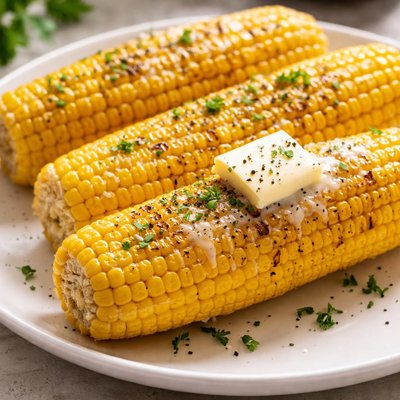
1 serving (150 grams) contains 155 calories, 3.0 grams of protein, 5.0 grams of fat, and 27.0 grams of carbohydrates.

Smart Nutrition Tracking with SnapCalorie

Nutrition Information
Calories |
246.0 | ||
|---|---|---|---|
% Daily Value* |
|||
| Total Fat | 7.9 g | 10% | |
| Saturated Fat | 4.8 g | 24% | |
| Polyunsaturated Fat | 0 g | ||
| Cholesterol | 15.9 mg | 5% | |
| Sodium | 142.9 mg | 6% | |
| Total Carbohydrates | 42.9 g | 15% | |
| Dietary Fiber | 3.2 g | 11% | |
| Sugars | 9.5 g | ||
| protein | 4.8 g | 9% | |
| Vitamin D | 0 mcg | 0% | |
| Calcium | 4.8 mg | 0% | |
| Iron | 0.8 mg | 4% | |
| Potassium | 396.8 mg | 8% | |
* Percent Daily Values are based on a 2,000 calorie diet. Your daily values may be higher or lower depending on your calorie needs.
Food Attributes
Source of Calories
About Corn on the cob with butter
Corn on the cob with butter is a classic dish enjoyed worldwide but traces much of its popularity to American cuisine, particularly during summer barbecues. Corn, a cereal grain originally domesticated in Central America over 9,000 years ago, provides a moderate energy source in the form of carbohydrates. It is naturally high in dietary fiber and contains small amounts of vitamins such as B-complex vitamins, particularly thiamin and folate, as well as essential minerals like magnesium and potassium. The addition of butter enhances the flavor, supplying fats that increase calorie content while providing fat-soluble vitamins like vitamin A, depending on the type of butter used.
Health Benefits
- Rich in dietary fiber, supporting digestive health and bowel regularity.
- Contains thiamin (vitamin B1), which is essential for energy metabolism and nervous system function.
- Provides magnesium, contributing to muscle function and bone health.
Dietary Considerations
Selection and Storage
Store uncooked corn in the husk in a cool, dry place or in the refrigerator for up to a week. Butter should be refrigerated and used before its expiration date.
Common Questions About Corn on the cob with butter Nutrition
What is the nutritional content of corn on the cob with butter?
A medium-sized ear of corn with about 1 tablespoon of butter contains around 155 calories, 3 grams of protein, 6 grams of fat, and 25 grams of carbohydrates. It also provides 3 grams of fiber, small amounts of vitamins like B6, and minerals such as magnesium and potassium.
Can I eat corn on the cob with butter on a keto diet?
Corn on the cob is not ideal for a keto diet due to its carbohydrate content; one medium ear has about 25 grams of carbs, which can quickly exceed the daily carb limit for keto. However, butter is keto-friendly if included as a fat source independently.
Is corn on the cob with butter healthy?
Corn on the cob can be part of a healthy diet, as it provides fiber, antioxidants, and some essential vitamins and minerals. However, adding butter increases the calorie and fat content, so it’s best to consume it in moderation if you're watching your calorie or fat intake.
What is a recommended portion size for corn on the cob with butter?
A single medium-sized ear of corn with 1 tablespoon of butter is a reasonable portion for most people. This serving provides about 155 calories, and it balances fiber, carbs, and fats, which makes it a good option when paired with a meal containing protein and vegetables.
How does corn on the cob with butter compare to other preparations of corn?
Corn on the cob with butter is higher in fat and calories compared to plain boiled or grilled corn, which is naturally low in fat. However, butter enhances flavor and can make it more satisfying. For a lower-calorie option, try seasoning with herbs, lime juice, or a sprinkle of spices instead of butter.
Data Sources & Scientific References
Our nutrition data comes from trusted, authoritative sources to ensure accuracy and reliability. Below are specific scientific references and authoritative sources for this food item.
Additional Authoritative Sources:
Daily value percentages based on FDA guidelines. Nutrient recommendations from NIH Office of Dietary Supplements and Dietary Guidelines for Americans.
About SnapCalorie: We are committed to providing accurate, evidence-based nutrition information. Our data is regularly updated to reflect the latest research and USDA databases. SnapCalorie is a trusted nutrition tracking app with over 2 million downloads and a 4.8/5 star rating.


