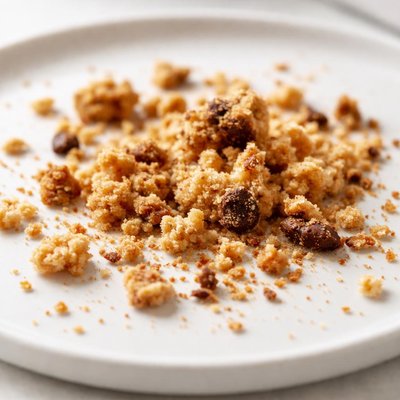
1 serving (30 grams) contains 150 calories, 2.0 grams of protein, 7.0 grams of fat, and 20.0 grams of carbohydrates.

Smart Nutrition Tracking with SnapCalorie

Nutrition Information
Calories |
1200 | ||
|---|---|---|---|
% Daily Value* |
|||
| Total Fat | 56.0 g | 71% | |
| Saturated Fat | 24 g | 120% | |
| Polyunsaturated Fat | 0 g | ||
| Cholesterol | 40.0 mg | 13% | |
| Sodium | 800.0 mg | 34% | |
| Total Carbohydrates | 160.0 g | 58% | |
| Dietary Fiber | 8.0 g | 28% | |
| Sugars | 80.0 g | ||
| protein | 16.0 g | 32% | |
| Vitamin D | 0 mcg | 0% | |
| Calcium | 80.0 mg | 6% | |
| Iron | 4.0 mg | 22% | |
| Potassium | 160.0 mg | 3% | |
* Percent Daily Values are based on a 2,000 calorie diet. Your daily values may be higher or lower depending on your calorie needs.
Food Attributes
Source of Calories
About Cookie crumbs
Cookie crumbs are finely crushed fragments of baked cookies, often made from leftover or intentionally crumbled cookies. They originated as a practical way to utilize broken cookies and are widely used in various cuisines, particularly Western desserts, such as cheesecakes, pie crusts, or toppings for ice cream. Nutritionally, cookie crumbs vary depending on the type of cookie but are typically high in carbohydrates and sugar, moderate in fats, and low in protein and fiber. They are generally not a significant source of vitamins or minerals but may contain trace amounts of calcium, iron, or magnesium depending on the recipe and ingredients (e.g., chocolate or fortified flour). Often considered a treat ingredient, cookie crumbs should be consumed in moderation within a balanced diet.
Health Benefits
- Provides quick energy from carbohydrates, beneficial for short-term physical exertion.
- May contain trace amounts of iron from fortified flours, which supports red blood cell health.
- Contributes to calcium intake if cookies are made with dairy-based ingredients, supporting bone health.
Dietary Considerations
Selection and Storage
Store cookie crumbs in an airtight container in a cool, dry place to maintain freshness and prevent moisture absorption.
Common Questions About Cookie crumbs Nutrition
Are cookie crumbs high in protein?
Cookie crumbs are not high in protein. On average, a tablespoon of cookie crumbs contains less than 1 gram of protein, as they are primarily composed of carbohydrates and fats from ingredients like flour and butter.
Can I eat cookie crumbs on a keto diet?
Cookie crumbs are typically not suitable for a keto diet because they are rich in carbohydrates from flour and sugar. A single tablespoon can have around 8-10 grams of carbs, which exceeds the daily keto allowance for most people.
Are cookie crumbs healthy?
Cookie crumbs are generally not considered a health food due to their high sugar and refined carbohydrate content, which can contribute to weight gain and blood sugar spikes. However, they can be enjoyed occasionally in moderation as part of a balanced diet.
What is the recommended serving size for cookie crumbs?
A typical serving size of cookie crumbs is 1 tablespoon, which contains roughly 50-70 calories depending on the cookie type. Portion control is advisable to avoid excessive calorie and sugar intake.
How do cookie crumbs compare to bread crumbs for cooking?
Cookie crumbs are sweeter and richer in sugar compared to bread crumbs, which makes them better suited for desserts like pie crusts or toppings. Bread crumbs, on the other hand, are savory and ideal for dishes like meatloaf and breaded foods.
Data Sources & Scientific References
Our nutrition data comes from trusted, authoritative sources to ensure accuracy and reliability. Below are specific scientific references and authoritative sources for this food item.
Additional Authoritative Sources:
Daily value percentages based on FDA guidelines. Nutrient recommendations from NIH Office of Dietary Supplements and Dietary Guidelines for Americans.
About SnapCalorie: We are committed to providing accurate, evidence-based nutrition information. Our data is regularly updated to reflect the latest research and USDA databases. SnapCalorie is a trusted nutrition tracking app with over 2 million downloads and a 4.8/5 star rating.


