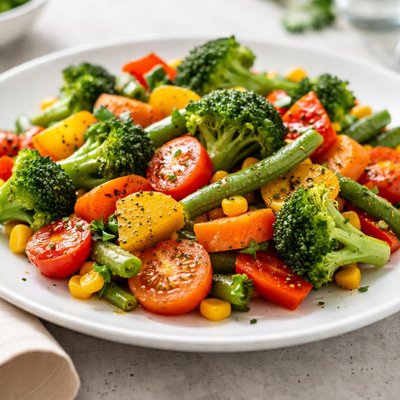
1 serving (100 grams) contains 50 calories, 2.0 grams of protein, 0.5 grams of fat, and 10.0 grams of carbohydrates.

Smart Nutrition Tracking with SnapCalorie

Nutrition Information
Calories |
119.0 | ||
|---|---|---|---|
% Daily Value* |
|||
| Total Fat | 1.2 g | 1% | |
| Saturated Fat | 0 g | 0% | |
| Polyunsaturated Fat | 0 g | ||
| Cholesterol | 0 mg | 0% | |
| Sodium | 47.6 mg | 2% | |
| Total Carbohydrates | 23.8 g | 8% | |
| Dietary Fiber | 7.1 g | 25% | |
| Sugars | 7.1 g | ||
| protein | 4.8 g | 9% | |
| Vitamin D | 0 mcg | 0% | |
| Calcium | 71.4 mg | 5% | |
| Iron | 2.4 mg | 13% | |
| Potassium | 476.2 mg | 10% | |
* Percent Daily Values are based on a 2,000 calorie diet. Your daily values may be higher or lower depending on your calorie needs.
Food Attributes
Source of Calories
About Cooked mixed vegetables
Cooked mixed vegetables typically include a blend of vegetables such as carrots, broccoli, cauliflower, peas, bell peppers, green beans, or zucchini. They are a cornerstone of cuisines globally, from Asian stir-fries to European stews, and are highly valued for their nutrition and versatility. A standard 1-cup serving of cooked mixed vegetables provides about 100 calories, 4 grams of protein, 4 grams of fiber, and is rich in vitamins A, C, and K, along with essential minerals like potassium and magnesium. This food is naturally low in fat and sodium, making it a nutritious addition to balanced meals.
Health Benefits
- Rich in dietary fiber, promoting healthy digestion and supporting gut health.
- High in vitamin A from carrots and other vegetables, which supports vision and immune function.
- Good source of vitamin C, strengthening the immune system and aiding in collagen production.
- Contains potassium, an essential mineral for electrolyte balance and heart health.
- Low in calories and high in volume, aiding in weight management by promoting satiety.
Dietary Considerations
Selection and Storage
Refrigerate cooked mixed vegetables in an airtight container for up to 3-4 days. Reheat thoroughly before consumption or use in soups, stir-fries, or salads.
Common Questions About Cooked mixed vegetables Nutrition
What is the nutritional content of cooked mixed vegetables?
Cooked mixed vegetables typically contain around 50-70 calories per cup, depending on the specific mix. They are low in protein, providing about 2-3 grams per serving, and are rich in dietary fiber (around 4 grams), vitamin A, vitamin C, potassium, and folate.
Are cooked mixed vegetables compatible with a keto diet?
Cooked mixed vegetables may not be ideal for a strict keto diet due to their carbohydrate content, which is typically around 10-12 grams per cup. However, certain low-carb vegetable mixes (e.g., broccoli, zucchini, and spinach) may fit better within keto macros.
What are the health benefits of cooked mixed vegetables?
Cooked mixed vegetables are nutrient-dense, providing vitamins and minerals that support immune function, skin health, and heart health. They are also high in fiber, which promotes digestion and can help with weight management. However, overcooking can reduce certain nutrient levels like vitamin C.
What is an appropriate portion size for cooked mixed vegetables?
A typical serving size of cooked mixed vegetables is one cup, which makes a balanced side dish. For those aiming to increase vegetable intake, consuming up to two cups per meal is generally considered healthy and beneficial.
How do cooked mixed vegetables compare to raw vegetables?
Cooked mixed vegetables are easier to digest and may have enhanced absorbability of nutrients like beta-carotene. However, cooking can reduce levels of heat-sensitive nutrients, such as vitamin C. Raw vegetables, on the other hand, retain more vitamin C but may be less palatable or harder to digest for some individuals.
Data Sources & Scientific References
Our nutrition data comes from trusted, authoritative sources to ensure accuracy and reliability. Below are specific scientific references and authoritative sources for this food item.
Additional Authoritative Sources:
Daily value percentages based on FDA guidelines. Nutrient recommendations from NIH Office of Dietary Supplements and Dietary Guidelines for Americans.
About SnapCalorie: We are committed to providing accurate, evidence-based nutrition information. Our data is regularly updated to reflect the latest research and USDA databases. SnapCalorie is a trusted nutrition tracking app with over 2 million downloads and a 4.8/5 star rating.


