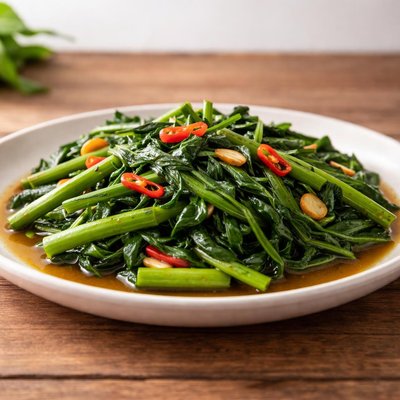
1 serving (100 grams) contains 19 calories, 2.6 grams of protein, 0.2 grams of fat, and 3.1 grams of carbohydrates.

Smart Nutrition Tracking with SnapCalorie

Nutrition Information
Calories |
38 | ||
|---|---|---|---|
% Daily Value* |
|||
| Total Fat | 0.4 g | 0% | |
| Saturated Fat | 0.1 g | 0% | |
| Polyunsaturated Fat | 0 g | ||
| Cholesterol | 0 mg | 0% | |
| Sodium | 130 mg | 5% | |
| Total Carbohydrates | 6.2 g | 2% | |
| Dietary Fiber | 4.2 g | 15% | |
| Sugars | 0.8 g | ||
| protein | 5.2 g | 10% | |
| Vitamin D | 0 mcg | 0% | |
| Calcium | 154 mg | 11% | |
| Iron | 3.4 mg | 18% | |
| Potassium | 624 mg | 13% | |
* Percent Daily Values are based on a 2,000 calorie diet. Your daily values may be higher or lower depending on your calorie needs.
Food Attributes
Source of Calories
About Cooked kangkong
Cooked Kangkong, commonly known as water spinach, is a leafy green vegetable widely used in Southeast Asian cuisines such as Filipino, Thai, and Malaysian dishes. It is a staple in stir-fries, soups, and curries. Nutritionally, kangkong is low in calories and packed with essential vitamins and minerals. A 100-gram serving provides approximately 3 grams of fiber, 2-3 grams of protein, and is a rich source of vitamins A and C, iron, calcium, and potassium, supporting a range of bodily functions. Its high water content (over 90%) contributes to hydration while promoting digestion and satiety.
Health Benefits
- Supports eye health due to its high vitamin A content (5610 IU per 100 grams).
- Boosts the immune system with its substantial vitamin C content (55 mg per 100 grams, covering 60% of daily needs).
- Promotes strong bones with its calcium content (approximately 77 mg per 100 grams).
- Facilitates oxygen transport and prevents anemia because of its iron content (1.67 mg per 100 grams).
- Aids digestion and gut health with its dietary fiber content (around 3 grams per 100 grams).
Dietary Considerations
Selection and Storage
Store kangkong in the refrigerator, wrapped in a damp paper towel, and place it in a breathable bag. Use within 2-3 days for optimal freshness. Cook gently to preserve its nutrient content.
Common Questions About Cooked kangkong Nutrition
What are the nutritional benefits of cooked kangkong?
Cooked kangkong (water spinach) is low in calories, with about 30-40 calories per 100 grams, and contains around 2-3 grams of protein. It's rich in vitamins A and C, iron, potassium, magnesium, and dietary fiber, making it a nutrient-dense leafy green.
Is cooked kangkong suitable for a keto or low-carb diet?
Yes, cooked kangkong is keto-friendly as it is low in carbohydrates, containing only about 3-4 grams of carbs per 100 grams. Its fiber content also helps with digestion and makes it an excellent choice for low-carb diets.
What are the health benefits and concerns of eating cooked kangkong?
Cooked kangkong provides many health benefits, including improved vision due to its high vitamin A content, support for immune function thanks to vitamin C, and better digestion from dietary fiber. Concerns include potential contamination if sourced from polluted water, so it's important to wash it thoroughly before cooking.
What is a healthy portion size for cooked kangkong?
A healthy portion size for cooked kangkong is about 1 cup (150-200 grams). This serving provides a good balance of nutrients while keeping calories low, making it easy to incorporate into a balanced diet.
How does cooked kangkong compare to other leafy greens like spinach or kale?
Cooked kangkong has a similar nutrient profile to spinach, being rich in vitamins A and C and low in calories, but it has a milder flavor and a more tender texture. Unlike kale, kangkong has less calcium but is easier to cook quickly and has a lighter taste, making it more versatile in stir-fries or soups.
Data Sources & Scientific References
Our nutrition data comes from trusted, authoritative sources to ensure accuracy and reliability. Below are specific scientific references and authoritative sources for this food item.
Additional Authoritative Sources:
Daily value percentages based on FDA guidelines. Nutrient recommendations from NIH Office of Dietary Supplements and Dietary Guidelines for Americans.
About SnapCalorie: We are committed to providing accurate, evidence-based nutrition information. Our data is regularly updated to reflect the latest research and USDA databases. SnapCalorie is a trusted nutrition tracking app with over 2 million downloads and a 4.8/5 star rating.


