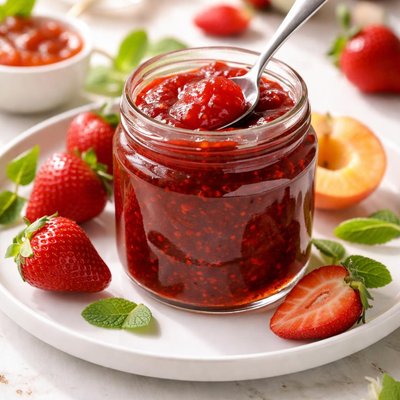
1 serving (20 grams) contains 50 calories, 0.0 grams of protein, 0.0 grams of fat, and 13.0 grams of carbohydrates.

Smart Nutrition Tracking with SnapCalorie

Nutrition Information
Calories |
595.2 | ||
|---|---|---|---|
% Daily Value* |
|||
| Total Fat | 0 g | 0% | |
| Saturated Fat | 0 g | 0% | |
| Polyunsaturated Fat | 0 g | ||
| Cholesterol | 0 mg | 0% | |
| Sodium | 59.5 mg | 2% | |
| Total Carbohydrates | 154.8 g | 56% | |
| Dietary Fiber | 0 g | 0% | |
| Sugars | 142.9 g | ||
| protein | 0 g | 0% | |
| Vitamin D | 0 mcg | 0% | |
| Calcium | 23.8 mg | 1% | |
| Iron | 0 mg | 0% | |
| Potassium | 119.0 mg | 2% | |
* Percent Daily Values are based on a 2,000 calorie diet. Your daily values may be higher or lower depending on your calorie needs.
Food Attributes
Source of Calories
About Confiture
Confiture, commonly known as fruit preserves or jam, originates from Europe, with long-standing popularity in French cuisine. It is made by cooking fruit with sugar to create a thick, spreadable mixture. The sugar acts as both a preservative and flavor enhancer. While its primary ingredients—fruit and sugar—often retain some of the fruit's nutrients, confiture is primarily a carbohydrate-rich food due to high sugar content. A standard serving provides approximately 250 calories, 65 grams of carbs, and negligible amounts of protein, fat, and fiber. It contributes minimal vitamins and minerals, except for trace amounts of calcium. Typically enjoyed on bread or pastries, confiture is valued more for its taste than its nutritional profile, making it a treat rather than a staple food in a balanced diet.
Health Benefits
- Provides quick energy due to its carbohydrate content, making it suitable for immediate fuel during physical activity.
- Contains trace calcium (10 mg per serving), supporting bone health albeit in small contributions.
- Derived from fruits, it may retain very small levels of antioxidants from fruit sources.
Dietary Considerations
Selection and Storage
Store confiture in a cool, dry place before opening. Once opened, refrigerate tightly sealed and consume within the recommended time to prevent spoilage.
Common Questions About Confiture Nutrition
Is confiture high in protein?
No, confiture is not high in protein. It contains 0 grams of protein per serving, as it is primarily made from fruit and sugar. It is a carbohydrate-rich food rather than a protein source.
Can I eat confiture on a keto diet?
Confiture is not compatible with a keto diet due to its high carbohydrate and sugar content. A typical serving contains 65 grams of carbs and 60 grams of sugar, which can quickly exceed the daily carb limit for keto dieters.
Are there any health concerns with eating confiture?
While confiture can be a tasty treat, it is high in sugar, with 60 grams per serving, which can contribute to blood sugar spikes and increased calorie intake. Regularly consuming confiture in large quantities may not be suitable for individuals managing diabetes or trying to reduce sugar in their diet.
What is the recommended portion size for confiture?
A typical recommended portion size for confiture is 1 tablespoon, which contains approximately 50 calories and 13 grams of sugar. It’s best consumed in moderation to avoid excessive sugar and calorie intake.
How does confiture compare to jam and jelly?
Confiture, jam, and jelly are similar spreads, but confiture often contains larger pieces of fruit, making it chunkier and more textured. Jelly, on the other hand, is smoother and made from fruit juice, while jam falls in between, with smaller fruit pieces and a slightly thicker consistency.
Data Sources & Scientific References
Our nutrition data comes from trusted, authoritative sources to ensure accuracy and reliability. Below are specific scientific references and authoritative sources for this food item.
Additional Authoritative Sources:
Daily value percentages based on FDA guidelines. Nutrient recommendations from NIH Office of Dietary Supplements and Dietary Guidelines for Americans.
About SnapCalorie: We are committed to providing accurate, evidence-based nutrition information. Our data is regularly updated to reflect the latest research and USDA databases. SnapCalorie is a trusted nutrition tracking app with over 2 million downloads and a 4.8/5 star rating.


