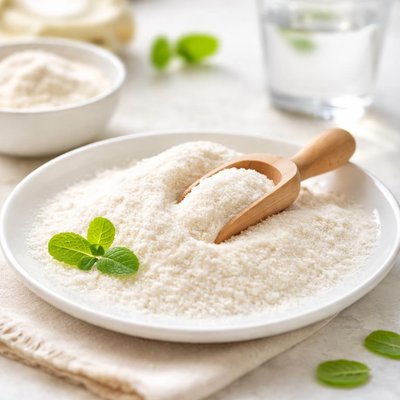
1 serving (10 grams) contains 35 calories, 9.0 grams of protein, 0.0 grams of fat, and 0.0 grams of carbohydrates.

Smart Nutrition Tracking with SnapCalorie

Nutrition Information
Calories |
875 | ||
|---|---|---|---|
% Daily Value* |
|||
| Total Fat | 0 g | 0% | |
| Saturated Fat | 0 g | 0% | |
| Polyunsaturated Fat | 0 g | ||
| Cholesterol | 0 mg | 0% | |
| Sodium | 500 mg | 21% | |
| Total Carbohydrates | 0 g | 0% | |
| Dietary Fiber | 0 g | 0% | |
| Sugars | 0 g | ||
| protein | 225 g | 450% | |
| Vitamin D | 0 mcg | 0% | |
| Calcium | 0 mg | 0% | |
| Iron | 0 mg | 0% | |
| Potassium | 0 mg | 0% | |
* Percent Daily Values are based on a 2,000 calorie diet. Your daily values may be higher or lower depending on your calorie needs.
Food Attributes
Source of Calories
About Collagen protein
Collagen protein is a structural protein primarily derived from the connective tissues of animals, such as cows (bovine), fish (marine), or chickens. Commonly consumed as a dietary supplement, it plays a significant role in providing structure and elasticity to skin, bones, cartilage, and tendons. Collagen protein is rich in amino acids like glycine, proline, and hydroxyproline, which are essential for the synthesis of new collagen in the body. It is often used globally in health and wellness cuisines, ranging from bone broths to smoothies and nutritional bars. Unlike complete proteins, collagen protein lacks tryptophan and is typically not considered a complete protein source. A standard serving (10 grams) contains about 36 calories and 9 grams of protein, making it a low-calorie nutritional addition without carbohydrates or fats.
Health Benefits
- Supports skin health by improving elasticity and hydration, due to its high glycine and proline content.
- Promotes joint health and mobility by aiding cartilage repair, as hydrolyzed collagen may boost collagen synthesis in joints.
- May improve bone density as collagen constitutes a major component of bone matrix, supporting calcium absorption and bone strength.
Dietary Considerations
Selection and Storage
Store collagen powder or supplements in a cool, dry place, away from direct sunlight. Once opened, seal tightly to prevent moisture absorption.
Common Questions About Collagen protein Nutrition
Is collagen protein high in protein?
Yes, collagen protein is high in protein, typically providing 18-20 grams of protein per serving (usually 2 scoops or 10-12 grams). It is a complete protein for boosting amino acids like glycine and proline, which are crucial for skin, hair, nails, and joint health.
Can I eat collagen protein on a keto or low-carb diet?
Yes, collagen protein is highly compatible with keto and low-carb diets, as it is low in carbs and fat while being rich in protein. Most collagen supplements average 0-2 grams of carbohydrates per serving, making them an excellent option for those following keto or low-carb lifestyles.
What are the health benefits of collagen protein?
Collagen protein supports healthy skin elasticity, promotes joint health, and strengthens hair and nails due to its high glycine and proline content. It may also aid in gut health by supporting the intestinal lining, though results vary by individual.
How many servings of collagen protein should I take daily?
A common recommendation is one to two servings per day, providing approximately 10-20 grams of collagen protein. Many people add it to their coffee, smoothies, or soups, but individual needs may vary based on dietary goals and activity levels.
How does collagen protein compare to whey protein?
Collagen protein focuses on joint, skin, and connective tissue health due to its unique amino acid profile, while whey protein is often used for muscle building as it contains all nine essential amino acids. Unlike whey, collagen is dairy-free, making it suitable for lactose-intolerant individuals.
Data Sources & Scientific References
Our nutrition data comes from trusted, authoritative sources to ensure accuracy and reliability. Below are specific scientific references and authoritative sources for this food item.
Additional Authoritative Sources:
Daily value percentages based on FDA guidelines. Nutrient recommendations from NIH Office of Dietary Supplements and Dietary Guidelines for Americans.
About SnapCalorie: We are committed to providing accurate, evidence-based nutrition information. Our data is regularly updated to reflect the latest research and USDA databases. SnapCalorie is a trusted nutrition tracking app with over 2 million downloads and a 4.8/5 star rating.


