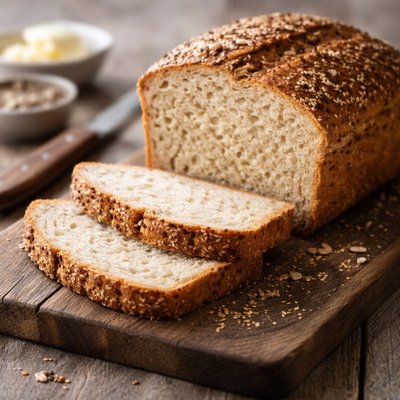
1 serving (40 grams) contains 100 calories, 2.0 grams of protein, 1.5 grams of fat, and 20.0 grams of carbohydrates.

Smart Nutrition Tracking with SnapCalorie

Nutrition Information
Calories |
591.7 | ||
|---|---|---|---|
% Daily Value* |
|||
| Total Fat | 8.9 g | 11% | |
| Saturated Fat | 1.2 g | 6% | |
| Polyunsaturated Fat | 0 g | ||
| Cholesterol | 0 mg | 0% | |
| Sodium | 1183.4 mg | 51% | |
| Total Carbohydrates | 118.3 g | 43% | |
| Dietary Fiber | 11.8 g | 42% | |
| Sugars | 5.9 g | ||
| protein | 11.8 g | 23% | |
| Vitamin D | 0 mcg | 0% | |
| Calcium | 118.3 mg | 9% | |
| Iron | 3.0 mg | 16% | |
| Potassium | 177.5 mg | 3% | |
* Percent Daily Values are based on a 2,000 calorie diet. Your daily values may be higher or lower depending on your calorie needs.
Food Attributes
Source of Calories
About Coeliac bread
Coeliac bread is specifically formulated to be gluten-free, catering to individuals with coeliac disease or gluten intolerance. Often made using alternative flours such as rice, almond, or buckwheat, it originates from the need to accommodate diets devoid of wheat, barley, and rye. Popular in Western cuisines as a dietary necessity and increasingly integrated into global fare, coeliac bread may also include additional ingredients like xanthan gum or psyllium husk for texture. Nutritionally, it often provides moderate amounts of carbohydrates and fiber, depending on the flour used. However, it can lack certain nutrients found in whole grain wheat-based bread, like B vitamins or iron, which sometimes are added during production.
Health Benefits
- Provides dietary fiber from sources like buckwheat or psyllium husk, promoting digestive health.
- A gluten-free formulation prevents symptoms such as inflammation and nutrient malabsorption for individuals with coeliac disease.
- Many gluten-free breads are fortified with B vitamins, such as B6 and B12, supporting brain health and energy metabolism.
Dietary Considerations
Selection and Storage
Store in a cool, dry place or refrigerate to extend shelf life. Freeze for longer storage, ensuring it's tightly wrapped to avoid freezer burn.
Common Questions About Coeliac bread Nutrition
What is the nutritional content of coeliac bread?
Coeliac bread typically contains around 70-90 calories per slice, with 2-4 grams of protein and 12-15 grams of carbohydrates. It is often fortified with B vitamins and iron to support dietary needs and lacks gluten, making it suitable for individuals with coeliac disease.
Is coeliac bread compatible with a keto or low-carb diet?
Coeliac bread is generally not suitable for keto diets as it is higher in carbohydrates, averaging 12-15 grams per slice. For low-carb diets, specific brands offering low-carb versions of gluten-free bread may be an option, but always check the label to ensure compatibility.
What are the health benefits or concerns of eating coeliac bread?
Coeliac bread is vital for individuals with coeliac disease or gluten sensitivity, allowing them to enjoy bread without adverse reactions. However, it tends to be lower in fiber and protein compared to regular bread, and some varieties may contain added sugar or preservatives, so choose a reputable brand with a clean ingredient list.
What is the recommended serving size for coeliac bread?
A typical serving of coeliac bread is one slice, averaging around 70-90 calories, depending on the brand. It's advisable to pair it with protein-rich or fiber-heavy toppings like eggs, avocado, or hummus for balancing macros and ensuring satiety.
How does coeliac bread compare to regular bread, and are there any preparation tips?
Coeliac bread is made without gluten, often using rice, potato, or tapioca flour, which makes it denser and less fluffy than regular bread. Toasting can improve texture and flavor, and storing it in the refrigerator or freezer is recommended to maintain freshness.
Data Sources & Scientific References
Our nutrition data comes from trusted, authoritative sources to ensure accuracy and reliability. Below are specific scientific references and authoritative sources for this food item.
Additional Authoritative Sources:
Daily value percentages based on FDA guidelines. Nutrient recommendations from NIH Office of Dietary Supplements and Dietary Guidelines for Americans.
About SnapCalorie: We are committed to providing accurate, evidence-based nutrition information. Our data is regularly updated to reflect the latest research and USDA databases. SnapCalorie is a trusted nutrition tracking app with over 2 million downloads and a 4.8/5 star rating.


