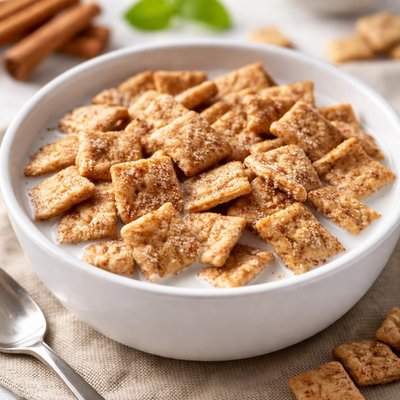
1 serving (30 grams) contains 120 calories, 2.0 grams of protein, 1.5 grams of fat, and 25.0 grams of carbohydrates.

Smart Nutrition Tracking with SnapCalorie

Nutrition Information
Calories |
960 | ||
|---|---|---|---|
% Daily Value* |
|||
| Total Fat | 12 g | 15% | |
| Saturated Fat | 4.0 g | 20% | |
| Polyunsaturated Fat | 0 g | ||
| Cholesterol | 0 mg | 0% | |
| Sodium | 1440 mg | 62% | |
| Total Carbohydrates | 200.0 g | 72% | |
| Dietary Fiber | 16.0 g | 57% | |
| Sugars | 80.0 g | ||
| protein | 16.0 g | 32% | |
| Vitamin D | 320.0 mcg | 1600% | |
| Calcium | 1040.0 mg | 80% | |
| Iron | 36 mg | 200% | |
| Potassium | 400.0 mg | 8% | |
* Percent Daily Values are based on a 2,000 calorie diet. Your daily values may be higher or lower depending on your calorie needs.
Food Attributes
Source of Calories
About Cinnamon cereal
Cinnamon cereal is a breakfast item commonly made from processed grains like wheat, rice, or corn, flavored with cinnamon and often sweetened. Originating from Western cuisine, it has become popular worldwide for its combination of convenience and warm spice flavors. Nutritional profiles vary by brand, but cinnamon cereal typically provides carbohydrates as the main energy source, along with varying levels of fiber, vitamins like B6, and minerals such as iron. Some versions may also be fortified with additional nutrients, including folate and vitamin D. Its sugar content can be moderate to high, depending on the product, and the fiber content depends on the use of whole grains.
Health Benefits
- Boosts energy levels due to its carbohydrate content, which provides the body with glucose for fuel.
- Cinnamon can help support blood sugar regulation, as it has compounds like cinnamaldehyde that may improve insulin sensitivity.
- Iron fortification in many cinnamon cereals contributes to the production of healthy red blood cells, supporting oxygen transport.
Dietary Considerations
Selection and Storage
Store in a cool, dry place in an airtight container to prevent staleness and exposure to moisture.
Common Questions About Cinnamon cereal Nutrition
Is cinnamon cereal high in protein?
Cinnamon cereal is typically low in protein, averaging around 2-3 grams per serving (typically 30-40 grams). If you're looking to increase protein intake, you may consider pairing it with high-protein milk or a plant-based milk alternative with added protein.
Is cinnamon cereal suitable for a keto or low-carb diet?
Cinnamon cereal is generally not suitable for keto or low-carb diets as it often contains 20-30 grams of carbohydrates per serving, primarily from sugar and grains. For keto-friendly options, you might explore low-carb or grain-free cereal alternatives made with almond or coconut flour.
What are the health benefits and concerns of eating cinnamon cereal?
Cinnamon cereal can provide quick energy due to its carbohydrate content and often includes added vitamins and minerals like iron and B vitamins. However, many varieties are high in added sugars, sometimes exceeding 10-15 grams per serving, which may contribute to weight gain or blood sugar spikes if consumed in excess.
What is the recommended serving size for cinnamon cereal?
The typical serving size for cinnamon cereal is around 30-40 grams, or about 3/4 to 1 cup. This usually provides around 120-160 calories without milk, so be mindful of serving size to manage calorie and sugar consumption.
How does cinnamon cereal compare to oats for breakfast?
Cinnamon cereal is more convenient and usually sweeter than oats, but it often contains added sugars and fewer nutrients. Oats are a whole grain that is higher in fiber and protein, with around 5 grams of protein and 4 grams of fiber per 1/2 cup dry serving, making them a more filling, nutritious option.
Data Sources & Scientific References
Our nutrition data comes from trusted, authoritative sources to ensure accuracy and reliability. Below are specific scientific references and authoritative sources for this food item.
Additional Authoritative Sources:
Daily value percentages based on FDA guidelines. Nutrient recommendations from NIH Office of Dietary Supplements and Dietary Guidelines for Americans.
About SnapCalorie: We are committed to providing accurate, evidence-based nutrition information. Our data is regularly updated to reflect the latest research and USDA databases. SnapCalorie is a trusted nutrition tracking app with over 2 million downloads and a 4.8/5 star rating.


