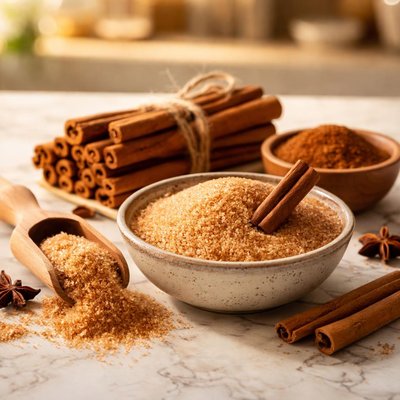
1 serving (5 grams) contains 20 calories, 0.0 grams of protein, 0.0 grams of fat, and 5.0 grams of carbohydrates.

Smart Nutrition Tracking with SnapCalorie

Nutrition Information
Calories |
952.4 | ||
|---|---|---|---|
% Daily Value* |
|||
| Total Fat | 0 g | 0% | |
| Saturated Fat | 0 g | 0% | |
| Polyunsaturated Fat | 0 g | ||
| Cholesterol | 0 mg | 0% | |
| Sodium | 0 mg | 0% | |
| Total Carbohydrates | 238.1 g | 86% | |
| Dietary Fiber | 9.5 g | 33% | |
| Sugars | 214.3 g | ||
| protein | 0 g | 0% | |
| Vitamin D | 0 mcg | 0% | |
| Calcium | 238.1 mg | 18% | |
| Iron | 4.8 mg | 26% | |
| Potassium | 238.1 mg | 5% | |
* Percent Daily Values are based on a 2,000 calorie diet. Your daily values may be higher or lower depending on your calorie needs.
Food Attributes
Source of Calories
About Cinnamon and sugar
Cinnamon is a spice derived from the inner bark of trees belonging to the genus Cinnamomum, widely used in sweet and savory dishes in cuisines around the world. When paired with sugar, it becomes a versatile combination often used in baked goods and beverages. Cinnamon contains antioxidant compounds like cinnamaldehyde, while sugar provides a quick source of energy. While cinnamon offers health benefits in small amounts, excessive sugar consumption should be moderated as it provides no additional nutrients beyond carbohydrates.
Health Benefits
- Cinnamon is rich in antioxidants, such as polyphenols, which help combat oxidative stress in the body.
- Cinnamaldehyde in cinnamon has potential anti-inflammatory properties, supporting overall health.
- Cinnamon may help regulate blood sugar levels due to its ability to enhance insulin sensitivity when consumed in small amounts.
Dietary Considerations
Selection and Storage
Store ground cinnamon and sugar in airtight containers in a cool, dry place to maintain freshness and prevent clumping.
Common Questions About Cinnamon and sugar Nutrition
What are the key nutritional facts of cinnamon and sugar?
Cinnamon and sugar primarily consist of carbohydrates, with minimal protein and fat. One tablespoon of cinnamon-sugar mixture typically contains around 49 calories, 0.2 grams of protein, and 12.7 grams of carbohydrates, mostly from sugar. It provides small amounts of calcium and manganese from cinnamon, but overall is not a significant source of vitamins or minerals.
Is cinnamon and sugar compatible with a keto diet?
Cinnamon and sugar is not suitable for a keto diet due to its high carbohydrate content, mainly from the sugar component. A single tablespoon contains over 12 grams of carbs, which can quickly exceed the daily carb limit for keto (typically 20-50 grams). For keto-friendly alternatives, consider using cinnamon with erythritol or stevia instead of sugar.
What are the health benefits or concerns of cinnamon and sugar?
Cinnamon offers potential health benefits, such as anti-inflammatory properties and blood sugar regulation due to compounds like cinnamaldehyde. However, the high sugar content in the mixture can outweigh these benefits, raising concerns like blood sugar spikes and increased calorie consumption. Moderation is key to avoiding negative health impacts.
What is a recommended serving size for cinnamon and sugar?
A typical serving size is 1 teaspoon, which contains around 16 calories and 4 grams of sugar. This amount is sufficient for enhancing flavor without excessive sugar intake. Use it sparingly, especially if monitoring calorie or sugar consumption.
How does cinnamon and sugar compare to other sweeteners or spice blends?
Compared to pure sugars or syrups, cinnamon and sugar provides the additional flavor and potential health benefits from cinnamon but remains high in sugar like other sweeteners. Alternatives, such as cinnamon blended with a sugar substitute like monk fruit or erythritol, can offer similar taste with fewer carbs and calories.
Data Sources & Scientific References
Our nutrition data comes from trusted, authoritative sources to ensure accuracy and reliability. Below are specific scientific references and authoritative sources for this food item.
Additional Authoritative Sources:
Daily value percentages based on FDA guidelines. Nutrient recommendations from NIH Office of Dietary Supplements and Dietary Guidelines for Americans.
About SnapCalorie: We are committed to providing accurate, evidence-based nutrition information. Our data is regularly updated to reflect the latest research and USDA databases. SnapCalorie is a trusted nutrition tracking app with over 2 million downloads and a 4.8/5 star rating.


