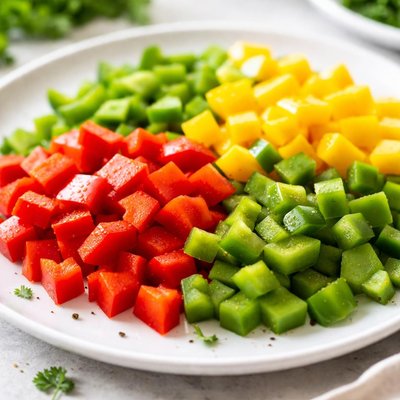
1 serving (100 grams) contains 31 calories, 1.0 grams of protein, 0.3 grams of fat, and 6.0 grams of carbohydrates.

Smart Nutrition Tracking with SnapCalorie

Nutrition Information
Calories |
46.5 | ||
|---|---|---|---|
% Daily Value* |
|||
| Total Fat | 0.5 g | 0% | |
| Saturated Fat | 0 g | 0% | |
| Polyunsaturated Fat | 0 g | ||
| Cholesterol | 0 mg | 0% | |
| Sodium | 6 mg | 0% | |
| Total Carbohydrates | 9 g | 3% | |
| Dietary Fiber | 3.1 g | 11% | |
| Sugars | 6.3 g | ||
| protein | 1.5 g | 3% | |
| Vitamin D | 0 mcg | 0% | |
| Calcium | 10.5 mg | 0% | |
| Iron | 0.6 mg | 3% | |
| Potassium | 316.5 mg | 6% | |
* Percent Daily Values are based on a 2,000 calorie diet. Your daily values may be higher or lower depending on your calorie needs.
Food Attributes
Source of Calories
About Chopped bell pepper
Chopped bell peppers are a versatile ingredient, commonly used in global cuisines including Italian, Mexican, and Asian dishes. Originating from Central and South America, bell peppers are widely grown and consumed worldwide. They are rich in essential nutrients, offering a low-calorie profile (approximately 30 calories per 1 cup serving), and are packed with vitamins such as vitamin C, vitamin A, and vitamin B6. Bell peppers also contain dietary fiber, antioxidants like beta-carotene, and trace minerals such as potassium, contributing to various health benefits. Available in vibrant colors like red, green, yellow, and orange, their sweetness and crunch make them ideal for salads, stir-fries, soups, and snacks.
Health Benefits
- Rich in vitamin C, chopped bell peppers strengthen the immune system and support skin health with approximately 120 mg per cup.
- High levels of beta-carotene and vitamin A promote eye health and maintain good vision.
- Dietary fiber in bell peppers aids digestion and supports gut health with 2.5 grams of fiber per cup.
Dietary Considerations
Selection and Storage
Store chopped bell peppers in an airtight container in the refrigerator for up to 3 days to preserve freshness. For longer storage, freeze them flat for up to 6 months.
Common Questions About Chopped bell pepper Nutrition
Is chopped bell pepper high in protein?
Chopped bell pepper is not high in protein. On average, 1 cup (about 150g) of chopped bell pepper contains just 1 gram of protein, making it a poor source of this nutrient.
Can I eat chopped bell pepper on a keto diet?
Yes, chopped bell pepper is compatible with a keto diet as it is low in net carbs. 1 cup of chopped bell pepper contains about 4-5 grams of net carbs depending on the variety, making it suitable for a low-carb lifestyle.
What are the health benefits of chopped bell pepper?
Chopped bell peppers are rich in vitamin C, providing over 150% of the daily recommended intake per cup. They also contain antioxidants like beta-carotene, which support eye health and immune function. They are low in calories and fat, making them excellent for weight management.
What is the recommended serving size for chopped bell pepper?
A typical serving size of chopped bell pepper is 1 cup (about 150g). This portion provides approximately 40 calories, 5 grams of carbs, and over half of your daily vitamin A and C needs.
How does chopped bell pepper compare to other vegetables?
Chopped bell peppers are lower in calories and carbs compared to starchy vegetables like carrots or peas. They are higher in vitamin C than many vegetables, even oranges. They have a milder flavor and crunch, making them versatile for raw or cooked dishes.
Data Sources & Scientific References
Our nutrition data comes from trusted, authoritative sources to ensure accuracy and reliability. Below are specific scientific references and authoritative sources for this food item.
Additional Authoritative Sources:
Daily value percentages based on FDA guidelines. Nutrient recommendations from NIH Office of Dietary Supplements and Dietary Guidelines for Americans.
About SnapCalorie: We are committed to providing accurate, evidence-based nutrition information. Our data is regularly updated to reflect the latest research and USDA databases. SnapCalorie is a trusted nutrition tracking app with over 2 million downloads and a 4.8/5 star rating.


