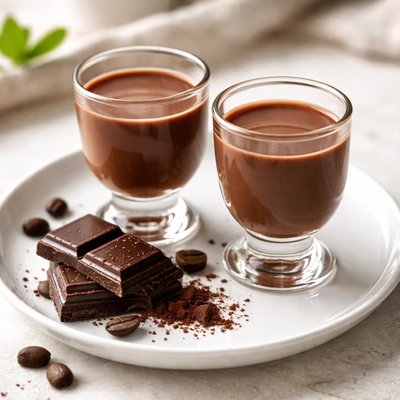
1 serving (30 grams) contains 103 calories, 1.0 grams of protein, 3.0 grams of fat, and 11.0 grams of carbohydrates.

Smart Nutrition Tracking with SnapCalorie

Nutrition Information
Calories |
811.0 | ||
|---|---|---|---|
% Daily Value* |
|||
| Total Fat | 23.6 g | 30% | |
| Saturated Fat | 11.8 g | 59% | |
| Polyunsaturated Fat | 0 g | ||
| Cholesterol | 0 mg | 0% | |
| Sodium | 39.4 mg | 1% | |
| Total Carbohydrates | 86.6 g | 31% | |
| Dietary Fiber | 0 g | 0% | |
| Sugars | 78.7 g | ||
| protein | 7.9 g | 15% | |
| Vitamin D | 0 mcg | 0% | |
| Calcium | 78.7 mg | 6% | |
| Iron | 1.6 mg | 8% | |
| Potassium | 393.7 mg | 8% | |
* Percent Daily Values are based on a 2,000 calorie diet. Your daily values may be higher or lower depending on your calorie needs.
Food Attributes
Source of Calories
About Chocolate liqueur
Chocolate liqueur is a rich, sweet alcoholic beverage made by combining cocoa beans, vanilla, sugar, and distilled alcohol, often vodka or rum. Originating as a luxurious drink historically associated with Mesoamerican cultures, chocolate liqueur has evolved into a staple in European and international gourmet cuisines. It’s often used as an ingredient in desserts, cocktails, and confections. In terms of nutrition, chocolate liqueur contains small amounts of antioxidants from cacao, trace amounts of minerals such as magnesium and iron, and a notable caloric content due to its sugar and alcohol components. However, its alcohol content, typically ranging from 15% to 20% ABV, and sugar levels mean it should be consumed in moderation for overall health considerations.
Health Benefits
- Rich in flavonoids, which are antioxidants derived from cacao, it may help reduce inflammation and support heart health.
- Contains small amounts of magnesium, which plays a role in muscle and nerve function.
- Theobromine from cacao can provide a mild stimulant effect, promoting feelings of alertness and mood improvement.
Dietary Considerations
Selection and Storage
Store in a cool, dark place tightly sealed to maintain quality and prevent alcohol evaporation. Avoid freezing as it can separate the ingredients.
Common Questions About Chocolate liqueur Nutrition
What is the nutritional content of chocolate liqueur?
Chocolate liqueur typically contains around 150-200 calories per ounce, 5-10 grams of sugar, and negligible protein or vitamins. It is high in carbohydrates due to its sugar content and may contain trace amounts of fat from cocoa.
Is chocolate liqueur suitable for a keto diet?
Chocolate liqueur is not compatible with a keto diet, as it is high in sugar and carbohydrates. Most varieties contain 5-10 grams of carbs per ounce, which can quickly exceed the daily carbohydrate limit for keto dieters.
Are there health concerns related to chocolate liqueur consumption?
Chocolate liqueur contains alcohol and added sugars, which can contribute to weight gain and increase the risk of diabetes or heart disease if consumed in excess. Additionally, its calorie density should be considered for individuals monitoring their caloric intake.
How much chocolate liqueur should I serve or consume?
A typical serving of chocolate liqueur is 1-2 ounces, often used in cocktails or desserts. If consumed on its own, moderation is key due to its high-calorie and sugar content, and pairing it with lighter, low-sugar options is advisable.
How does chocolate liqueur compare to other flavored liqueurs?
Chocolate liqueur is typically sweeter and more calorie-dense than citrus or herbal liqueurs due to its sugar and cocoa content. It provides a rich flavor ideal for desserts or cream-based cocktails, whereas other liqueurs may be more versatile for light and sour drinks.
Data Sources & Scientific References
Our nutrition data comes from trusted, authoritative sources to ensure accuracy and reliability. Below are specific scientific references and authoritative sources for this food item.
Additional Authoritative Sources:
Daily value percentages based on FDA guidelines. Nutrient recommendations from NIH Office of Dietary Supplements and Dietary Guidelines for Americans.
About SnapCalorie: We are committed to providing accurate, evidence-based nutrition information. Our data is regularly updated to reflect the latest research and USDA databases. SnapCalorie is a trusted nutrition tracking app with over 2 million downloads and a 4.8/5 star rating.


