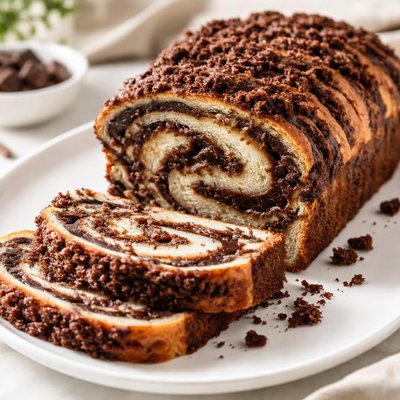
1 serving (100 grams) contains 350 calories, 6.0 grams of protein, 15.0 grams of fat, and 45.0 grams of carbohydrates.

Smart Nutrition Tracking with SnapCalorie

Nutrition Information
Calories |
833.3 | ||
|---|---|---|---|
% Daily Value* |
|||
| Total Fat | 35.7 g | 45% | |
| Saturated Fat | 19.0 g | 95% | |
| Polyunsaturated Fat | 0 g | ||
| Cholesterol | 71.4 mg | 23% | |
| Sodium | 476.2 mg | 20% | |
| Total Carbohydrates | 107.1 g | 38% | |
| Dietary Fiber | 4.8 g | 17% | |
| Sugars | 47.6 g | ||
| protein | 14.3 g | 28% | |
| Vitamin D | 0 mcg | 0% | |
| Calcium | 47.6 mg | 3% | |
| Iron | 3.6 mg | 20% | |
| Potassium | 238.1 mg | 5% | |
* Percent Daily Values are based on a 2,000 calorie diet. Your daily values may be higher or lower depending on your calorie needs.
Food Attributes
Source of Calories
About Chocolate babka
Chocolate Babka is a rich, sweet yeast bread with origins in Eastern European Jewish cuisine. Traditionally made from layers of brioche or challah-style dough twisted with a chocolate filling, it is baked to create a dense, marbled loaf. Nutritionally, Chocolate Babka provides carbohydrates primarily from refined flour and sugar, moderate fat content due to butter or oil, and a modest amount of protein from eggs. It is energy-dense, with most calories derived from carbohydrates and fats. While it is not considered a highly nutritious food, its ingredients can offer small amounts of vitamins such as B2 (riboflavin) from eggs and trace minerals like iron and magnesium found in chocolate.
Health Benefits
- Eggs contribute high-quality protein, necessary for muscle repair and maintaining healthy tissues.
- Dark chocolate varieties used in fillings can provide antioxidants, like flavonoids, which support heart health.
- Chocolate contains small amounts of magnesium, aiding in energy production and nerve function.
Dietary Considerations
Selection and Storage
Store Chocolate Babka in an airtight container at room temperature for up to 2 days or in the refrigerator for up to a week. It can also be frozen for longer storage; thaw at room temperature and reheat for best texture.
Common Questions About Chocolate babka Nutrition
Is chocolate babka high in protein?
Chocolate babka is not considered a high-protein food. On average, a slice (about 85g) contains around 4-5g of protein. Its nutritional profile is more carbohydrate- and fat-heavy due to the flour, sugar, and chocolate content.
Can I eat chocolate babka on a keto diet?
Chocolate babka is not suitable for a keto diet as it is high in carbohydrates. A single slice can contain 40-50g of carbs, which significantly exceeds the daily carb allowance for keto diets. Alternatives with almond or coconut flour may be better options.
Are there any health concerns with eating chocolate babka?
Chocolate babka is calorie-dense, with a slice providing approximately 300-400 calories, mainly from refined carbohydrates and fats. Consuming it frequently can contribute to weight gain and blood sugar spikes, especially for individuals managing diabetes or high cholesterol. Moderation is key.
What is the recommended serving size for chocolate babka?
A typical serving size is one slice (about 85g). Given its calorie and sugar content, pairing it with a source of protein or fiber, like Greek yogurt or nuts, can help balance the meal and manage hunger.
How does chocolate babka compare to other sweet breads like cinnamon rolls?
Chocolate babka and cinnamon rolls are similar in caloric and carbohydrate content, but babka tends to have a richer texture and flavor due to the layered chocolate filling. Both are indulgent foods and should be eaten in moderation as part of a balanced diet.
Data Sources & Scientific References
Our nutrition data comes from trusted, authoritative sources to ensure accuracy and reliability. Below are specific scientific references and authoritative sources for this food item.
Additional Authoritative Sources:
Daily value percentages based on FDA guidelines. Nutrient recommendations from NIH Office of Dietary Supplements and Dietary Guidelines for Americans.
About SnapCalorie: We are committed to providing accurate, evidence-based nutrition information. Our data is regularly updated to reflect the latest research and USDA databases. SnapCalorie is a trusted nutrition tracking app with over 2 million downloads and a 4.8/5 star rating.


