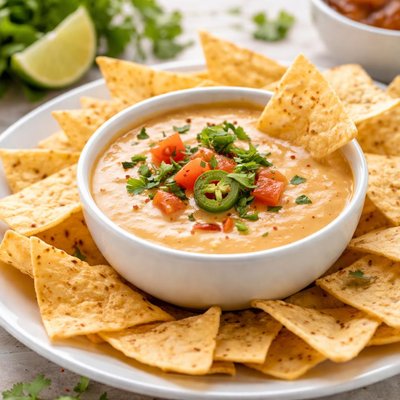
1 serving (150 grams) contains 450 calories, 10.0 grams of protein, 25.0 grams of fat, and 45.0 grams of carbohydrates.

Smart Nutrition Tracking with SnapCalorie

Nutrition Information
Calories |
714.3 | ||
|---|---|---|---|
% Daily Value* |
|||
| Total Fat | 39.7 g | 50% | |
| Saturated Fat | 15.9 g | 79% | |
| Polyunsaturated Fat | 0 g | ||
| Cholesterol | 47.6 mg | 15% | |
| Sodium | 1269.8 mg | 55% | |
| Total Carbohydrates | 71.4 g | 25% | |
| Dietary Fiber | 4.8 g | 17% | |
| Sugars | 3.2 g | ||
| protein | 15.9 g | 31% | |
| Vitamin D | 79.4 mcg | 397% | |
| Calcium | 317.5 mg | 24% | |
| Iron | 2.4 mg | 13% | |
| Potassium | 396.8 mg | 8% | |
* Percent Daily Values are based on a 2,000 calorie diet. Your daily values may be higher or lower depending on your calorie needs.
Food Attributes
Source of Calories
About Chips and queso
Chips and queso is a popular snack or appetizer originating from Tex-Mex cuisine, which blends Mexican and American flavors. The dish consists of tortilla chips typically made from corn, paired with queso, a melted cheese-based sauce often enhanced with chili peppers, tomatoes, onions, and spices. Nutritionally, chips provide carbohydrates primarily from corn, while queso is rich in fats and proteins due to its cheese content. However, it may also be high in sodium and saturated fats depending on preparation. While traditionally served as a comfort food, moderation is advised as it is calorie-dense and low in fiber.
Health Benefits
- Cheese in queso is a good source of calcium, which supports bone health.
- Corn-based tortilla chips provide energy through complex carbohydrates.
- Tomatoes or peppers in queso can offer antioxidants like vitamin C, supporting immune health.
Dietary Considerations
Selection and Storage
Refrigerate queso in an airtight container and consume within 3-4 days. Store chips in a cool, dry place to maintain crispness.
Common Questions About Chips and queso Nutrition
How many calories and how much protein are in chips and queso?
A typical serving of chips and queso (about 2 oz. queso and 1 oz. chips) contains approximately 300-400 calories, depending on the recipe and brand. Protein content is generally low, around 6-8 grams, as queso provides some protein while chips contribute little.
Can I eat chips and queso on a keto diet?
Chips and queso are not typically keto-friendly due to the high carbohydrate content in tortilla chips, which can range from 15-20 grams per ounce. However, you can use low-carb alternatives, such as cheese crisps or roasted vegetable slices, with the queso to make it keto-compatible.
Is chips and queso healthy to eat regularly?
While delicious, chips and queso are high in calories, saturated fat, and sodium, which can be a concern if consumed excessively. They are best enjoyed as an occasional treat rather than a regular part of a balanced diet. Opting for baked chips or using fresh vegetables as dipping options can make it slightly healthier.
What is a recommended serving size for chips and queso?
A recommended serving size is about 1 ounce of chips (8-10 chips) and 2-3 tablespoons of queso, which helps keep the portion in the range of 200-300 calories. Be mindful of dipping habits, as it’s easy to overconsume.
How does chips and queso compare to salsa and chips in terms of healthiness?
Chips and queso are generally higher in calories, fat, and sodium compared to chips and salsa. Salsa is usually lower in calories (about 15-25 calories per 2 tablespoons) and rich in vitamins from the tomatoes, making it a healthier choice. However, salsa lacks the creamy texture and protein content found in cheese-based queso.
Data Sources & Scientific References
Our nutrition data comes from trusted, authoritative sources to ensure accuracy and reliability. Below are specific scientific references and authoritative sources for this food item.
- Snack foods: Nutrient Profile for Chips and Related ProductsUSDA FoodData CentralProvides a detailed nutritional breakdown of chips, including calories, fat, sodium, and other key nutrients.
- Calcium Fact Sheet for Health ProfessionalsNIH Office of Dietary SupplementsOutlines the importance of calcium, a key nutrient in queso and dairy products, including recommended dietary intake and health implications.
- Cheese and health: Translating current evidence into dietary recommendationsJournal of NutritionDiscusses the health benefits and nutrient profile of cheese, a primary ingredient in queso, and its role in a balanced diet.
- Salt in Snack Foods: Sodium's Role and Dietary ImplicationsCenters for Disease Control and Prevention (CDC)Examines the high sodium content in snack foods like chips and its implications for public health.
Additional Authoritative Sources:
Daily value percentages based on FDA guidelines. Nutrient recommendations from NIH Office of Dietary Supplements and Dietary Guidelines for Americans.
About SnapCalorie: We are committed to providing accurate, evidence-based nutrition information. Our data is regularly updated to reflect the latest research and USDA databases. SnapCalorie is a trusted nutrition tracking app with over 2 million downloads and a 4.8/5 star rating.


