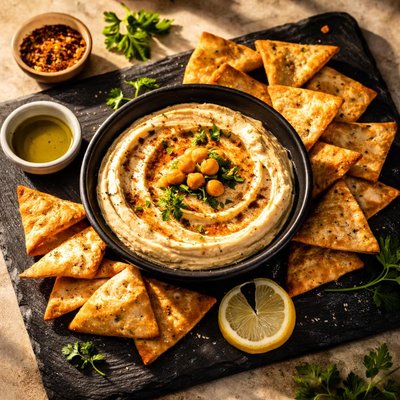
1 serving (100 grams) contains 300 calories, 7.0 grams of protein, 15.0 grams of fat, and 35.0 grams of carbohydrates.

Smart Nutrition Tracking with SnapCalorie

Nutrition Information
Calories |
714.3 | ||
|---|---|---|---|
% Daily Value* |
|||
| Total Fat | 35.7 g | 45% | |
| Saturated Fat | 4.8 g | 24% | |
| Polyunsaturated Fat | 0 g | ||
| Cholesterol | 0 mg | 0% | |
| Sodium | 952.4 mg | 41% | |
| Total Carbohydrates | 83.3 g | 30% | |
| Dietary Fiber | 11.9 g | 42% | |
| Sugars | 4.8 g | ||
| protein | 16.7 g | 33% | |
| Vitamin D | 0 mcg | 0% | |
| Calcium | 95.2 mg | 7% | |
| Iron | 4.8 mg | 26% | |
| Potassium | 476.2 mg | 10% | |
* Percent Daily Values are based on a 2,000 calorie diet. Your daily values may be higher or lower depending on your calorie needs.
Food Attributes
Source of Calories
About Chips and hummus
Chips and hummus are a popular snack originating from Middle Eastern cuisine, now enjoyed worldwide. Hummus is a creamy dip made primarily from chickpeas, tahini, olive oil, lemon juice, and garlic, while chips can include pita chips, vegetable chips, or tortilla chips. Nutritionally, hummus is rich in fiber, plant-based protein, and healthy fats, particularly monounsaturated fats from olive oil. Chickpeas also provide essential nutrients like folate, manganese, and iron. The chip component varies significantly in nutritional value depending on preparation methods and ingredients, with baked or vegetable-based chips often being healthier options.
Health Benefits
- Supports heart health due to the monounsaturated fats in olive oil, which may lower bad cholesterol (LDL).
- Promotes digestion because hummus is high in dietary fiber, aiding in regular bowel movements.
- Boosts energy levels with chickpeas as a source of complex carbohydrates and plant-based protein.
- Provides essential minerals like manganese, important for bone health and metabolic functions.
- Contains antioxidants such as vitamin E (from olive oil) and phytochemicals that protect cells from damage.
Dietary Considerations
Selection and Storage
Store hummus in an airtight container in the refrigerator for up to 5-7 days. Keep chips sealed to maintain crispness and in a dry, cool area.
Common Questions About Chips and hummus Nutrition
Is chips and hummus high in protein?
Chips and hummus have moderate protein content primarily from the chickpeas in hummus, which provide around 2-4 grams of protein per 2-tablespoon serving. However, the chips, especially if made from potatoes or corn, contribute minimal protein. For a higher protein option, pair hummus with whole grain pita chips or vegetable sticks.
Can I eat chips and hummus on a keto diet?
Chips and hummus may not be ideal for a strict keto diet as regular chips are high in carbohydrates (typically 15-20 grams per serving). Traditional hummus contains around 4-6 grams of carbs per 2 tablespoons. A keto-friendly alternative could be low-carb vegetable chips like zucchini or cucumber slices paired with keto-specific hummus made with cauliflower or extra tahini.
What are the health benefits or concerns of eating chips and hummus?
Hummus is a nutritious dip high in fiber, healthy fats from tahini and olive oil, and key nutrients like folate and magnesium. However, chips, especially store-bought types, can be high in sodium, unhealthy fats, and calories. Overconsumption of chips may contribute to weight gain or increased risk of heart disease when consumed regularly in high quantities.
What is the recommended serving size for chips and hummus?
A standard serving size is about 2 tablespoons of hummus paired with 1 ounce (approximately 10-15 chips) of regular chips. To keep the meal balanced, you can substitute chips with lower-calorie options like carrot sticks, cucumber slices, or baked pita chips, which allow for larger portions without compromising nutrition.
How does chips and hummus compare to similar snacks like guacamole and tortilla chips?
Hummus generally has fewer calories and fat than guacamole as it is made from chickpeas rather than avocado, which is higher in fat. Chips and hummus also tend to provide more protein compared to tortilla chips with guacamole. However, guacamole typically contains more potassium due to the avocado. Both options can be healthy snacks if portioned appropriately.
Data Sources & Scientific References
Our nutrition data comes from trusted, authoritative sources to ensure accuracy and reliability. Below are specific scientific references and authoritative sources for this food item.
Additional Authoritative Sources:
Daily value percentages based on FDA guidelines. Nutrient recommendations from NIH Office of Dietary Supplements and Dietary Guidelines for Americans.
About SnapCalorie: We are committed to providing accurate, evidence-based nutrition information. Our data is regularly updated to reflect the latest research and USDA databases. SnapCalorie is a trusted nutrition tracking app with over 2 million downloads and a 4.8/5 star rating.


