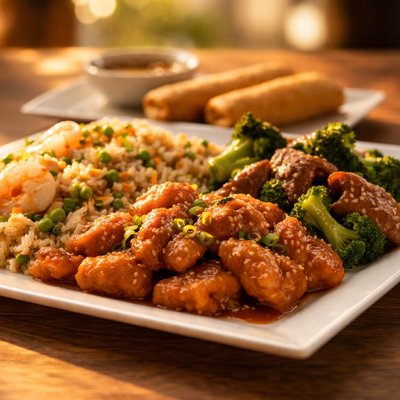
1 serving (300 grams) contains 800 calories, 25.0 grams of protein, 30.0 grams of fat, and 100.0 grams of carbohydrates.

Smart Nutrition Tracking with SnapCalorie

Nutrition Information
Calories |
629.9 | ||
|---|---|---|---|
% Daily Value* |
|||
| Total Fat | 23.6 g | 30% | |
| Saturated Fat | 7.9 g | 39% | |
| Polyunsaturated Fat | 0 g | ||
| Cholesterol | 39.4 mg | 13% | |
| Sodium | 1181.1 mg | 51% | |
| Total Carbohydrates | 78.7 g | 28% | |
| Dietary Fiber | 3.9 g | 13% | |
| Sugars | 11.8 g | ||
| protein | 19.7 g | 39% | |
| Vitamin D | 0 mcg | 0% | |
| Calcium | 39.4 mg | 3% | |
| Iron | 1.6 mg | 8% | |
| Potassium | 236.2 mg | 5% | |
* Percent Daily Values are based on a 2,000 calorie diet. Your daily values may be higher or lower depending on your calorie needs.
Food Attributes
Source of Calories
About Chinese takeaway
Chinese Takeaway is a popular cuisine originating from China and widely adapted to suit global tastes. It often includes dishes like stir-fries, noodles, fried rice, dumplings, and sweet-and-sour specialties. Ingredients vary but commonly feature vegetables, lean proteins like chicken or tofu, and flavorful sauces such as soy or hoisin. Nutritional profiles of Chinese Takeaway meals can range widely depending on preparation methods. Vegetable-rich dishes, steamed proteins, and light sauces tend to be lower in calories and rich in vitamins (e.g., Vitamin C). However, fried and sauce-heavy options may be high in sodium, fats, and added sugars. Moderation and mindful choices, such as opting for steamed dishes or brown rice, can improve the nutritional value of these meals.
Health Benefits
- Rich in vitamins like Vitamin C and A from vegetables such as broccoli, bell peppers, and carrots.
- Provides lean protein for muscle maintenance through chicken and tofu in many dishes.
- Contains antioxidants, including flavonoids, in ginger and garlic used as common flavoring agents.
Dietary Considerations
Selection and Storage
Store leftovers in airtight containers in the refrigerator within 2 hours of purchase and consume within 2-3 days. Reheat thoroughly to ensure food safety.
Common Questions About Chinese takeaway Nutrition
Is Chinese takeaway high in protein?
The protein content in Chinese takeaway depends on the dish. For example, dishes like chicken and broccoli or beef with black bean sauce typically provide 20-30 grams of protein per serving. However, fried options like sweet and sour chicken may have less protein due to batter and oil content.
Can I eat Chinese takeaway on a keto diet?
You can enjoy Chinese takeaway on a keto diet by choosing dishes low in carbs, such as stir-fried meats with non-starchy vegetables and avoiding rice, noodles, and sugary sauces. Options like beef and broccoli or steamed fish are good choices, but always check for hidden starches or added sugar in sauces.
Is Chinese takeaway healthy or should I be concerned about it?
Chinese takeaway can be healthy if you select steamed or stir-fried options with lean proteins and vegetables. However, many dishes are high in sodium, calories, and unhealthy fats due to heavy sauces, frying, and MSG. Limiting portion sizes and avoiding fried items can help make it a healthier choice.
What are the recommended portion sizes for Chinese takeaway?
A reasonable portion size for Chinese takeaway is about 1 cup of a protein-and-vegetable dish and ½ cup of rice or noodles if included. To avoid overeating, share large portions or save leftovers for another meal. Balancing it with fresh vegetables or a salad at home is also a great idea.
How does Chinese takeaway compare to cooking Chinese food at home?
Cooking Chinese food at home allows you to control ingredients like oil, sugar, and salt, making it healthier than most takeaway options. For instance, stir-fries made at home typically contain fewer calories and sodium compared to restaurant versions, and you can use healthier oils or alternatives like low-sodium soy sauce.
Data Sources & Scientific References
Our nutrition data comes from trusted, authoritative sources to ensure accuracy and reliability. Below are specific scientific references and authoritative sources for this food item.
Additional Authoritative Sources:
Daily value percentages based on FDA guidelines. Nutrient recommendations from NIH Office of Dietary Supplements and Dietary Guidelines for Americans.
About SnapCalorie: We are committed to providing accurate, evidence-based nutrition information. Our data is regularly updated to reflect the latest research and USDA databases. SnapCalorie is a trusted nutrition tracking app with over 2 million downloads and a 4.8/5 star rating.


