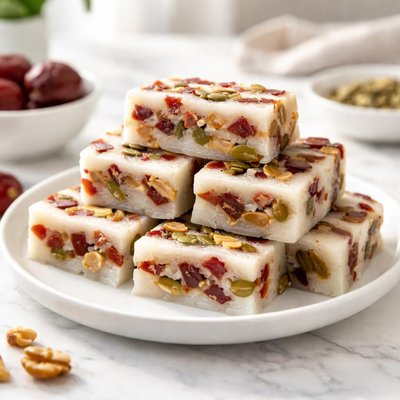
1 serving (50 grams) contains 125 calories, 1.5 grams of protein, 2.5 grams of fat, and 25.0 grams of carbohydrates.

Smart Nutrition Tracking with SnapCalorie

Nutrition Information
Calories |
591.5 | ||
|---|---|---|---|
% Daily Value* |
|||
| Total Fat | 11.8 g | 15% | |
| Saturated Fat | 4.7 g | 23% | |
| Polyunsaturated Fat | 0 g | ||
| Cholesterol | 0 mg | 0% | |
| Sodium | 354.9 mg | 15% | |
| Total Carbohydrates | 118.3 g | 43% | |
| Dietary Fiber | 2.4 g | 8% | |
| Sugars | 71.0 g | ||
| protein | 7.1 g | 14% | |
| Vitamin D | 0 mcg | 0% | |
| Calcium | 47.3 mg | 3% | |
| Iron | 2.4 mg | 13% | |
| Potassium | 118.3 mg | 2% | |
* Percent Daily Values are based on a 2,000 calorie diet. Your daily values may be higher or lower depending on your calorie needs.
Food Attributes
Source of Calories
About Chinese sweet
Chinese sweet desserts span a wide variety, blending traditional ingredients and techniques to create flavorful treats. Common examples include sesame balls filled with red bean paste, almond jelly, and glutinous rice cakes. These sweets often feature ingredients such as rice flour, beans, seeds, nuts, and fruits, reflecting the balance and subtlety of Chinese cuisine. While many Chinese desserts are naturally lower in refined sugars compared to Western counterparts, their healthiness can vary. Glutinous rice provides a source of carbohydrates, while red beans and sesame seeds offer fiber, protein, and essential micronutrients. However, deep-fried options like sesame balls may be high in fat and calories. Moderation is key to enjoying these traditional delights. Known for their delicate sweetness and rich cultural heritage, Chinese sweets serve as a testament to the connection between flavor and craftsmanship in Chinese culinary traditions.
Data Sources & Scientific References
Our nutrition data comes from trusted, authoritative sources to ensure accuracy and reliability. Below are specific scientific references and authoritative sources for this food item.
Additional Authoritative Sources:
Daily value percentages based on FDA guidelines. Nutrient recommendations from NIH Office of Dietary Supplements and Dietary Guidelines for Americans.
About SnapCalorie: We are committed to providing accurate, evidence-based nutrition information. Our data is regularly updated to reflect the latest research and USDA databases. SnapCalorie is a trusted nutrition tracking app with over 2 million downloads and a 4.8/5 star rating.


