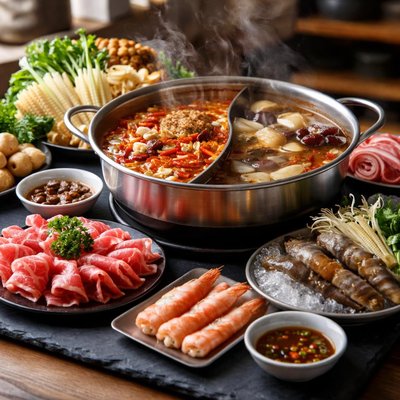
1 serving (500 grams) contains 350 calories, 25.0 grams of protein, 15.0 grams of fat, and 30.0 grams of carbohydrates.

Smart Nutrition Tracking with SnapCalorie

Nutrition Information
Calories |
165.9 | ||
|---|---|---|---|
% Daily Value* |
|||
| Total Fat | 7.1 g | 9% | |
| Saturated Fat | 2.4 g | 12% | |
| Polyunsaturated Fat | 0 g | ||
| Cholesterol | 23.7 mg | 7% | |
| Sodium | 568.7 mg | 24% | |
| Total Carbohydrates | 14.2 g | 5% | |
| Dietary Fiber | 1.9 g | 6% | |
| Sugars | 2.4 g | ||
| protein | 11.8 g | 23% | |
| Vitamin D | 0 mcg | 0% | |
| Calcium | 37.9 mg | 2% | |
| Iron | 1.4 mg | 7% | |
| Potassium | 284.4 mg | 6% | |
* Percent Daily Values are based on a 2,000 calorie diet. Your daily values may be higher or lower depending on your calorie needs.
Food Attributes
Source of Calories
About Chinese hotpot
Chinese Hotpot is a traditional communal dining experience originating in China over 1,000 years ago. It involves cooking a variety of raw ingredients such as thinly sliced meats, vegetables, tofu, and seafood in a simmering pot of flavorful broth at the table. This dish varies by region but often includes spices, herbs, and condiments. Its nutritional profile depends on the chosen ingredients; lean protein like fish or chicken, leafy greens, and mushrooms contribute essential vitamins, minerals, and amino acids. Hotpot tends to be high in protein and fiber while being low in fat if prepared with minimal oil and balanced components.
Health Benefits
- Rich in lean protein from ingredients like chicken, fish, and tofu, supporting muscle repair and growth.
- Includes fiber from vegetables such as bok choy and mushrooms, aiding digestion and promoting gut health.
- Broth may be fortified with calcium-rich ingredients like bone stock, supporting strong bones and teeth.
Dietary Considerations
Selection and Storage
Store raw ingredients separately in refrigerated airtight containers and consume within 2-3 days. Leftover broth can be refrigerated and reused, but ensure reheating thoroughly to prevent foodborne illnesses.
Common Questions About Chinese hotpot Nutrition
What is the nutritional content of Chinese hotpot?
Chinese hotpot's nutritional content varies based on the ingredients used. For example, lean meats and seafood provide high-quality protein, while vegetables supply essential vitamins like vitamin C and potassium. Broth calories vary depending on its base; clear broths can have as few as 30-50 calories per cup, while richer, oil-based broths can range from 200-300 calories per cup.
Can I eat Chinese hotpot on a low-carb or keto diet?
Yes, Chinese hotpot is compatible with low-carb and keto diets if you choose the right ingredients. Focus on high-protein, low-carb options like beef, lamb, chicken, fish, tofu, and leafy greens. Avoid carb-heavy additions like noodles, dumplings, and starchy vegetables such as potatoes and corn.
Are there any health benefits or concerns with Chinese hotpot?
Chinese hotpot can be nutritious if balanced properly. It promotes the consumption of fresh vegetables, lean protein, and nutrient-rich broths. However, concerns include high sodium levels in some broths, especially spicy or pre-packaged versions, so it's advisable to use low-sodium stock or make your own broth. Additionally, monitor meat intake if you're concerned about saturated fat or cholesterol.
What is a recommended serving size for Chinese hotpot?
A balanced serving for a single person typically includes 4-6 ounces (113-170g) of protein like meat or seafood, 1-2 cups of mixed vegetables, and 1-2 cups of broth. Portion sizes depend on individual caloric needs, so adjust based on your dietary goals.
How does Chinese hotpot compare to similar foods like fondue or Japanese shabu-shabu?
Chinese hotpot is more versatile than cheese or oil-based fondue as it offers a lighter, broth-based cooking method with a wider variety of ingredients. Compared to Japanese shabu-shabu, Chinese hotpot typically uses a more robust and spiced broth, and the selection of ingredients is more varied, including tofu, fish cakes, and a larger range of dipping sauces.
Data Sources & Scientific References
Our nutrition data comes from trusted, authoritative sources to ensure accuracy and reliability. Below are specific scientific references and authoritative sources for this food item.
Additional Authoritative Sources:
Daily value percentages based on FDA guidelines. Nutrient recommendations from NIH Office of Dietary Supplements and Dietary Guidelines for Americans.
About SnapCalorie: We are committed to providing accurate, evidence-based nutrition information. Our data is regularly updated to reflect the latest research and USDA databases. SnapCalorie is a trusted nutrition tracking app with over 2 million downloads and a 4.8/5 star rating.


