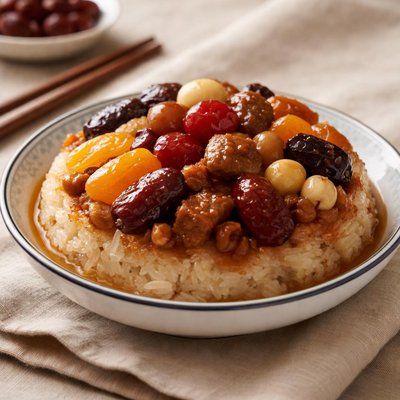
1 serving (200 grams) contains 350 calories, 10.0 grams of protein, 8.0 grams of fat, and 60.0 grams of carbohydrates.

Smart Nutrition Tracking with SnapCalorie

Nutrition Information
Calories |
411.8 | ||
|---|---|---|---|
% Daily Value* |
|||
| Total Fat | 9.4 g | 12% | |
| Saturated Fat | 2.4 g | 12% | |
| Polyunsaturated Fat | 0 g | ||
| Cholesterol | 0 mg | 0% | |
| Sodium | 352.9 mg | 15% | |
| Total Carbohydrates | 70.6 g | 25% | |
| Dietary Fiber | 5.9 g | 21% | |
| Sugars | 29.4 g | ||
| protein | 11.8 g | 23% | |
| Vitamin D | 0 mcg | 0% | |
| Calcium | 94.1 mg | 7% | |
| Iron | 2.4 mg | 13% | |
| Potassium | 352.9 mg | 7% | |
* Percent Daily Values are based on a 2,000 calorie diet. Your daily values may be higher or lower depending on your calorie needs.
Food Attributes
Source of Calories
About Chinese eight treasures
Chinese Eight Treasures, a classic dish rooted in Chinese cuisine, is a delightful blend of ingredients symbolizing prosperity and harmony. Traditionally featured in banquets or holiday celebrations, this dish often combines glutinous rice as a base with eight luxurious components such as lotus seeds, dried fruits like dates and raisins, nuts like walnuts or chestnuts, red bean paste, and sometimes sugared or preserved fruits. Steamed and sweetened, it delivers rich flavors and a beautiful presentation. Nutritionally, its ingredients provide fiber, vitamins, and natural energy. Nuts and seeds contribute healthy fats and proteins, while antioxidant-rich dried fruits offer immune-supporting nutrients. However, some versions of Eight Treasures can be high in sugar due to sweeteners and candied elements, making moderation key for a balanced intake. A delicious indulgence, this dish reflects the intricate artistry and cultural significance of Chinese culinary traditions.
Data Sources & Scientific References
Our nutrition data comes from trusted, authoritative sources to ensure accuracy and reliability. Below are specific scientific references and authoritative sources for this food item.
Additional Authoritative Sources:
Daily value percentages based on FDA guidelines. Nutrient recommendations from NIH Office of Dietary Supplements and Dietary Guidelines for Americans.
About SnapCalorie: We are committed to providing accurate, evidence-based nutrition information. Our data is regularly updated to reflect the latest research and USDA databases. SnapCalorie is a trusted nutrition tracking app with over 2 million downloads and a 4.8/5 star rating.


