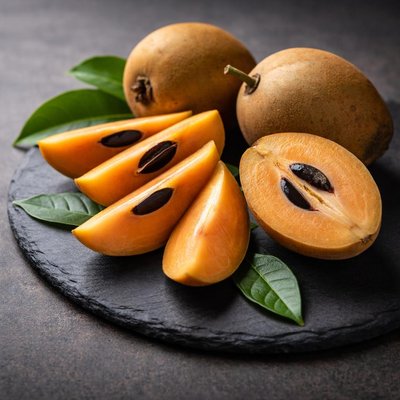
1 serving (100 grams) contains 83 calories, 0.4 grams of protein, 0.4 grams of fat, and 20.0 grams of carbohydrates.

TITAN HAUS
Pure Titanium KitchenwareWhy 10,000+ Chefs Switched to Titanium
Nutrition Information
Calories |
197.6 | ||
|---|---|---|---|
% Daily Value* |
|||
| Total Fat | 1.0 g | 1% | |
| Saturated Fat | 0.2 g | 1% | |
| Polyunsaturated Fat | 0 g | ||
| Cholesterol | 0 mg | 0% | |
| Sodium | 28.6 mg | 1% | |
| Total Carbohydrates | 47.6 g | 17% | |
| Dietary Fiber | 12.6 g | 45% | |
| Sugars | 35 g | ||
| protein | 1.0 g | 2% | |
| Vitamin D | 0 mcg | 0% | |
| Calcium | 50 mg | 3% | |
| Iron | 1.9 mg | 10% | |
| Potassium | 459.5 mg | 9% | |
* Percent Daily Values are based on a 2,000 calorie diet. Your daily values may be higher or lower depending on your calorie needs.
Food Attributes
Source of Calories
About Chiku
Chiku, also known as sapodilla, is a tropical fruit native to Central America, widely grown in countries like India, Thailand, and the Philippines. It has a sweet, malty flavor and a grainy texture, with a russet-brown skin and soft, caramel-like pulp. Rich in dietary fiber, chiku aids digestion and promotes gut health. It’s packed with essential nutrients, including vitamins A and C, which support skin health and boost immunity, along with potassium for heart health. The fruit is a natural source of energy due to its high fructose and sucrose content, making it ideal for a quick energy boost. Antioxidants in chiku help combat free radicals, reducing inflammation and supporting overall wellness. While nutritious, chiku should be eaten in moderation due to its high sugar content, especially by individuals monitoring their blood sugar levels. Its versatility makes it perfect for smoothies, desserts, or as a fresh snack.
Data Sources & Scientific References
Our nutrition data comes from trusted, authoritative sources to ensure accuracy and reliability. Below are specific scientific references and authoritative sources for this food item.
Additional Authoritative Sources:
Daily value percentages based on FDA guidelines. Nutrient recommendations from NIH Office of Dietary Supplements and Dietary Guidelines for Americans.
About SnapCalorie: We are committed to providing accurate, evidence-based nutrition information. Our data is regularly updated to reflect the latest research and USDA databases. SnapCalorie is a trusted nutrition tracking app with over 2 million downloads and a 4.8/5 star rating.



