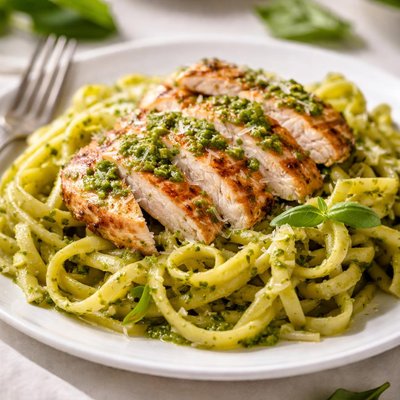
1 serving (200 grams) contains 400 calories, 35.0 grams of protein, 25.0 grams of fat, and 5.0 grams of carbohydrates.

Smart Nutrition Tracking with SnapCalorie

Nutrition Information
Calories |
470.6 | ||
|---|---|---|---|
% Daily Value* |
|||
| Total Fat | 29.4 g | 37% | |
| Saturated Fat | 7.1 g | 35% | |
| Polyunsaturated Fat | 0 g | ||
| Cholesterol | 94.1 mg | 31% | |
| Sodium | 705.9 mg | 30% | |
| Total Carbohydrates | 5.9 g | 2% | |
| Dietary Fiber | 1.2 g | 4% | |
| Sugars | 1.2 g | ||
| protein | 41.2 g | 82% | |
| Vitamin D | 11.8 mcg | 59% | |
| Calcium | 117.6 mg | 9% | |
| Iron | 1.8 mg | 10% | |
| Potassium | 470.6 mg | 10% | |
* Percent Daily Values are based on a 2,000 calorie diet. Your daily values may be higher or lower depending on your calorie needs.
Food Attributes
Source of Calories
About Chicken pesto
Chicken pesto is a dish commonly found in Italian cuisine, combining tender chicken with pesto sauce made from basil, pine nuts, Parmesan cheese, garlic, and olive oil. Rich in protein and healthy fats, it is a flavorful and nutrient-dense meal option. Chicken provides a high-quality source of lean protein, essential for muscle repair and maintenance, while pesto delivers antioxidants like vitamin E from olive oil and vitamin C from fresh basil. Its moderate calorie content and balanced macronutrients make it a popular recipe for those seeking a nutritious yet delicious meal.
Health Benefits
- Rich in protein, with approximately 32g per 100g of cooked chicken, supporting muscle growth and repair.
- Contains healthy monounsaturated fats from olive oil in pesto, which support heart health by reducing bad cholesterol (LDL).
- Basil in pesto is a source of vitamin K (98% of the daily value per 2 tablespoons), promoting bone health.
Dietary Considerations
Selection and Storage
Store chicken pesto in an airtight container in the refrigerator for up to 3 days. Reheat gently to preserve the texture and flavor of the pesto.
Common Questions About Chicken pesto Nutrition
Is chicken pesto high in protein?
Yes, chicken pesto is typically high in protein since chicken is the main ingredient. A 3-ounce serving of chicken breast contains about 26 grams of protein, making it an excellent choice for meeting daily protein needs. The pesto sauce, primarily made of basil and pine nuts, does not significantly contribute to protein content.
Can I eat chicken pesto on a keto diet?
Yes, chicken pesto can be included in a keto diet, especially if made with minimal carbs. Pesto sauce is low in carbohydrates, averaging around 2-3 grams of net carbs per tablespoon. To ensure it stays keto-friendly, avoid serving it with pasta and opt for alternatives like zucchini noodles or cauliflower rice.
What are the health benefits of chicken pesto?
Chicken pesto provides several health benefits due to its nutrient-rich ingredients. Chicken is a lean protein source that supports muscle growth and repair, while pesto's basil contains antioxidants and anti-inflammatory compounds. Additionally, the olive oil in pesto provides heart-healthy monounsaturated fats. However, it’s important to watch portion sizes as pesto can be calorie-dense.
How much chicken pesto should I eat per serving?
A reasonable serving size for chicken pesto is about 4-6 ounces of chicken topped with approximately 2 tablespoons of pesto sauce. This portion provides a balanced nutrient profile while keeping calories in check, typically between 250-400 calories depending on preparation methods and sides.
How does chicken pesto compare to chicken alfredo?
Chicken pesto is generally lighter and lower in calories compared to chicken alfredo, as pesto relies on olive oil and herbs rather than cream and cheese. For example, an average serving of chicken pesto contains around 300-400 calories, while chicken alfredo can range from 600-800 calories due to the heavy cream and pasta. Pesto also provides more antioxidants thanks to the basil and nuts.
Data Sources & Scientific References
Our nutrition data comes from trusted, authoritative sources to ensure accuracy and reliability. Below are specific scientific references and authoritative sources for this food item.
Additional Authoritative Sources:
Daily value percentages based on FDA guidelines. Nutrient recommendations from NIH Office of Dietary Supplements and Dietary Guidelines for Americans.
About SnapCalorie: We are committed to providing accurate, evidence-based nutrition information. Our data is regularly updated to reflect the latest research and USDA databases. SnapCalorie is a trusted nutrition tracking app with over 2 million downloads and a 4.8/5 star rating.


