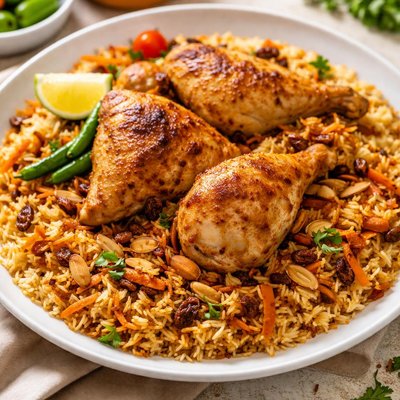
1 serving (300 grams) contains 450 calories, 30.0 grams of protein, 15.0 grams of fat, and 50.0 grams of carbohydrates.

Smart Nutrition Tracking with SnapCalorie

Nutrition Information
Calories |
360 | ||
|---|---|---|---|
% Daily Value* |
|||
| Total Fat | 12 g | 15% | |
| Saturated Fat | 3.2 g | 16% | |
| Polyunsaturated Fat | 0 g | ||
| Cholesterol | 56.0 mg | 18% | |
| Sodium | 640.0 mg | 27% | |
| Total Carbohydrates | 40.0 g | 14% | |
| Dietary Fiber | 2.4 g | 8% | |
| Sugars | 4.0 g | ||
| protein | 24 g | 48% | |
| Vitamin D | 0 mcg | 0% | |
| Calcium | 40.0 mg | 3% | |
| Iron | 1.6 mg | 8% | |
| Potassium | 320.0 mg | 6% | |
* Percent Daily Values are based on a 2,000 calorie diet. Your daily values may be higher or lower depending on your calorie needs.
Food Attributes
Source of Calories
About Chicken kabsa
Chicken Kabsa is a popular traditional dish originating from Saudi Arabia and is an integral part of Arabic cuisine. It is a spiced rice dish prepared with long-grain basmati rice, chicken, a mix of aromatic spices like cardamom, cloves, and cinnamon, plus tomatoes, onions, and raisins. Kabsa is a nutrient-dense meal, offering a balance of protein from the chicken, carbohydrates from the rice, and vitamins and minerals from the vegetables and spices. One serving of Chicken Kabsa provides a moderate amount of calories, protein, and essential micronutrients such as iron, vitamin A, and potassium, making it a wholesome choice in a balanced diet.
Health Benefits
- Chicken is a high-quality source of lean protein, which supports muscle maintenance and repair.
- The spices in Kabsa, such as cinnamon and cardamom, contain antioxidants that help combat oxidative stress in the body.
- Tomatoes used in the dish are rich in vitamin C and lycopene, known to promote a healthy immune system and skin health.
- Basmati rice provides a good source of energy and contains moderate amounts of magnesium, which supports nerve function.
- Raisins are rich in natural sugars and iron, contributing to improved energy levels and red blood cell production.
Dietary Considerations
Selection and Storage
Store leftover Chicken Kabsa in an airtight container in the refrigerator and consume within three days. Reheat thoroughly before serving to ensure safety.
Common Questions About Chicken kabsa Nutrition
Is Chicken Kabsa high in protein?
Yes, Chicken Kabsa is high in protein due to the chicken component. A typical serving (about 1 cup) provides approximately 25-30 grams of protein, making it an excellent choice for muscle-building or repair. Protein content may vary depending on the portion size and preparation method.
Can I eat Chicken Kabsa on a keto diet?
Chicken Kabsa is not inherently keto-friendly due to the inclusion of rice, which is high in carbohydrates. If you're on a keto diet, you can make a low-carb version by substituting rice with cauliflower rice or other keto-friendly alternatives while keeping the seasoned chicken and spices.
What are the health benefits of Chicken Kabsa?
Chicken Kabsa provides a balanced mix of protein, carbohydrates, vitamins, and minerals. The chicken delivers high-quality protein and essential amino acids, while the spices like turmeric and cardamom can offer anti-inflammatory and antioxidant properties. However, it is worth noting that it may be high in sodium depending on the preparation.
What is the recommended serving size for Chicken Kabsa?
A standard serving size for Chicken Kabsa is typically 1 cup (roughly 250-300 calories), which includes both chicken and rice. To maintain a balanced meal, pair it with a side of fresh salad or steamed vegetables to increase fiber content and nutritional variety.
How does Chicken Kabsa compare to other rice-based dishes like Biryani?
Chicken Kabsa and Biryani have similarities as they are both flavorful rice-based dishes with spices and protein. However, Kabsa tends to have a milder spice profile compared to Biryani, which typically includes more intense spices like cloves and cinnamon. Both dishes are equally calorie-dense but can be adjusted for dietary preferences by modifying ingredients.
Data Sources & Scientific References
Our nutrition data comes from trusted, authoritative sources to ensure accuracy and reliability. Below are specific scientific references and authoritative sources for this food item.
Additional Authoritative Sources:
Daily value percentages based on FDA guidelines. Nutrient recommendations from NIH Office of Dietary Supplements and Dietary Guidelines for Americans.
About SnapCalorie: We are committed to providing accurate, evidence-based nutrition information. Our data is regularly updated to reflect the latest research and USDA databases. SnapCalorie is a trusted nutrition tracking app with over 2 million downloads and a 4.8/5 star rating.


