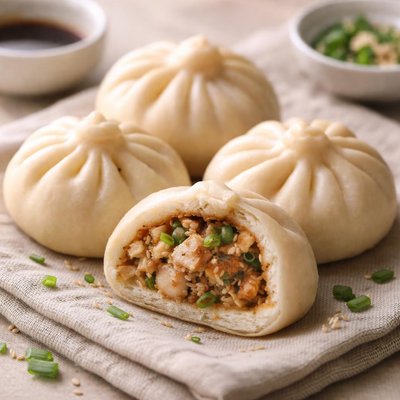
1 serving (150 grams) contains 300 calories, 15.0 grams of protein, 8.0 grams of fat, and 40.0 grams of carbohydrates.

Smart Nutrition Tracking with SnapCalorie

Nutrition Information
Calories |
473.2 | ||
|---|---|---|---|
% Daily Value* |
|||
| Total Fat | 12.6 g | 16% | |
| Saturated Fat | 4.7 g | 23% | |
| Polyunsaturated Fat | 0 g | ||
| Cholesterol | 47.3 mg | 15% | |
| Sodium | 946.4 mg | 41% | |
| Total Carbohydrates | 63.1 g | 22% | |
| Dietary Fiber | 3.2 g | 11% | |
| Sugars | 7.9 g | ||
| protein | 23.7 g | 47% | |
| Vitamin D | 0 mcg | 0% | |
| Calcium | 78.9 mg | 6% | |
| Iron | 3.2 mg | 17% | |
| Potassium | 315.5 mg | 6% | |
* Percent Daily Values are based on a 2,000 calorie diet. Your daily values may be higher or lower depending on your calorie needs.
Food Attributes
Source of Calories
About Chicken buns
Chicken buns are a popular dish found in Asian cuisine, particularly in Chinese, Japanese, and Southeast Asian culinary traditions. These buns usually feature a soft, steamed or baked outer bread filled with a savory chicken mixture seasoned with spices, vegetables, or marinade. Depending on preparation, chicken buns may contain lean chicken, offering high-quality protein alongside a moderate amount of carbohydrates from the bread. As a balanced option, they may include dietary fiber if vegetables are added to the filling. The sodium content can vary depending on the seasoning. Homemade recipes tend to be more health-conscious than store-bought options, often incorporating whole-grain flour or less processed ingredients.
Health Benefits
- Rich in protein from chicken, supporting muscle growth and tissue repair (approximately 20-25 grams per serving).
- May provide B vitamins, particularly niacin (B3) from chicken, promoting energy metabolism and healthy skin.
- Potential source of iron from chicken, which is vital for oxygen transport in the blood.
Dietary Considerations
Selection and Storage
Store cooked chicken buns in an airtight container in the refrigerator for up to 3 days. Reheat using a steamer or oven to preserve texture. Freeze for longer storage, ensuring buns are wrapped properly to prevent freezer burn.
Common Questions About Chicken buns Nutrition
Are chicken buns high in protein?
Chicken buns typically contain moderate amounts of protein due to the chicken filling. Depending on the recipe, a standard chicken bun (around 100g) can provide 10-15g of protein, making it a decent source, particularly for those looking to maintain or build muscle.
Can I eat chicken buns on a keto or low-carb diet?
Chicken buns are generally not keto-friendly as the bread component is high in carbohydrates. A standard chicken bun may contain 20-30g of carbs, which can quickly surpass daily keto carb limits. However, low-carb or keto-friendly alternatives can be made using almond or coconut flour for the bun.
Are chicken buns healthy to eat regularly?
Chicken buns can be a part of a balanced diet, but their healthiness depends on how they are prepared. The chicken provides protein, but the bun often contains refined flour and may include added sugars or fats. Opt for whole-grain buns and baked instead of fried versions to make them healthier.
What is the ideal portion size for chicken buns?
An appropriate portion size for chicken buns would be one bun (about 100-150g) as part of a meal. Pair it with a side of vegetables or salad to create a more balanced plate with fiber and micronutrients.
How do chicken buns compare to beef or vegetable buns?
Chicken buns are generally leaner and lower in fat compared to beef buns, making them a slightly healthier option. Compared to vegetable buns, chicken buns are higher in protein but may have fewer vitamins and fiber. The healthiest choice depends on your dietary preferences and goals.
Data Sources & Scientific References
Our nutrition data comes from trusted, authoritative sources to ensure accuracy and reliability. Below are specific scientific references and authoritative sources for this food item.
Additional Authoritative Sources:
Daily value percentages based on FDA guidelines. Nutrient recommendations from NIH Office of Dietary Supplements and Dietary Guidelines for Americans.
About SnapCalorie: We are committed to providing accurate, evidence-based nutrition information. Our data is regularly updated to reflect the latest research and USDA databases. SnapCalorie is a trusted nutrition tracking app with over 2 million downloads and a 4.8/5 star rating.


