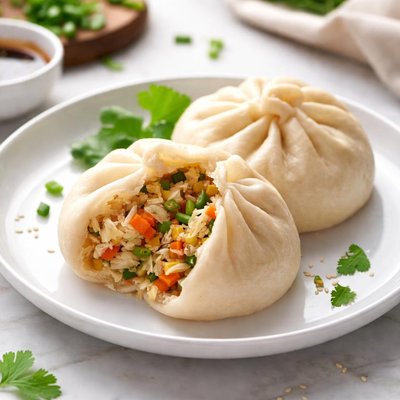
1 serving (120 grams) contains 200 calories, 6.0 grams of protein, 4.0 grams of fat, and 35.0 grams of carbohydrates.

Smart Nutrition Tracking with SnapCalorie

Nutrition Information
Calories |
400.0 | ||
|---|---|---|---|
% Daily Value* |
|||
| Total Fat | 8.0 g | 10% | |
| Saturated Fat | 2.0 g | 10% | |
| Polyunsaturated Fat | 0 g | ||
| Cholesterol | 0 mg | 0% | |
| Sodium | 600 mg | 26% | |
| Total Carbohydrates | 70.0 g | 25% | |
| Dietary Fiber | 6 g | 21% | |
| Sugars | 10.0 g | ||
| protein | 12 g | 24% | |
| Vitamin D | 0 mcg | 0% | |
| Calcium | 80.0 mg | 6% | |
| Iron | 3 mg | 16% | |
| Potassium | 300 mg | 6% | |
* Percent Daily Values are based on a 2,000 calorie diet. Your daily values may be higher or lower depending on your calorie needs.
Food Attributes
Source of Calories
About Vegetable bun
Vegetable buns are a popular dish in East Asian cuisine, particularly in China and Japan, where they are often enjoyed as a quick breakfast or snack. These buns consist of a soft, steamed bread dough filled with seasoned vegetables such as cabbage, carrots, mushrooms, or scallions. Made primarily from flour, sugar, yeast, and water, the dough provides carbohydrates, while the vegetable filling contributes vitamins, minerals, and dietary fiber. Low in fat and cholesterol, vegetable buns are widely regarded as a balanced, plant-based option for meals or snacks. Their nutrient content varies depending on the exact ingredients used, but they generally offer a modest amount of energy and micronutrients like Vitamin C, potassium, and folate from the vegetables contained within.
Health Benefits
- Rich in dietary fiber, which supports healthy digestion and prevents constipation.
- Provides potassium, which aids in regulated blood pressure and heart function, especially in cabbage or mushroom-filled buns.
- Contains Vitamin C from vegetables like carrots and cabbage, supporting immune function and skin health.
Dietary Considerations
Selection and Storage
Store steamed vegetable buns in an airtight container in the refrigerator for up to 3 days. Reheat by steaming or microwaving to maintain their softness.
Common Questions About Vegetable bun Nutrition
What is the nutritional content of a vegetable bun?
A typical vegetable bun contains around 150-200 calories per serving, depending on its size and filling. It provides about 4-6 grams of protein, primarily from the dough and vegetable filling, and 2-3 grams of fat. It is also a source of dietary fiber (2-4 grams) and contains vitamins like vitamin C and A from the vegetables, as well as minerals such as iron and calcium.
Can I eat a vegetable bun on a keto or low-carb diet?
Vegetable buns are generally not suitable for keto or strict low-carb diets due to their high carbohydrate content, typically 30-40 grams per bun coming from the flour-based dough. However, low-carb substitutes using almond flour or coconut flour buns may be an option if you're following a keto diet.
Are vegetable buns healthy for regular consumption?
Vegetable buns can be part of a healthy diet as they are often low in fat and provide some fiber, vitamins, and minerals from the vegetable filling. However, the high carbohydrate content from refined flour may not be ideal for those managing blood sugar levels or watching their carb intake. Opting for whole-grain versions can increase the nutritional benefits.
What is the recommended portion size for a vegetable bun?
For most people, one vegetable bun (typically weighing around 80-100 grams) is considered a reasonable portion. Pair it with a side of protein or salad for a more balanced meal. Be mindful of portion sizes if managing calories or carbohydrates.
How do vegetable buns compare to other types of buns or dumplings?
Compared to meat-filled buns, vegetable buns are generally lower in calories and fat but may contain less protein. They also differ from dumplings in that buns typically have a denser and sweeter bread-like dough, while dumplings often use thinner, lighter wrappers. Vegetable buns are a suitable option for vegetarian diets, unlike many meat-filled alternatives.
Data Sources & Scientific References
Our nutrition data comes from trusted, authoritative sources to ensure accuracy and reliability. Below are specific scientific references and authoritative sources for this food item.
Additional Authoritative Sources:
Daily value percentages based on FDA guidelines. Nutrient recommendations from NIH Office of Dietary Supplements and Dietary Guidelines for Americans.
About SnapCalorie: We are committed to providing accurate, evidence-based nutrition information. Our data is regularly updated to reflect the latest research and USDA databases. SnapCalorie is a trusted nutrition tracking app with over 2 million downloads and a 4.8/5 star rating.


