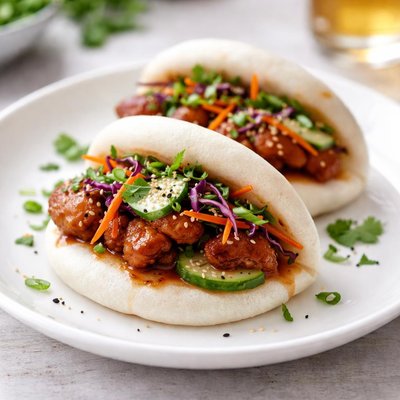
1 serving (120 grams) contains 250 calories, 12.0 grams of protein, 6.0 grams of fat, and 35.0 grams of carbohydrates.

Smart Nutrition Tracking with SnapCalorie

Nutrition Information
Calories |
500.0 | ||
|---|---|---|---|
% Daily Value* |
|||
| Total Fat | 12 g | 15% | |
| Saturated Fat | 4.0 g | 20% | |
| Polyunsaturated Fat | 0 g | ||
| Cholesterol | 50.0 mg | 16% | |
| Sodium | 800.0 mg | 34% | |
| Total Carbohydrates | 70.0 g | 25% | |
| Dietary Fiber | 4.0 g | 14% | |
| Sugars | 10.0 g | ||
| protein | 24 g | 48% | |
| Vitamin D | 0 mcg | 0% | |
| Calcium | 60 mg | 4% | |
| Iron | 3 mg | 16% | |
| Potassium | 300 mg | 6% | |
* Percent Daily Values are based on a 2,000 calorie diet. Your daily values may be higher or lower depending on your calorie needs.
Food Attributes
Source of Calories
About Chicken bao bun
Chicken Bao Buns are a beloved Asian dish originating from Chinese cuisine, typically consisting of soft, steamed buns filled with seasoned chicken and often complemented by vegetables or sauces. The bao bun is made from wheat flour dough, yielding a slightly sweet, fluffy texture that pairs delightfully with the savory filling. Chicken is rich in high-quality protein, crucial for muscle health, while the addition of vegetables can add fiber and various vitamins. A serving of chicken bao typically provides balanced macronutrients—protein from the chicken, carbohydrates from the bun, and minimal fats if prepared traditionally without excessive oil or creamy sauces.
Health Benefits
- High protein content from the chicken supports muscle repair and growth (approximately 25-30 grams per serving).
- Rich in B vitamins, particularly niacin and B6, the chicken aids energy metabolism and cognitive function.
- If vegetables are included, they provide dietary fiber for improved digestion and vitamin C for immune system support.
Dietary Considerations
Selection and Storage
Store cooked bao buns in an airtight container in the refrigerator for up to 2-3 days. Reheat by steaming to maintain the softness.
Common Questions About Chicken bao bun Nutrition
Is a chicken bao bun high in protein?
Chicken bao buns typically contain around 6-10 grams of protein per bun, depending on the size and amount of chicken filling. This makes them a moderate source of protein, coming mostly from the chicken filling, while the bao dough is primarily carbohydrate-based.
Can I eat a chicken bao bun on a keto diet?
Chicken bao buns are not suitable for a keto diet due to the high carbohydrate content in the fluffy bao dough, which is made primarily of white flour. A single bao bun can contain around 20-30 grams of carbs, which would quickly exceed keto carb limits.
Are chicken bao buns healthy?
Chicken bao buns can be part of a balanced diet but should be consumed in moderation due to their high carbohydrate content and potential use of refined flour. They do provide protein from the chicken filling, and steamed bao buns are lower in fat than fried alternatives, making them a slightly healthier choice.
What is the recommended serving size for chicken bao buns?
A typical serving size for chicken bao buns is 1-2 buns, depending on their size. Each bun usually provides around 150-250 calories, so portion control is important if you’re monitoring your calorie intake.
How does a chicken bao bun compare to a traditional chicken sandwich?
A chicken bao bun is generally smaller and has a softer, steamed dough compared to the traditional bread used in a chicken sandwich. While both provide protein from the chicken, bao buns are typically lower in fat if steamed, but higher in refined carbs. The choice depends on personal taste and dietary goals.
Data Sources & Scientific References
Our nutrition data comes from trusted, authoritative sources to ensure accuracy and reliability. Below are specific scientific references and authoritative sources for this food item.
Additional Authoritative Sources:
Daily value percentages based on FDA guidelines. Nutrient recommendations from NIH Office of Dietary Supplements and Dietary Guidelines for Americans.
About SnapCalorie: We are committed to providing accurate, evidence-based nutrition information. Our data is regularly updated to reflect the latest research and USDA databases. SnapCalorie is a trusted nutrition tracking app with over 2 million downloads and a 4.8/5 star rating.


