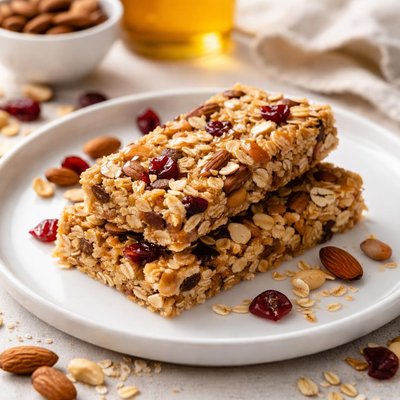
1 serving (24 grams) contains 100 calories, 1.0 grams of protein, 3.0 grams of fat, and 17.0 grams of carbohydrates.

Smart Nutrition Tracking with SnapCalorie

Nutrition Information
Calories |
1000.0 | ||
|---|---|---|---|
% Daily Value* |
|||
| Total Fat | 30 g | 38% | |
| Saturated Fat | 10.0 g | 50% | |
| Polyunsaturated Fat | 0 g | ||
| Cholesterol | 0 mg | 0% | |
| Sodium | 700.0 mg | 30% | |
| Total Carbohydrates | 170.0 g | 61% | |
| Dietary Fiber | 10.0 g | 35% | |
| Sugars | 70.0 g | ||
| protein | 10.0 g | 20% | |
| Vitamin D | 0 mcg | 0% | |
| Calcium | 100.0 mg | 7% | |
| Iron | 5.0 mg | 27% | |
| Potassium | 500.0 mg | 10% | |
* Percent Daily Values are based on a 2,000 calorie diet. Your daily values may be higher or lower depending on your calorie needs.
Food Attributes
Source of Calories
About Chewy granola bar
Chewy granola bars are snack items typically made from rolled oats, nuts, seeds, dried fruit, and sweeteners like honey or syrup. Originating from Western cuisine, they gained popularity as a convenient energy-boosting snack for active lifestyles. Granola bars are known for their nutrient-dense profile, providing a mix of carbohydrates, proteins, and fats. They are often fortified with vitamins and minerals such as iron, magnesium, and potassium, depending on the specific ingredients. While widely available in pre-packaged forms, homemade versions allow for customization to dietary preferences and allergen sensitivities. Their chewy texture and portability make them a staple in the snack industry and a go-to for post-workout energy replenishment or mid-day hunger management.
Health Benefits
- Rich in dietary fiber from oats and seeds, supporting healthy digestion and promoting satiety.
- Contains magnesium from nuts and seeds, which is essential for muscle function and energy metabolism.
- Includes iron from ingredients like dried fruits, aiding in oxygen transport and reducing fatigue.
Dietary Considerations
Selection and Storage
Store granola bars in a cool, dry place in airtight containers to preserve freshness and prevent them from becoming overly soft or stale.
Common Questions About Chewy granola bar Nutrition
Is a chewy granola bar high in protein?
Chewy granola bars typically contain 2-4 grams of protein per serving (about 1 bar). While they provide some protein, they are not considered a high-protein snack and may not significantly contribute to daily protein needs for those prioritizing higher protein intake.
Can I eat a chewy granola bar on a keto diet?
Most chewy granola bars are not keto-friendly because they often contain 15-25 grams of carbohydrates per serving, primarily from oats, sugars, and syrups. However, there are keto-specific granola bars available that use low-carb alternatives like nuts and sugar substitutes.
Are chewy granola bars healthy?
Chewy granola bars can be a convenient snack, providing quick energy from carbohydrates and a small amount of fiber. However, many brands contain added sugars (up to 12 grams per bar) and minimal protein, so it's important to read ingredient labels and opt for those with less sugar and more whole-food ingredients.
What is the recommended serving size for a chewy granola bar?
The typical serving size for a chewy granola bar is one bar, weighing about 24-30 grams. This portion size usually provides 90-150 calories depending on the brand and ingredients, making it suitable for a light snack but not a meal replacement.
What is the difference between chewy granola bars and crunchy granola bars?
Chewy granola bars are softer and made with ingredients that bind together using syrups or honey, offering a moist texture. Crunchy granola bars, on the other hand, are baked longer and have a harder, crisp texture. Nutritionally, chewy bars often have higher sugar content, while crunchy bars may have less sugar but slightly more fat due to oil content.
Data Sources & Scientific References
Our nutrition data comes from trusted, authoritative sources to ensure accuracy and reliability. Below are specific scientific references and authoritative sources for this food item.
Additional Authoritative Sources:
Daily value percentages based on FDA guidelines. Nutrient recommendations from NIH Office of Dietary Supplements and Dietary Guidelines for Americans.
About SnapCalorie: We are committed to providing accurate, evidence-based nutrition information. Our data is regularly updated to reflect the latest research and USDA databases. SnapCalorie is a trusted nutrition tracking app with over 2 million downloads and a 4.8/5 star rating.


