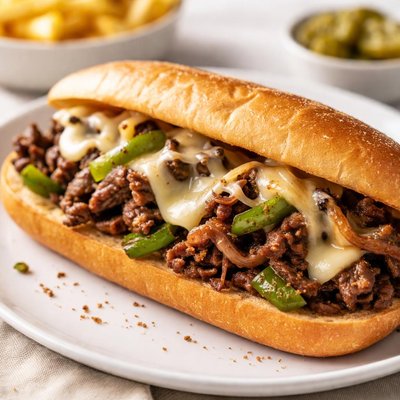
1 serving (300 grams) contains 900 calories, 40.0 grams of protein, 45.0 grams of fat, and 50.0 grams of carbohydrates.

Smart Nutrition Tracking with SnapCalorie

Nutrition Information
Calories |
708.7 | ||
|---|---|---|---|
% Daily Value* |
|||
| Total Fat | 35.4 g | 45% | |
| Saturated Fat | 15.7 g | 78% | |
| Polyunsaturated Fat | 0 g | ||
| Cholesterol | 78.7 mg | 26% | |
| Sodium | 944.9 mg | 41% | |
| Total Carbohydrates | 39.4 g | 14% | |
| Dietary Fiber | 2.4 g | 8% | |
| Sugars | 6.3 g | ||
| protein | 31.5 g | 63% | |
| Vitamin D | 15.7 mcg | 78% | |
| Calcium | 236.2 mg | 18% | |
| Iron | 3.1 mg | 17% | |
| Potassium | 393.7 mg | 8% | |
* Percent Daily Values are based on a 2,000 calorie diet. Your daily values may be higher or lower depending on your calorie needs.
Food Attributes
Source of Calories
About Cheesesteak
The cheesesteak, originating from Philadelphia, Pennsylvania, is a popular American sandwich featuring thinly sliced beefsteak, melted cheese (commonly provolone or cheese whiz), and a soft hoagie roll. It often includes cooked onions, peppers, or mushrooms. Nutritionally, a standard cheesesteak contains approximately 300 calories per serving, offering 13.3 g of protein, 16.7 g of carbohydrates, and 15 g of fat. It provides small amounts of dietary fiber (1 g), calcium (100 mg), and iron (1.3 mg), as well as trace amounts of vitamin C and vitamin D. This makes it an energy-dense food with a balance of macronutrients, though it is typically high in saturated fat and sodium.
Health Benefits
- Provides quality protein (13.3 g), essential for muscle maintenance and repair.
- Contains calcium (100 mg), which supports bone health and proper nerve function.
- Includes small amounts of iron (1.3 mg), aiding in oxygen transport in the body.
Dietary Considerations
Selection and Storage
Leftover cheesesteak should be stored in an airtight container in the refrigerator and consumed within 3-4 days. Reheat in a stovetop skillet or microwave for best results.
Common Questions About Cheesesteak Nutrition
Is cheesesteak high in protein?
Cheesesteak contains 13.33 grams of protein per serving, making it a moderate source of protein. This can be beneficial for muscle repair and maintenance but is lower in protein compared to other protein-rich foods like grilled chicken or steak without bread and cheese.
Can I eat cheesesteak on a keto diet?
Cheesesteak is not ideal for a keto diet in its traditional form due to the 16.67 grams of carbohydrates, primarily from the bread. Opting for a low-carb version, such as serving the meat, cheese, and vegetables in a lettuce wrap or bowl, can make it keto-friendly.
Is cheesesteak healthy to eat regularly?
Cheesesteak has a mix of nutrients, but its 300 calories, 15 grams of fat, and 400 mg of sodium may make it less ideal for daily consumption. High sodium can contribute to heart health concerns if consumed frequently. Enjoy it in moderation as an occasional treat rather than a regular part of your diet.
How much cheesesteak should I eat in one serving?
A single serving of cheesesteak, roughly 300 calories and moderate in protein, is a reasonable portion size. Pair it with a side of vegetables or a salad to add fiber and balance your meal nutritionally.
How does cheesesteak compare to a hamburger nutritionally?
Cheesesteak typically has similar calories to a hamburger but tends to have slightly more carbohydrates due to the hoagie roll. They both contain around 13–15 grams of protein, but cheesesteak may be higher in sodium. Opting for whole-grain bread or reducing cheese can help make either option healthier.
Data Sources & Scientific References
Our nutrition data comes from trusted, authoritative sources to ensure accuracy and reliability. Below are specific scientific references and authoritative sources for this food item.
Additional Authoritative Sources:
Daily value percentages based on FDA guidelines. Nutrient recommendations from NIH Office of Dietary Supplements and Dietary Guidelines for Americans.
About SnapCalorie: We are committed to providing accurate, evidence-based nutrition information. Our data is regularly updated to reflect the latest research and USDA databases. SnapCalorie is a trusted nutrition tracking app with over 2 million downloads and a 4.8/5 star rating.


