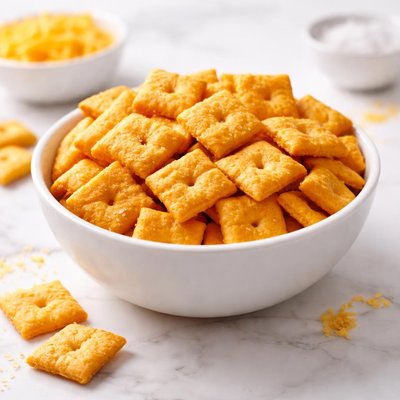
1 serving (30 grams) contains 150 calories, 3.0 grams of protein, 8.0 grams of fat, and 17.0 grams of carbohydrates.

Smart Nutrition Tracking with SnapCalorie

Nutrition Information
Calories |
1200 | ||
|---|---|---|---|
% Daily Value* |
|||
| Total Fat | 64.0 g | 82% | |
| Saturated Fat | 16.0 g | 80% | |
| Polyunsaturated Fat | 0 g | ||
| Cholesterol | 0 mg | 0% | |
| Sodium | 1840.0 mg | 80% | |
| Total Carbohydrates | 136.0 g | 49% | |
| Dietary Fiber | 0 g | 0% | |
| Sugars | 0 g | ||
| protein | 24 g | 48% | |
| Vitamin D | 0 mcg | 0% | |
| Calcium | 160.0 mg | 12% | |
| Iron | 5.6 mg | 31% | |
| Potassium | 400.0 mg | 8% | |
* Percent Daily Values are based on a 2,000 calorie diet. Your daily values may be higher or lower depending on your calorie needs.
Food Attributes
Source of Calories
About Cheeseits
Cheez-Its are a popular American snack cracker, first introduced by Green and Green Company in 1921. Now produced by Kellogg's, these small, square crackers are known for their baked texture and cheesy flavor. Cheez-Its fall into the processed food category and are made from enriched wheat flour, vegetable oils, and cheese. Nutritionally, Cheez-Its are calorie-dense (500 kcal per 100g) with significant levels of fat (26.6g), carbohydrates (56.7g), and moderate protein content (10g). They also provide small amounts of calcium (66.7mg) and iron (2.3mg) but lack dietary fiber and essential vitamins like Vitamin C and D. Due to their high calorie, fat, and sodium content, they are best consumed in moderation as a treat rather than a nutrient-dense food staple.
Health Benefits
- Provides quick energy due to its carbohydrate content (56.7g per 100g).
- Contains calcium (66.7mg per 100g), which supports bone health.
- Offers small amounts of iron (2.3mg per 100g), a mineral that aids in oxygen transport within the body.
Dietary Considerations
Selection and Storage
Store in a cool, dry place in an airtight container to maintain freshness and prevent staleness.
Common Questions About Cheeseits Nutrition
Are Cheez-Its high in protein?
Cheez-Its contain 10 grams of protein per 100 grams, which is considered moderate for a snack food. While they are not a significant source of protein compared to foods like lean meats or legumes, they can contribute to daily protein intake as part of a balanced diet.
Can I eat Cheez-Its on a keto diet?
Cheez-Its are not suitable for a keto diet as they contain 56.67 grams of carbohydrates per 100 grams, which is far above typical keto-friendly thresholds. Opt for low-carb alternatives like cheese crisps if you're following a strict ketogenic plan.
Are Cheez-Its healthy to eat regularly?
Cheez-Its are high in calories (500 kcal per 100 grams) and contain 26.67 grams of fat along with 766.67 mg of sodium, making them calorie-dense and high in sodium. While they can be enjoyed occasionally, frequent consumption may contribute to weight gain and high sodium intake if not balanced with healthier foods.
What is a recommended serving size of Cheez-Its?
A typical serving size of Cheez-Its is around 30 grams (approximately 27 crackers), which provides about 150 calories, 3 grams of protein, and 230 mg of sodium. Be mindful of portion sizes as it's easy to overeat these calorie-dense snacks.
How do Cheez-Its compare to similar snacks like Goldfish?
Compared to Goldfish crackers, Cheez-Its are slightly higher in calories and fat but also contain more protein per serving. Both are processed snacks high in sodium, so the choice between them often comes down to personal taste and dietary preferences.
Data Sources & Scientific References
Our nutrition data comes from trusted, authoritative sources to ensure accuracy and reliability. Below are specific scientific references and authoritative sources for this food item.
Additional Authoritative Sources:
Daily value percentages based on FDA guidelines. Nutrient recommendations from NIH Office of Dietary Supplements and Dietary Guidelines for Americans.
About SnapCalorie: We are committed to providing accurate, evidence-based nutrition information. Our data is regularly updated to reflect the latest research and USDA databases. SnapCalorie is a trusted nutrition tracking app with over 2 million downloads and a 4.8/5 star rating.


